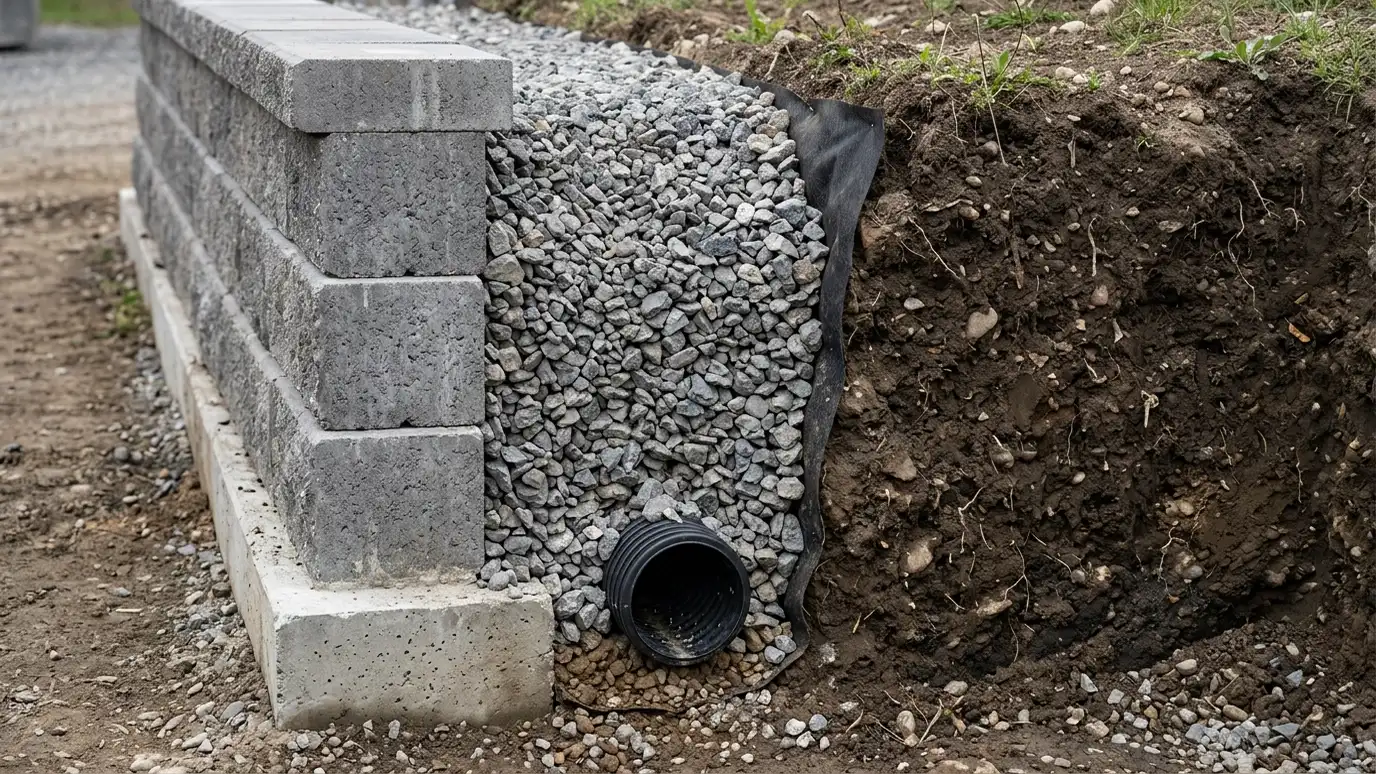
How drain pipe, clean stone, filter fabric and outlets work together to keep water pressure off a retaining wall.
Water is heavy. Soil soaked with rain pushes far harder on a wall than dry soil, and freezing and thawing can add stress. That is why nearly every well-built retaining wall includes a drainage system: clean, angular stone behind the wall, a perforated pipe at the base wrapped in filter fabric and an outlet where water can leave. Together, these parts give water a path out instead of letting pressure build.
Drainage is easy to overlook because it is hidden once the wall is finished. Clogged pipes, missing outlets and fine soil in the stone are common causes of failure. Surface water matters too, since downspouts, slopes and paved areas can send large volumes toward a wall. In Nashville, where heavy storms can drop a lot of rain quickly, we plan both subsurface and surface drainage for every wall and explain how to keep outlets clear.
Collects water at the base and carries it away.
Free-draining angular stone behind the wall.
Keeps soil out while letting water pass.
Daylight or approved tie-in so water can leave.
Downspouts and grading reduce load on the wall.
Access points for flushing and inspection.
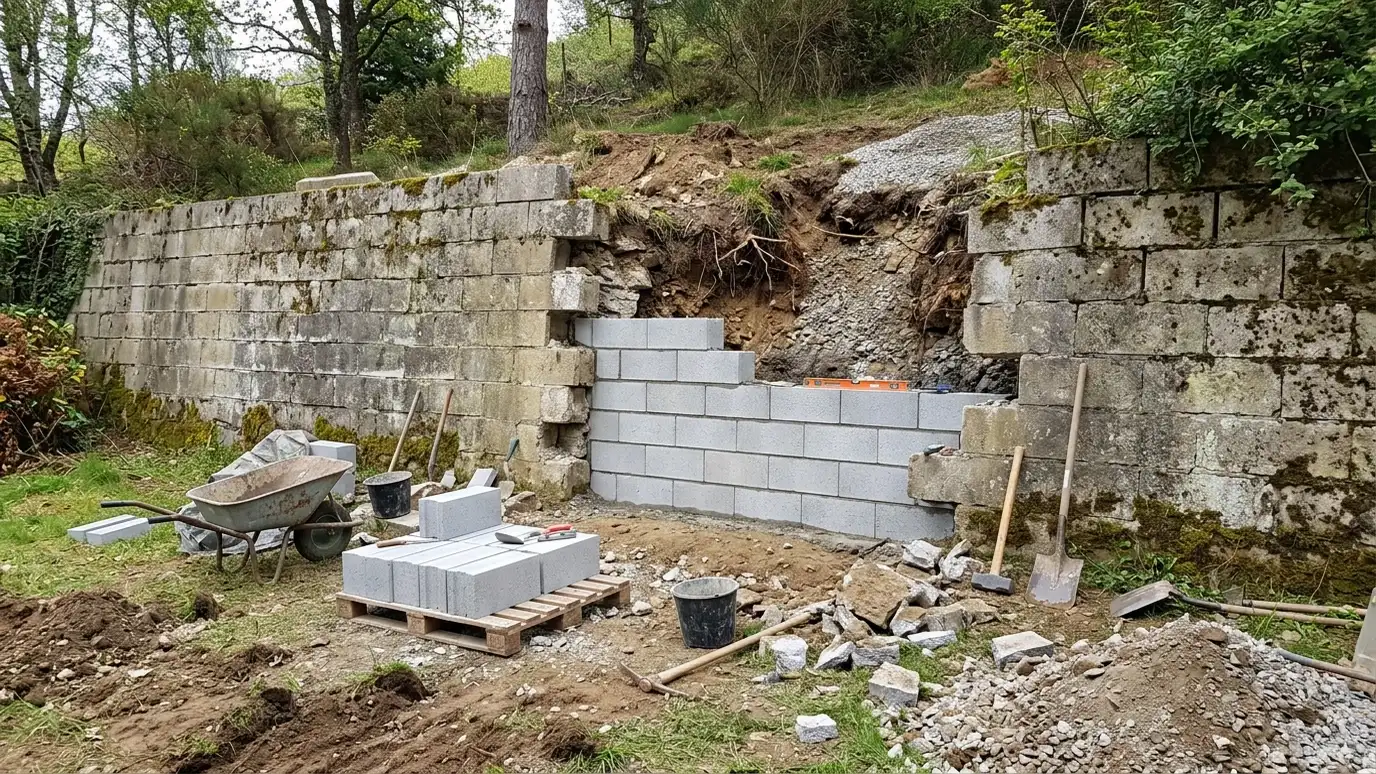 Retaining Wall RepairHonest inspection and repair of leaning, cracked, bulging or draining walls, with a clear view of what can…Explore
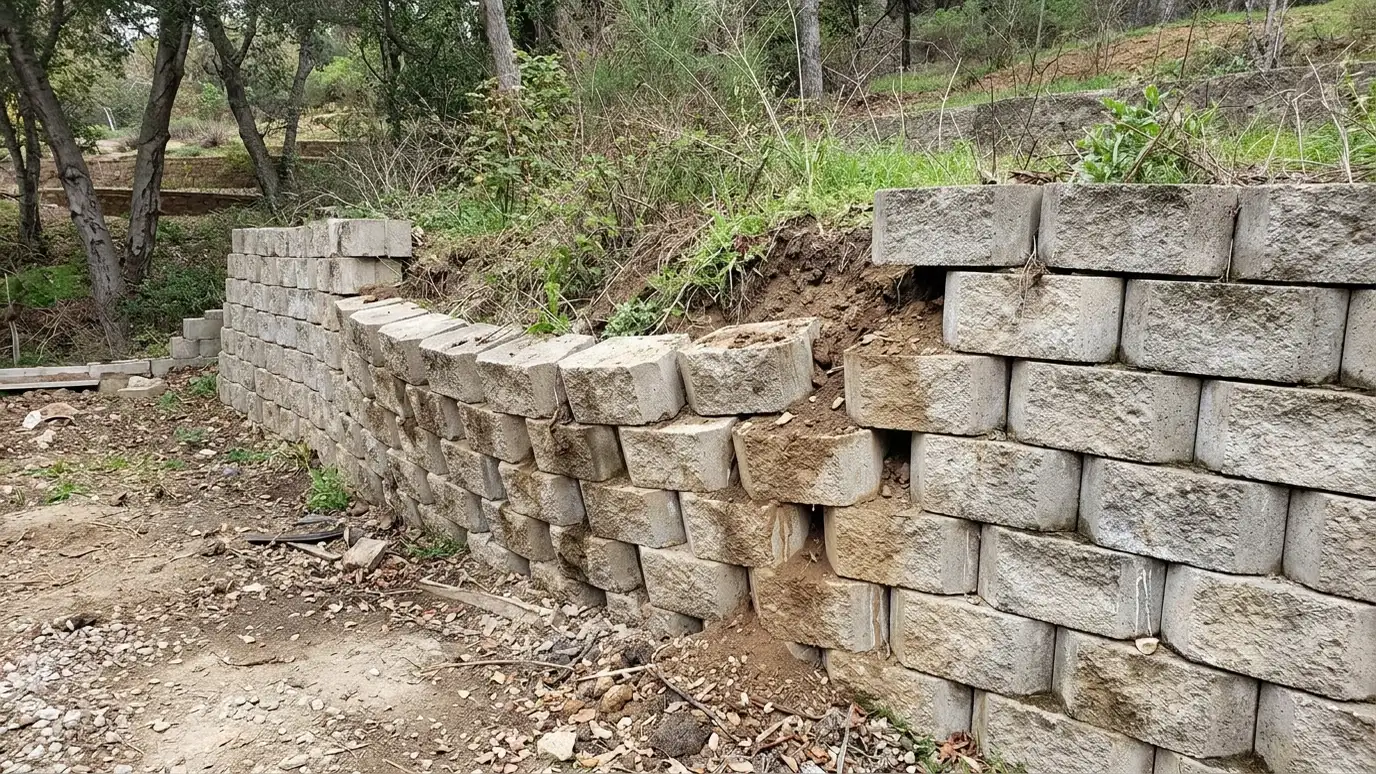 Leaning and Bulging Wall RepairDiagnosis and correction for walls that lean forward, bow outward or show a bulge in the face.Explore
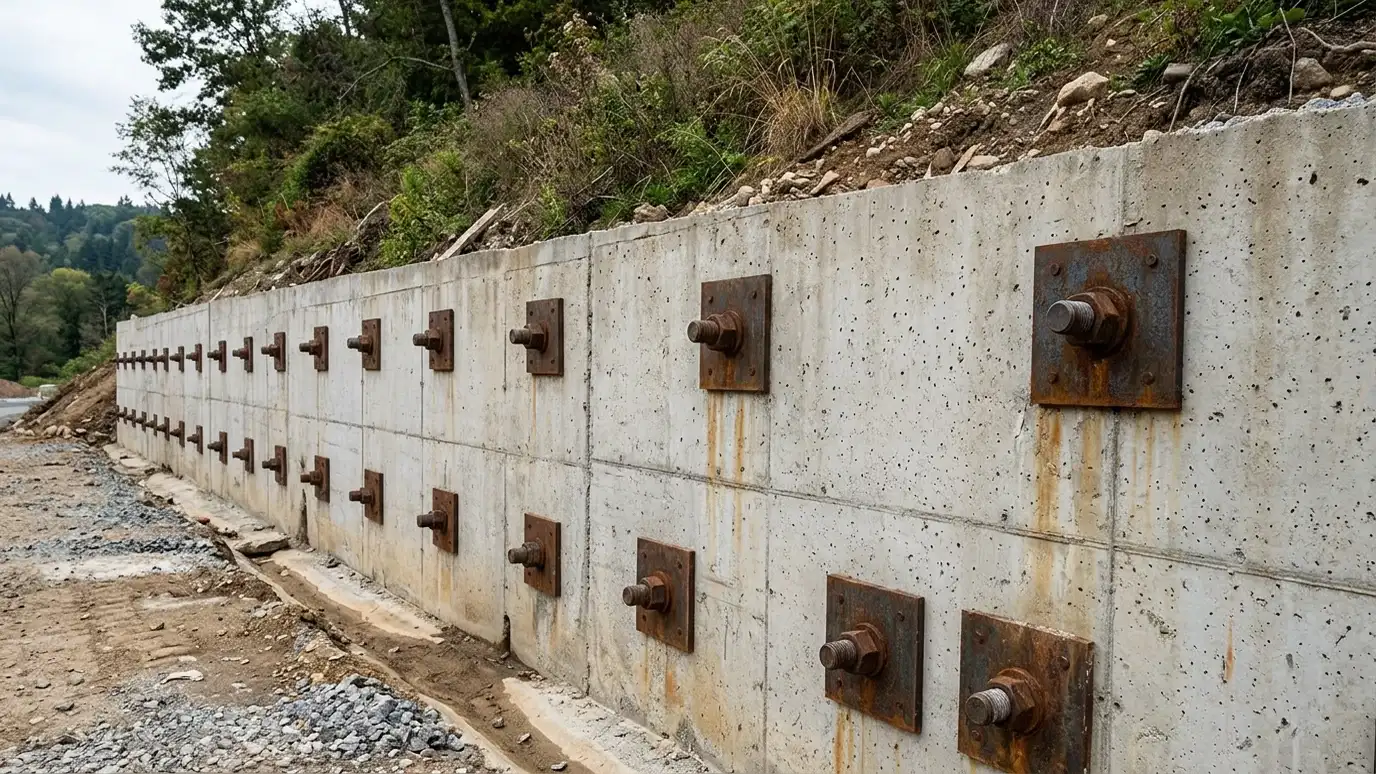 Helical Pier Wall SupportSteel helical piers and anchors that support settling walls, footings and structures on weak soil.Explore
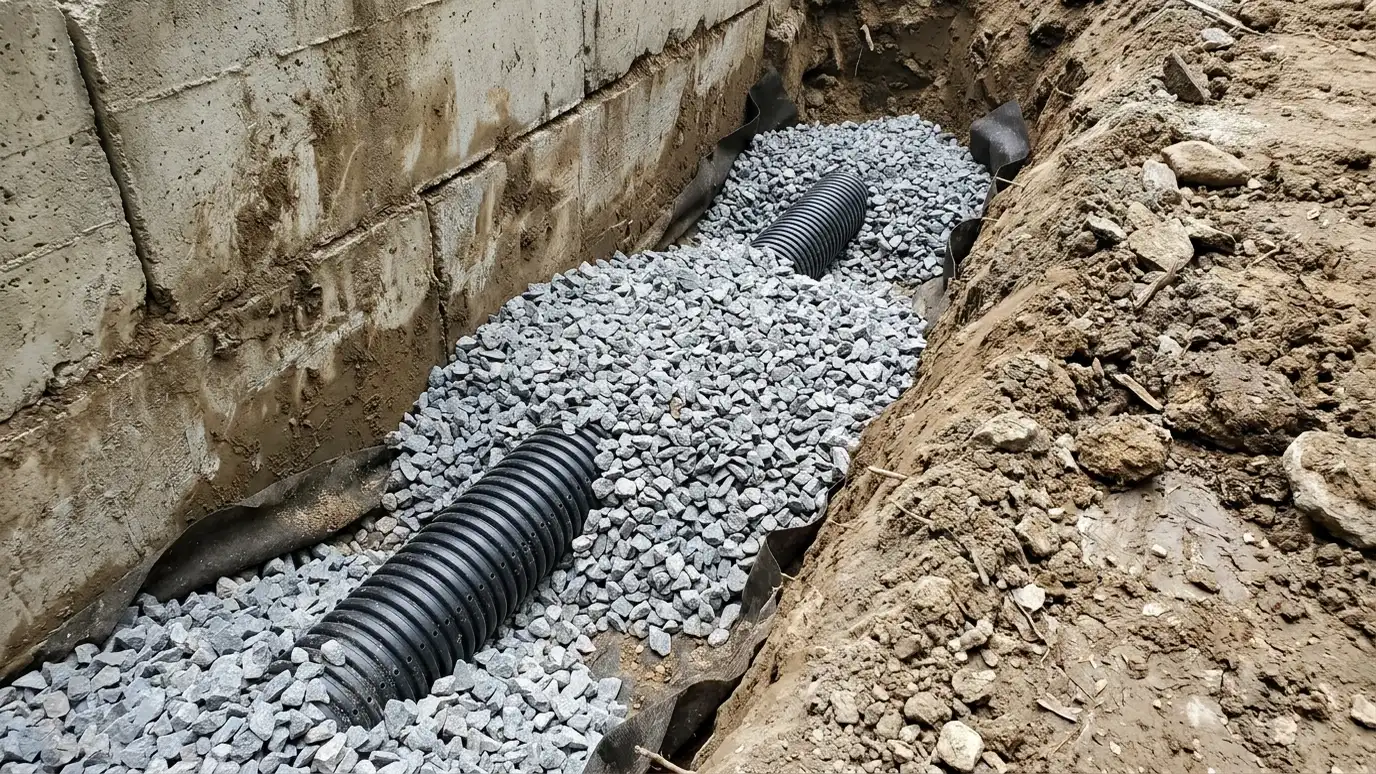 Drainage Repair Behind WallsFinding and fixing clogged, crushed or missing drains and saturated backfill that push on walls.Explore
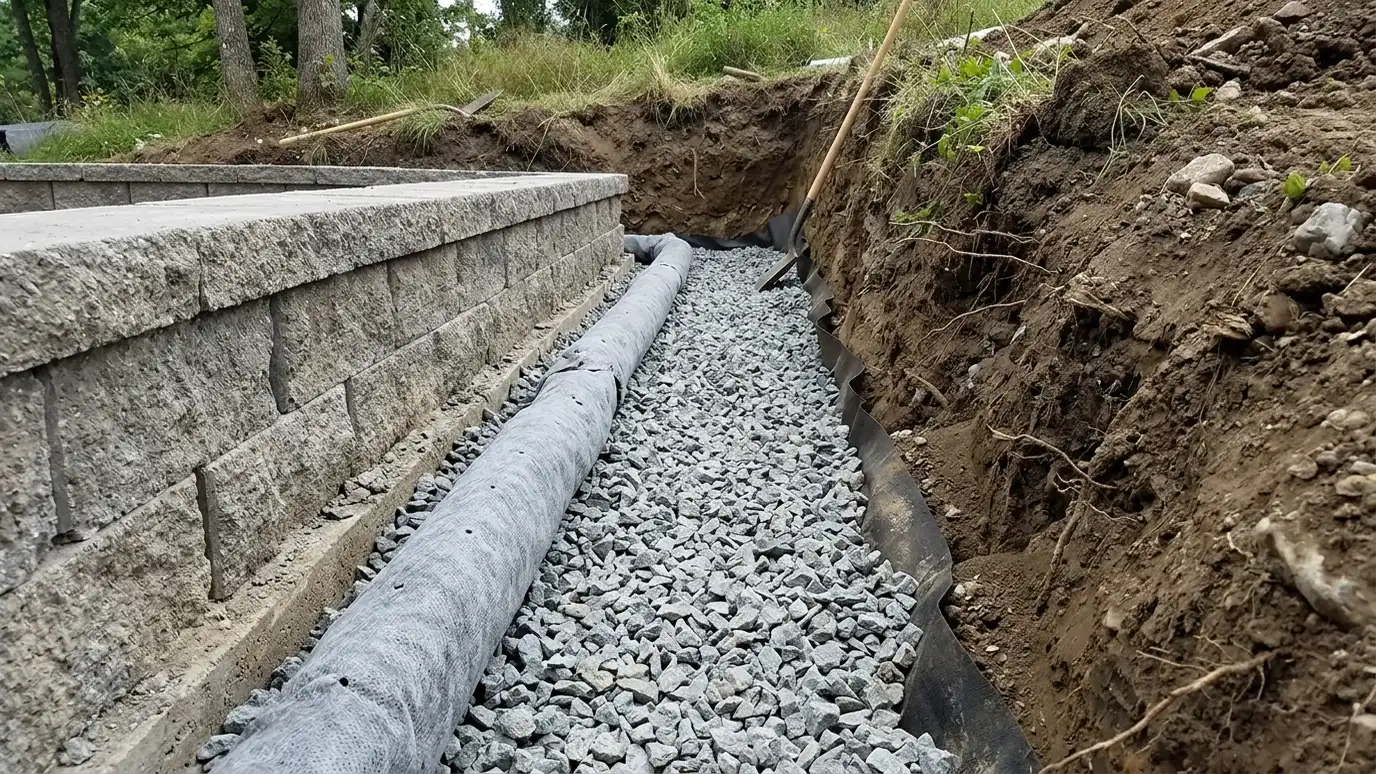 Retaining Wall Drainage SystemsPerforated drain pipe, clean gravel, filter fabric and clear outlets that keep water pressure off your wall.Explore
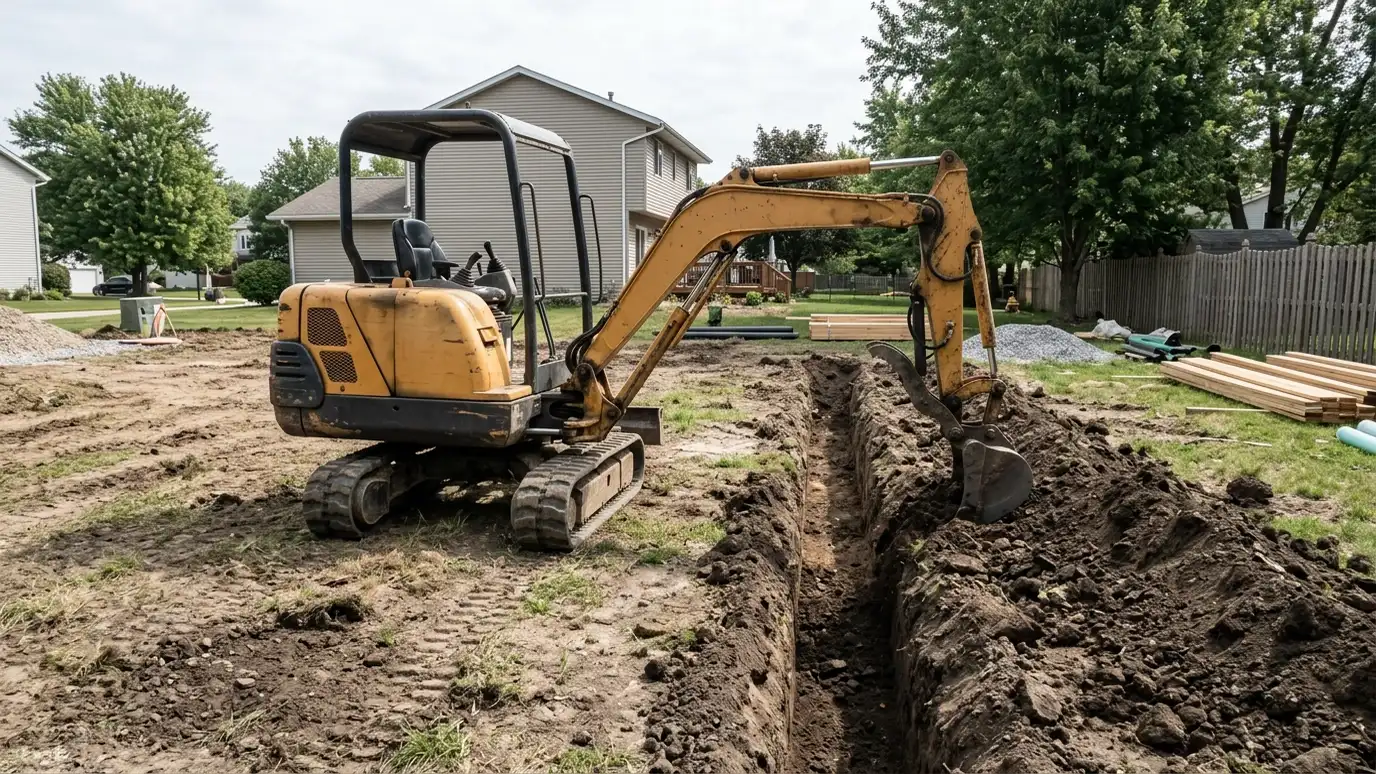 Excavation and Soil RemovalCareful digging, hauling and disposal of soil and debris for wall footings, drains and site changes.Explore
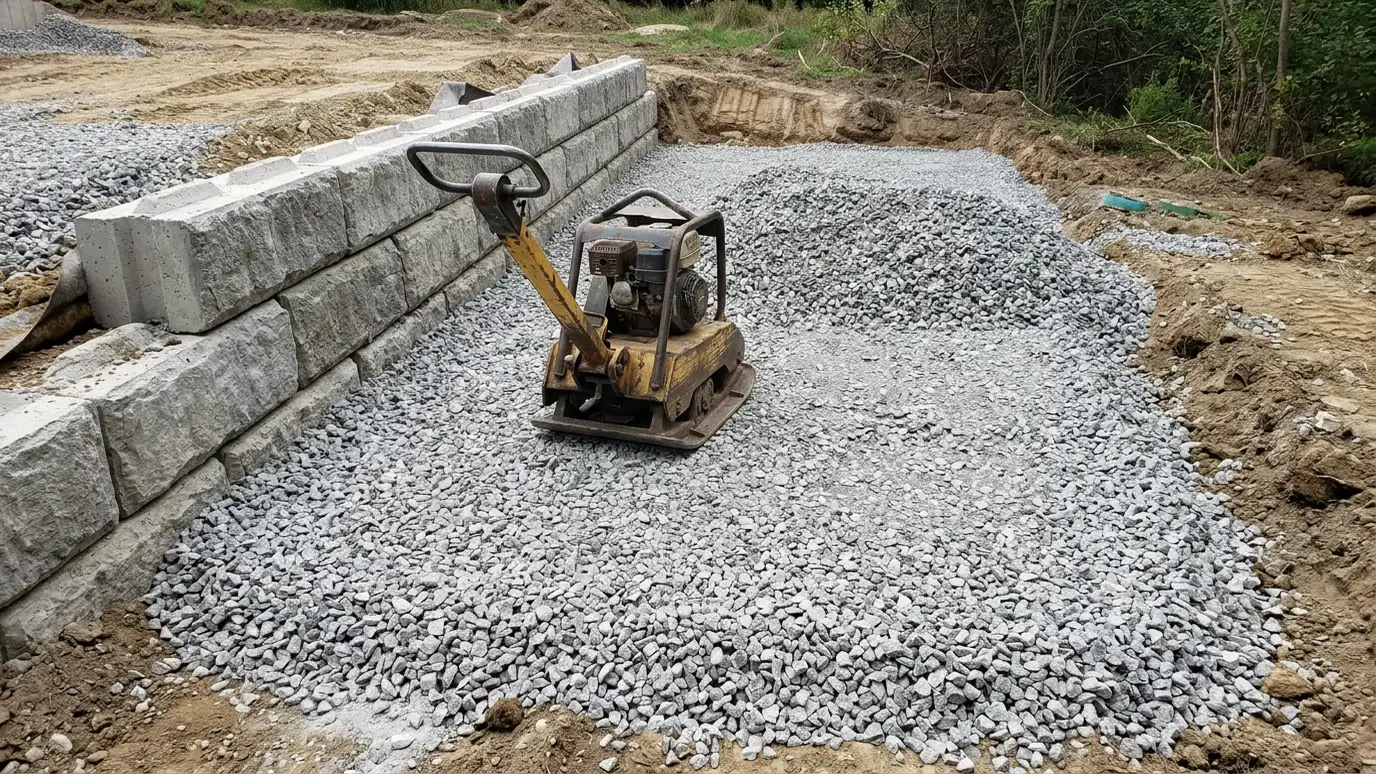 Backfill and CompactionPlacing clean drainage stone and engineered soil in thin lifts and compacting each lift so walls and patios…Explore
Size a wall, plan tiers or ballpark a budget.
 Retaining Wall Size and Material CalculatorEnter wall length and height to see face area, block count, base stone, drain pipe and geogrid layers to plan for.Try it
 Retaining Wall Tier and Slope PlannerEnter slope height and distance to see how many tiers may suit the grade, how far apart to space them and how wide the shelves can be.Try it
 Retaining Wall Budget PlannerPick a wall type, set the size and add extras to see a ballpark planning range. Placeholder values only.Try it
Most do. Short, dry-stacked walls may drain through the face, and we tell you what yours needs.
Yes. Fabric, clean stone and cleanouts reduce the risk.
To a safe outlet that does not harm neighbors or foundations.
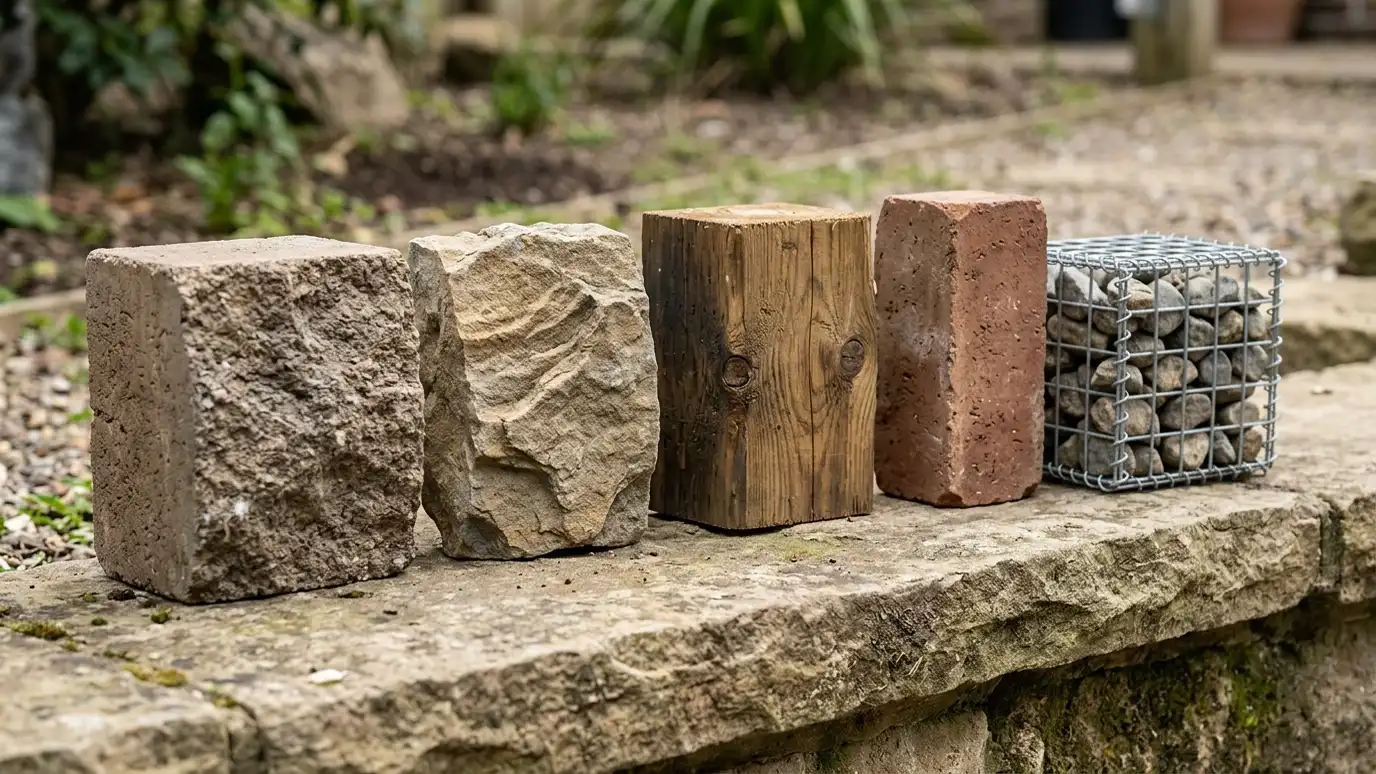 Comparison guideWall Materials ComparedSegmental block, poured concrete, natural stone, boulders, timber, brick and gabions compared by look, strength, drainage and care.Learn more
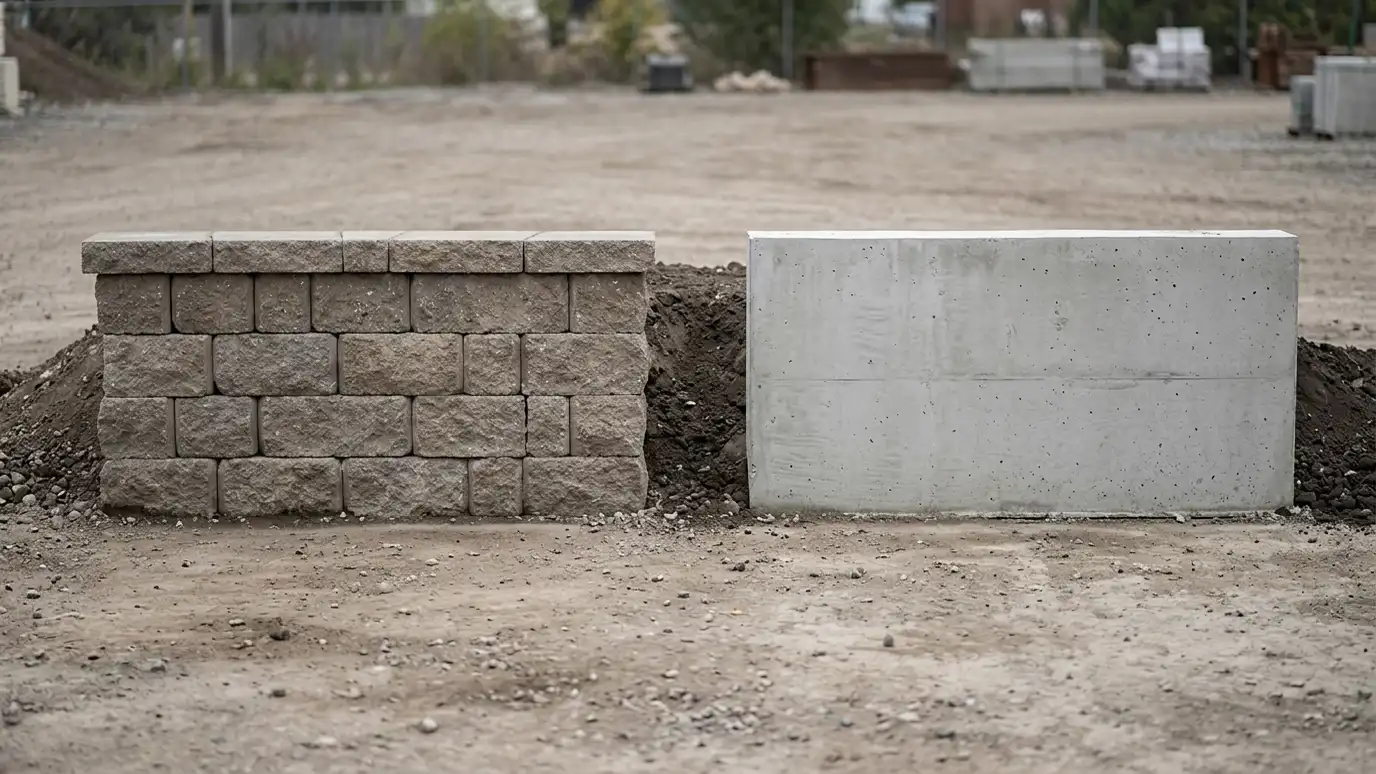 Comparison guideBlock vs Poured ConcreteInterlocking block walls and cast-in-place concrete walls compared by height, speed, flexibility, finish and repair.Learn more
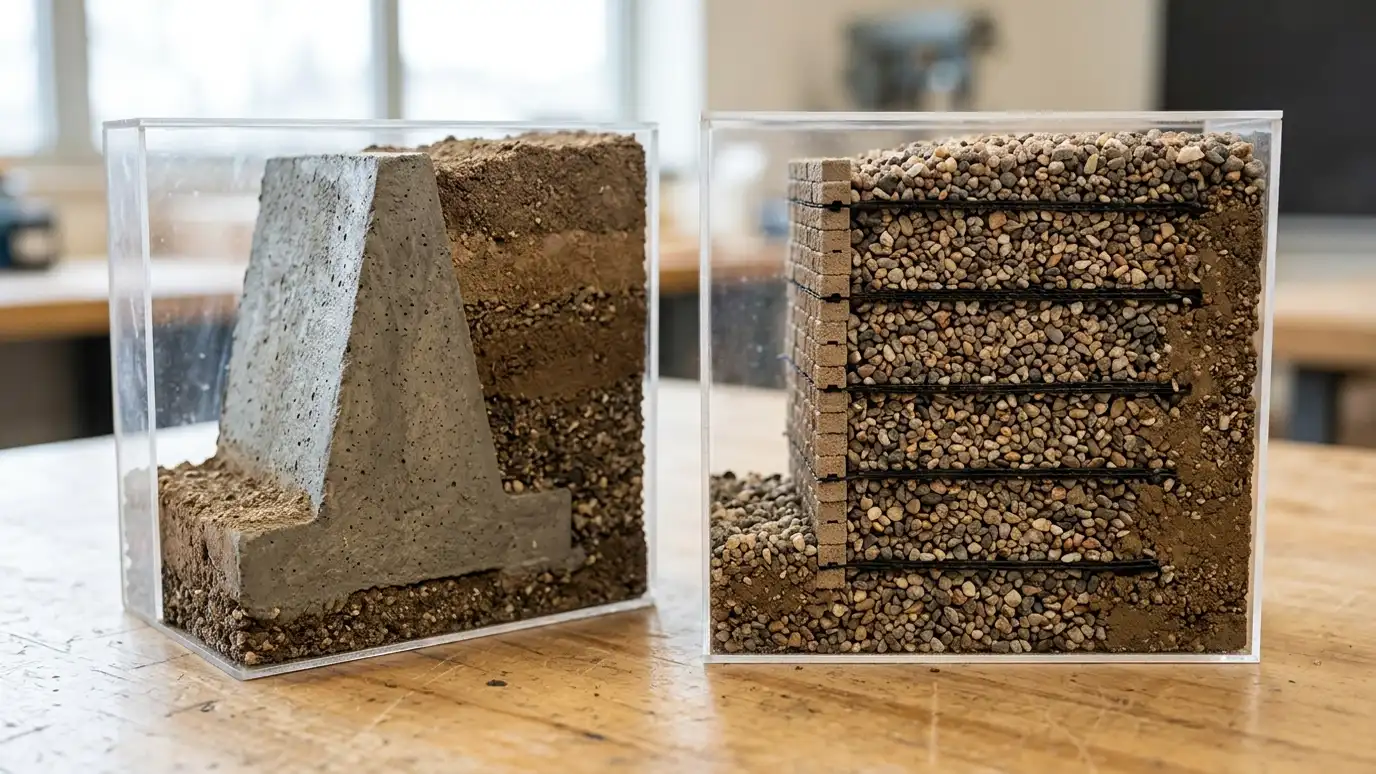 Comparison guideGravity vs Reinforced WallsWalls that resist soil with their own weight compared with walls that tie into reinforced soil, by height…Learn more
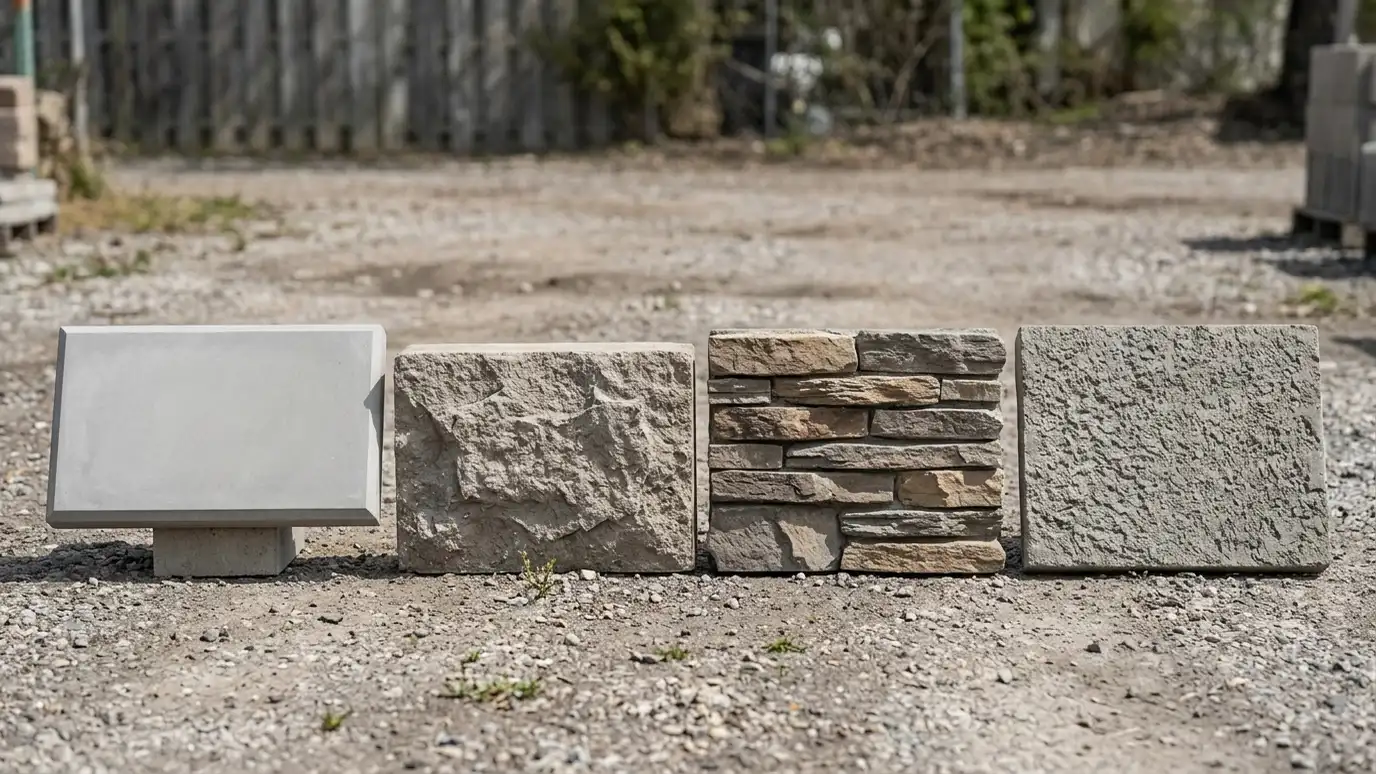 Comparison guideCaps and Finishes ComparedCap stones, manufactured caps, concrete tops, stucco and veneer compared by look, comfort, durability and care.Learn more
Call us and describe your slope or your wall. We will look at your site, talk through options and give you a clear written estimate.
