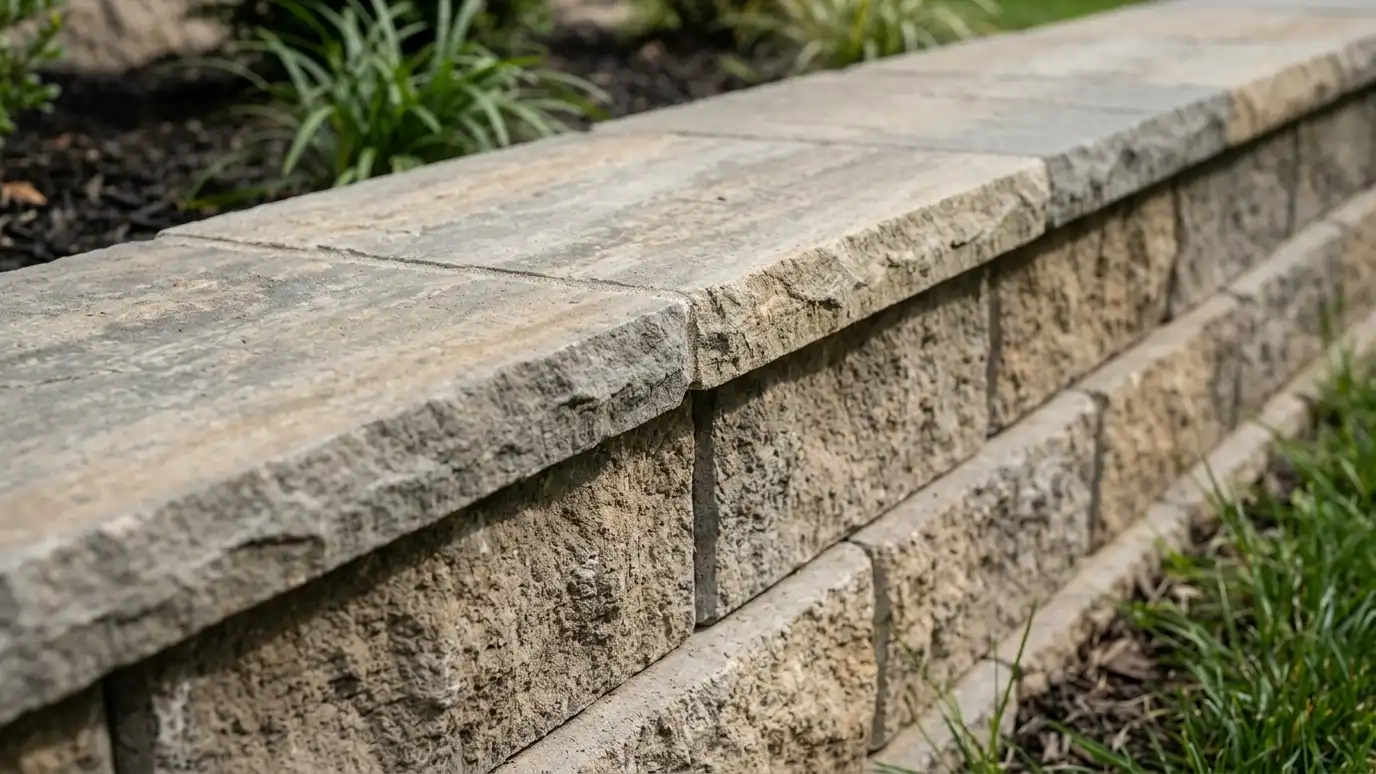
Finishing caps in stone, concrete or block that shed water, protect the top course and give a wall a clean, comfortable edge.
The cap is the crown of a retaining wall. It protects the top course from water, ties the last layer together and gives the wall its finished edge. A good cap can also double as a seat or a place to set a drink. Homeowners in Nashville choose caps in stone, concrete, brick or manufactured block to complete the look of the wall and help it last. A poorly fitted cap, by contrast, can let water in, shift under foot or look unfinished from the street.
We start with a Free Estimate and talk about how the wall will be used, from a simple edge to a wide seating surface. We choose a cap material and size that suit the wall and the style of your home, set it on the top course with structural adhesive where the system calls for it, keep joints tight and consistent and shape corners and ends so they look intentional. For curved walls we select caps that follow the radius, and for stepped walls we plan transitions so each section feels deliberate. Small details separate a good cap from a great one. We check that the overhang is even, that the cap sits fully on the course below and that joints line up with the pattern of the wall. Where a wall meets a column, a step or a house corner, we cut and fit caps so lines stay clean. If your wall will be used for seating in summer sun, we talk about colors and finishes that stay comfortable to the touch.
Caps keep water from soaking into the wall from above.
Overhangs and smooth surfaces make seating practical.
Stone, concrete and manufactured caps can echo your house.
Adhesive and careful layout keep caps from shifting.
Drag the handle to compare.
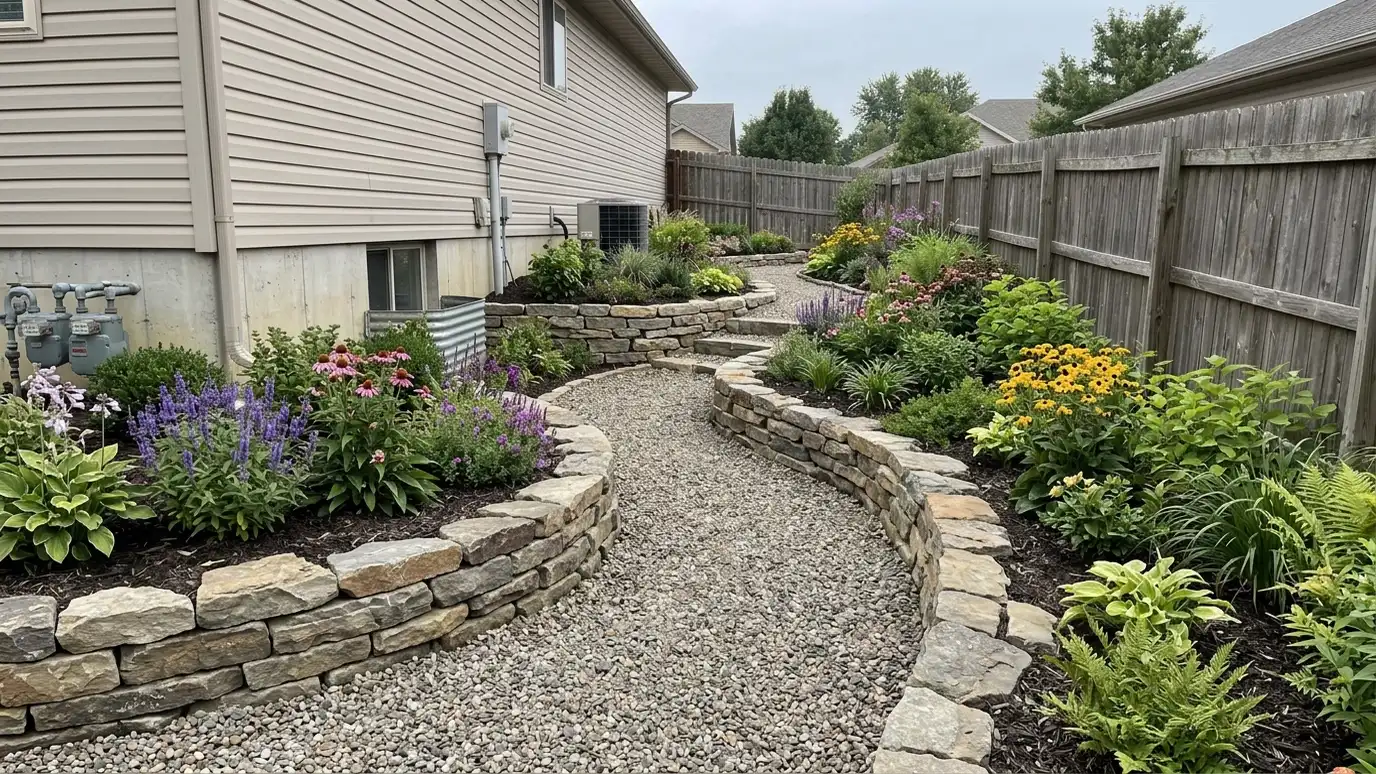
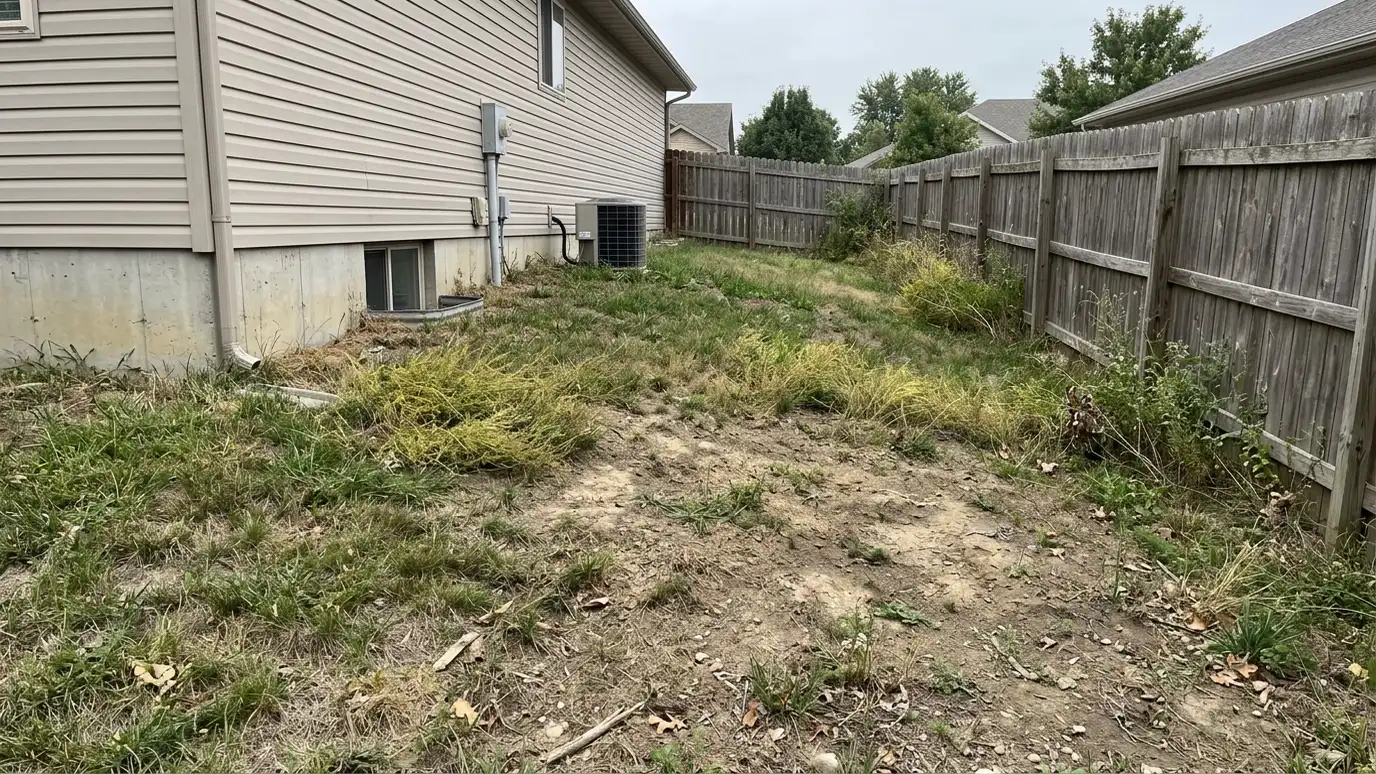 BeforeAfter
Edge and seating goals set.
Material and size chosen.
Joints and corners planned.
Adhesive and alignment.
Detailed neatly.
Surfaces finished.
Every topic has its own page with what to expect and how we approach it.
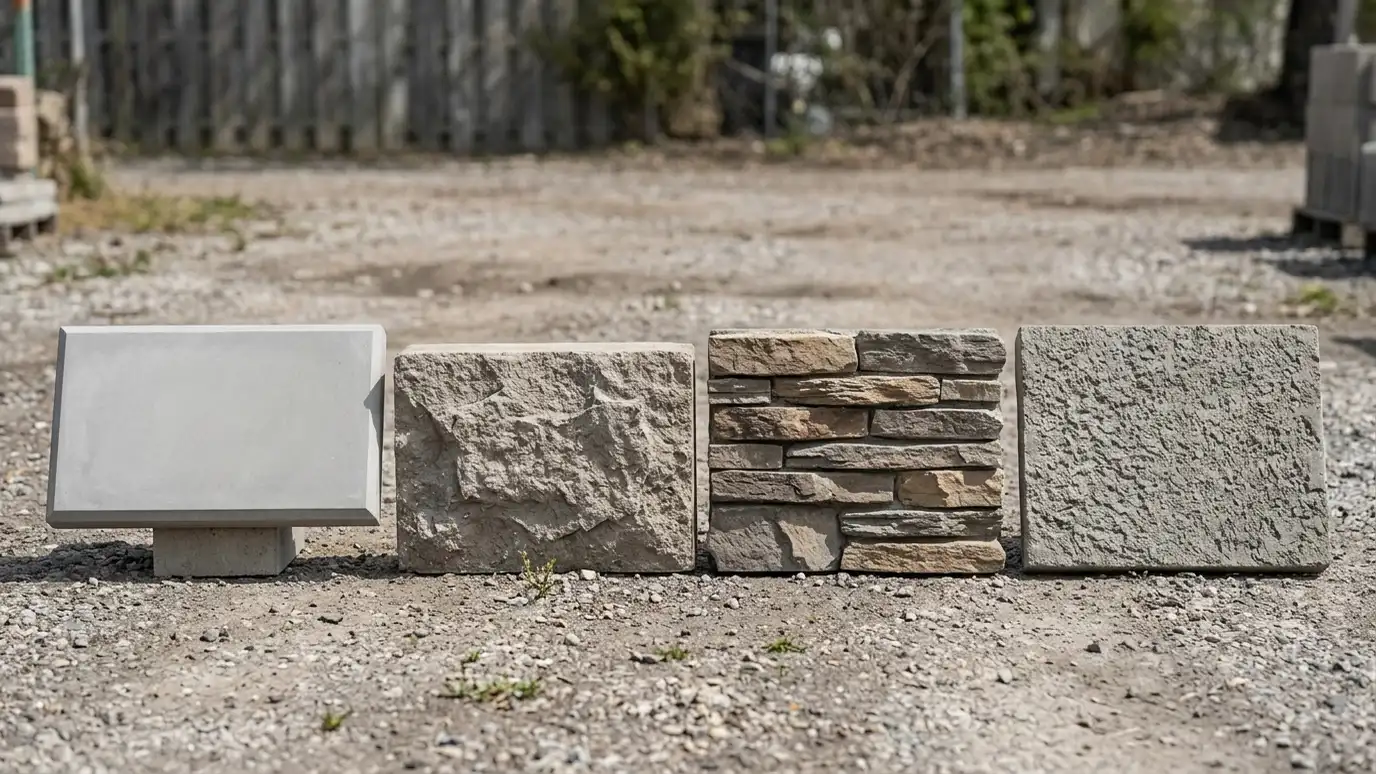 Comparison guideCaps and Finishes ComparedCap stones, manufactured caps, concrete tops, stucco and veneer compared by look, comfort, durability and care.Learn more
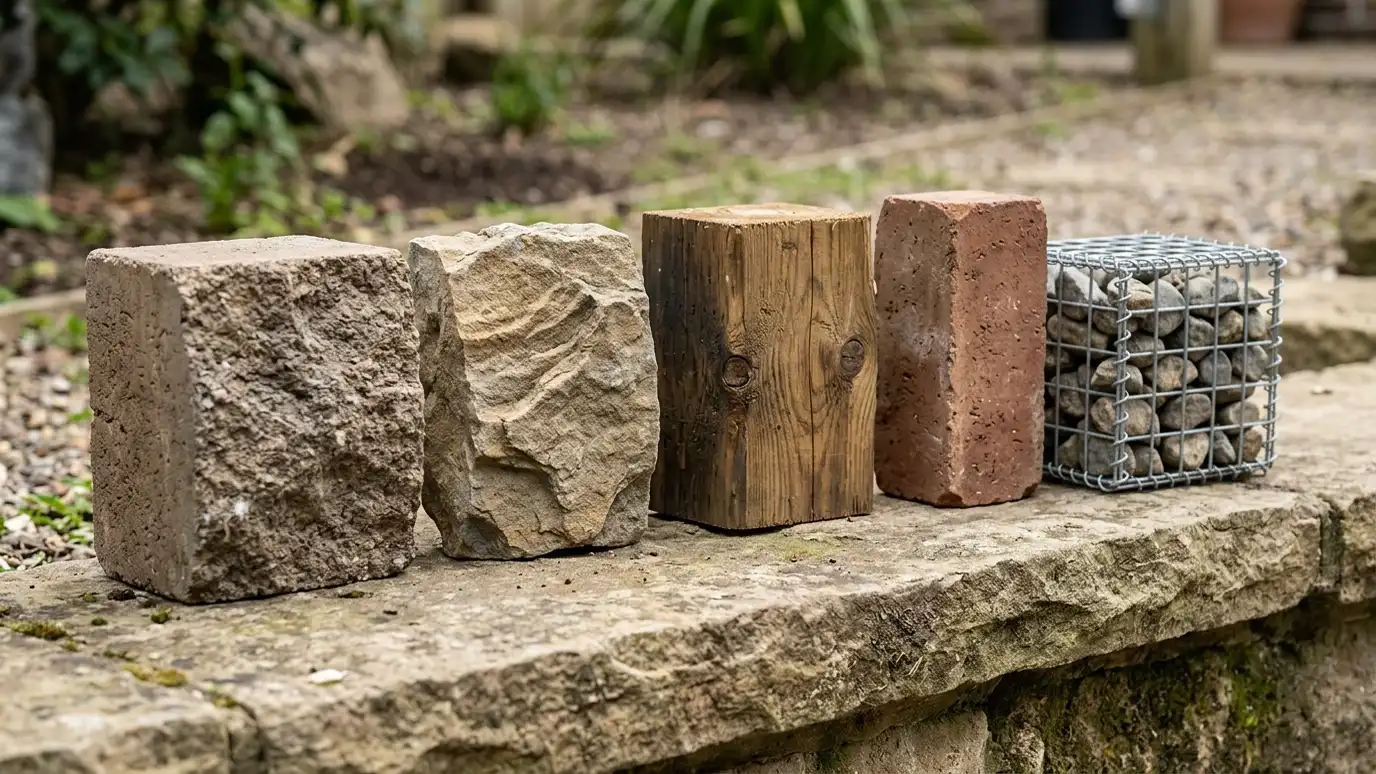 Comparison guideWall Materials ComparedSegmental block, poured concrete, natural stone, boulders, timber, brick and gabions compared by look, strength, drainage and care.Learn more
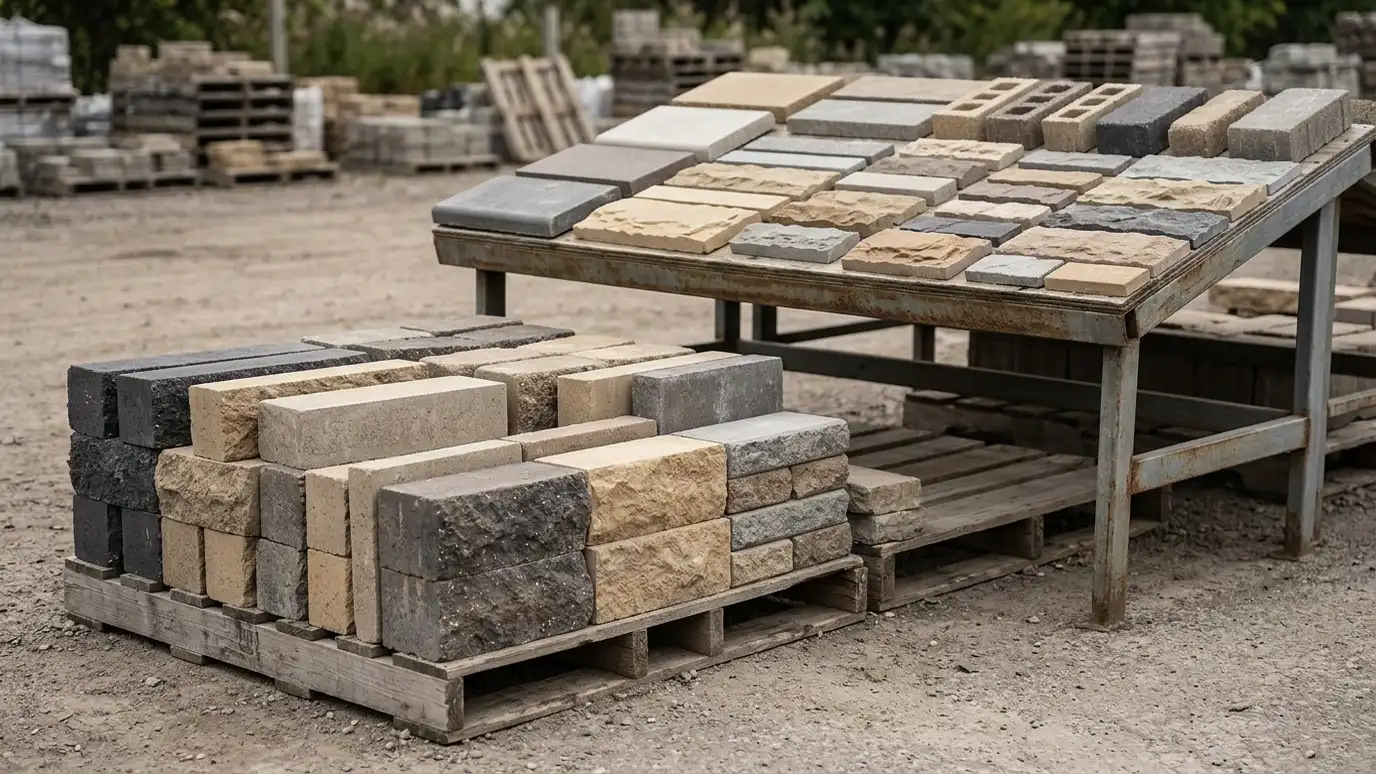 ResourceEldorado StoneA maker of manufactured stone veneer used on walls, fireplaces and outdoor living features.Learn more
Answer a few questions about height, style, access and care to see which wall materials usually fit and what to look at next.
You tell us what is wrong or what you want to build, and we set a visit that fits your day.
We walk the site, measure heights and lengths, look at soil and water paths and talk through what you want the space to do.
You receive a plain written scope with materials, drainage, engineering needs and the schedule before work begins.
We locate utilities, stake the wall line, excavate and build a compacted base that will carry the wall.
We build the wall course by course, add reinforcement as designed, install drains and place and compact clean backfill.
We add caps, steps and planting, clean up, restore the site and walk through the finished wall with you.
Many do, especially where people sit or walk. We follow the system instructions.
Wide enough for the use, from a modest edge to a seating surface.
Yes. We can plan low-voltage fixtures during construction.
Often, if they crack or loosen. We can advise on repairs.
It helps a great deal, along with drainage and sound construction.
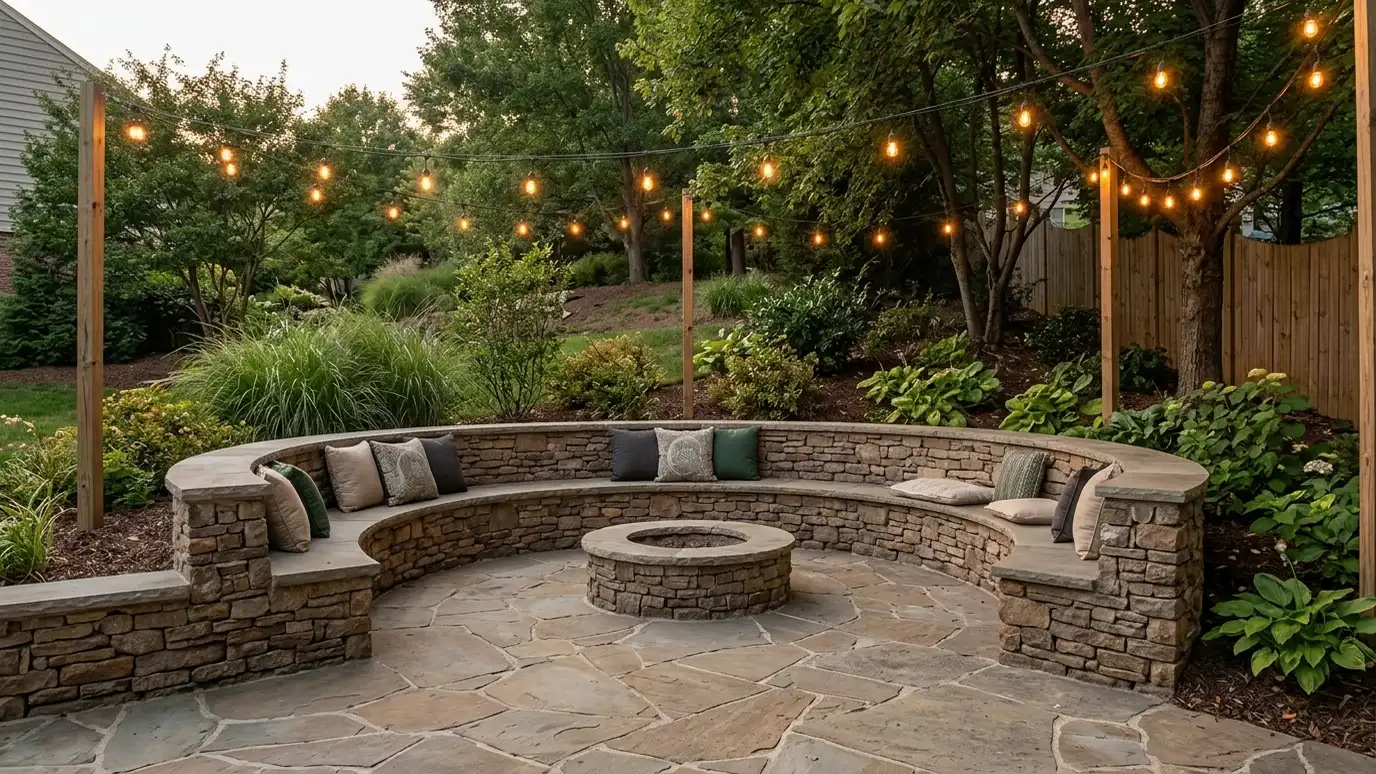 Seat Walls and Sitting WallsComfortable-height walls with wide caps that double as seating around patios, fire pits, gardens and entries.Explore
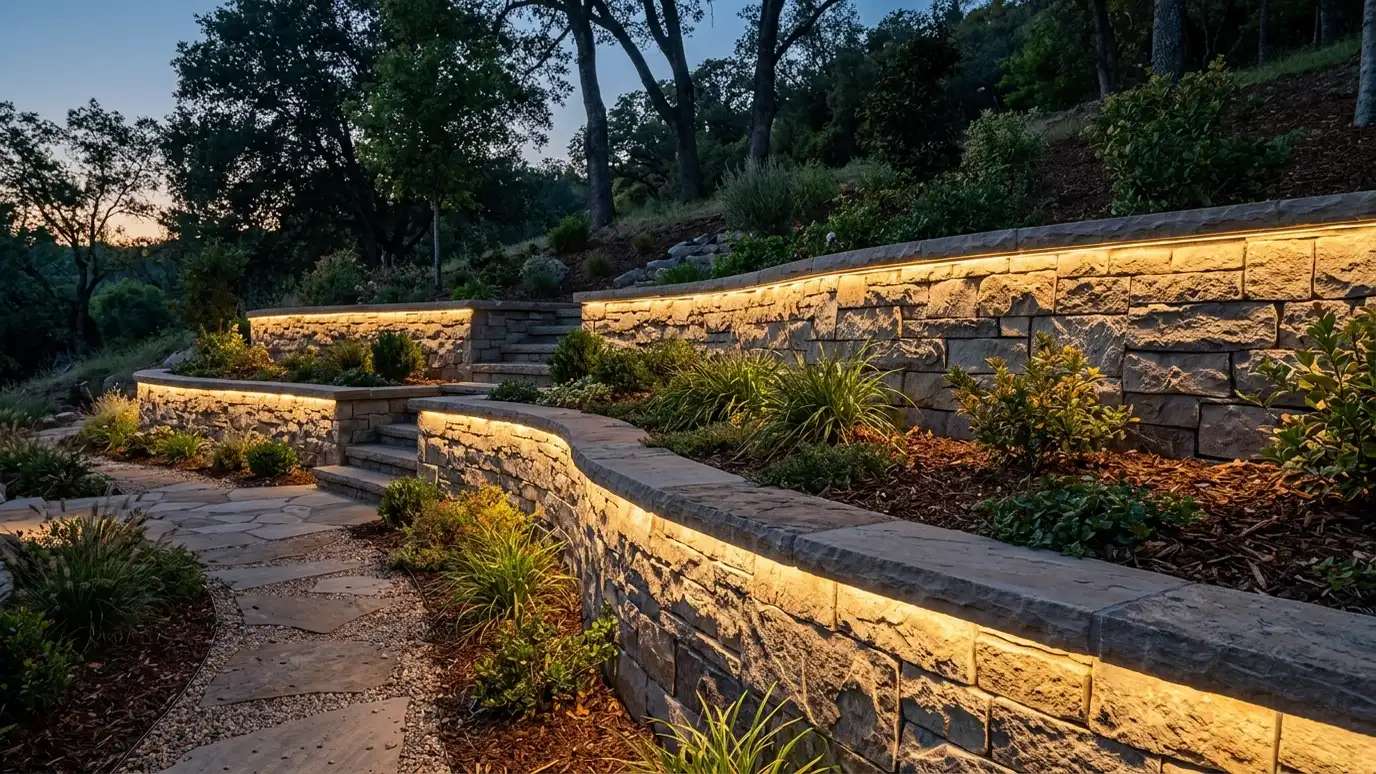 Wall LightingLow-voltage lighting built into caps, faces and steps so walls glow safely at night and add evening ambiance.Explore
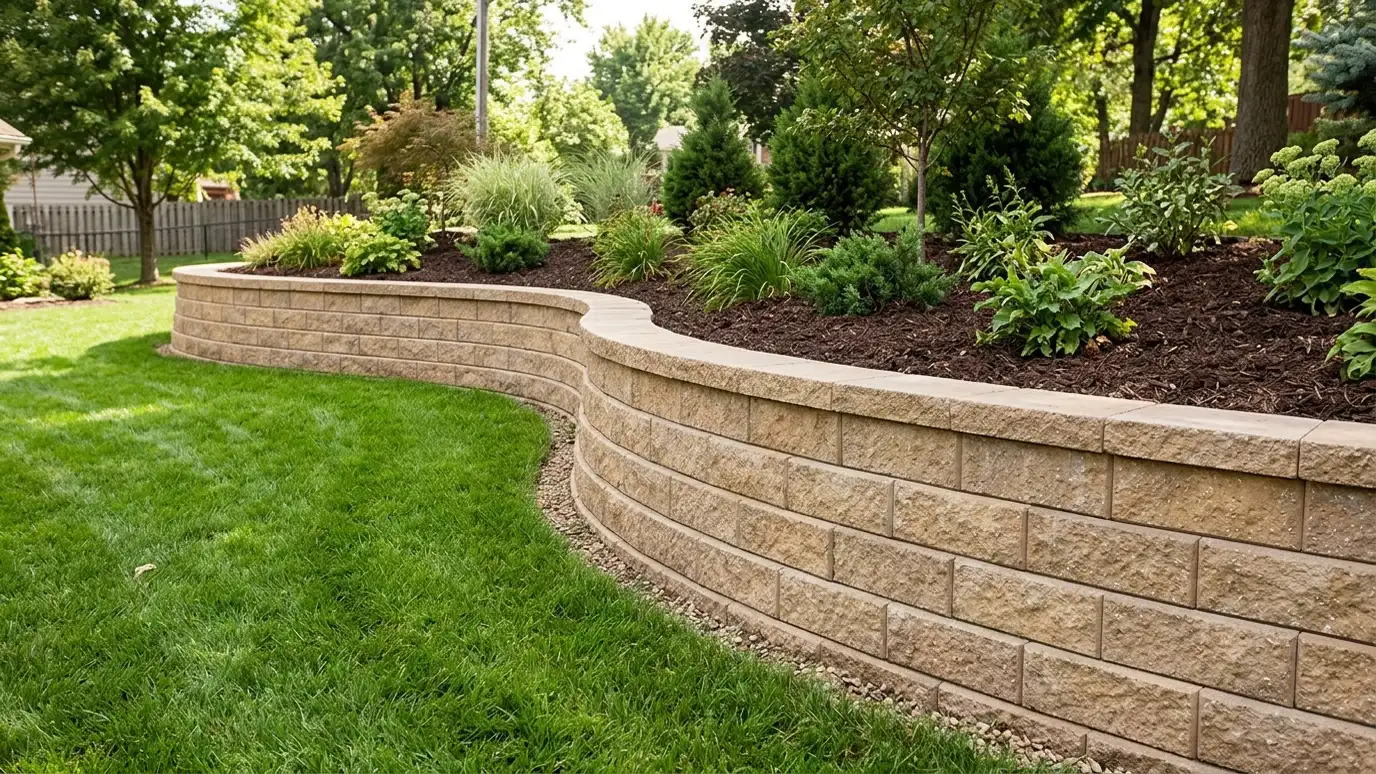 Segmental Block Retaining WallsInterlocking concrete block walls built on a compacted base with drainage and, when needed, geogrid reinforcement.Explore
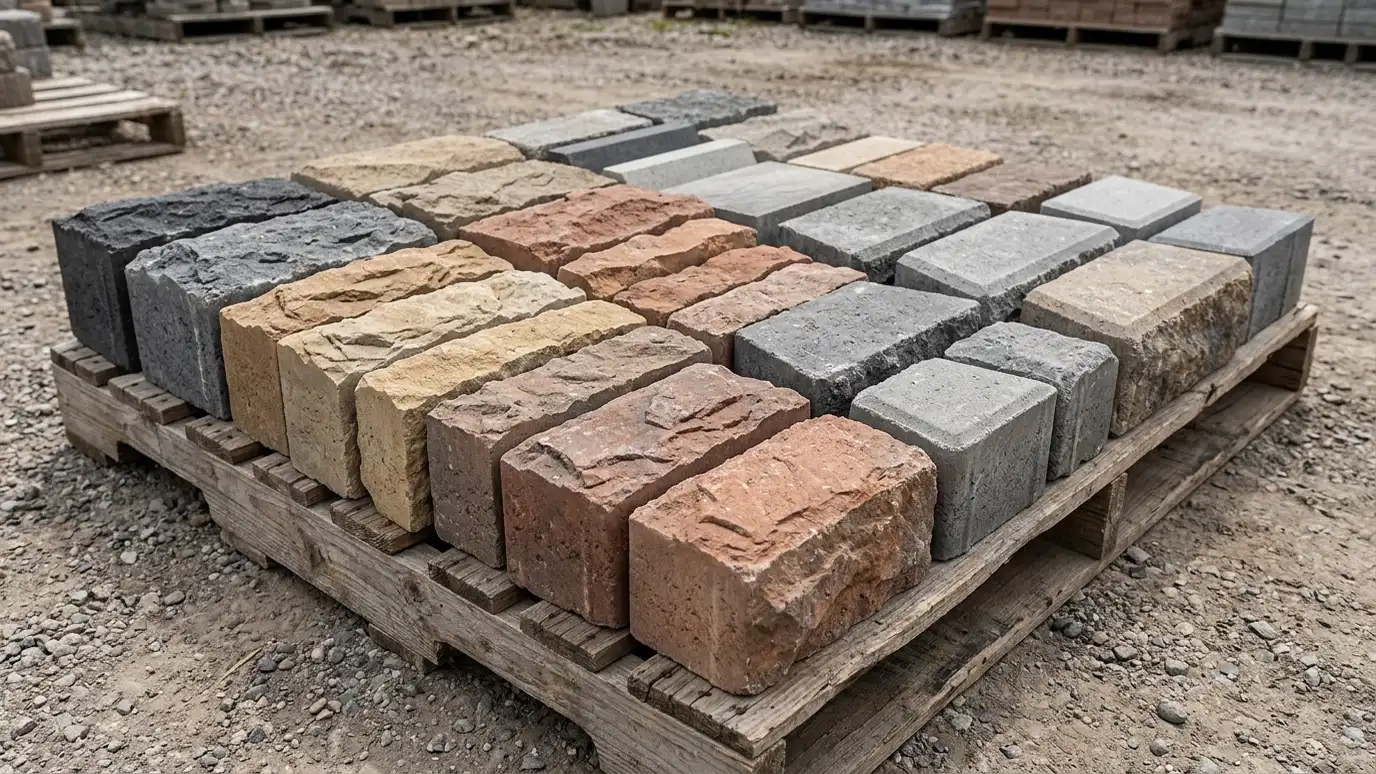 Retaining Wall Colors and TexturesHelp choosing block, stone and finish colors and textures that suit your home and landscape.Explore
Tell us about your project and we will call you back to set up a visit.
Or call (615) 357-7797 to talk now.