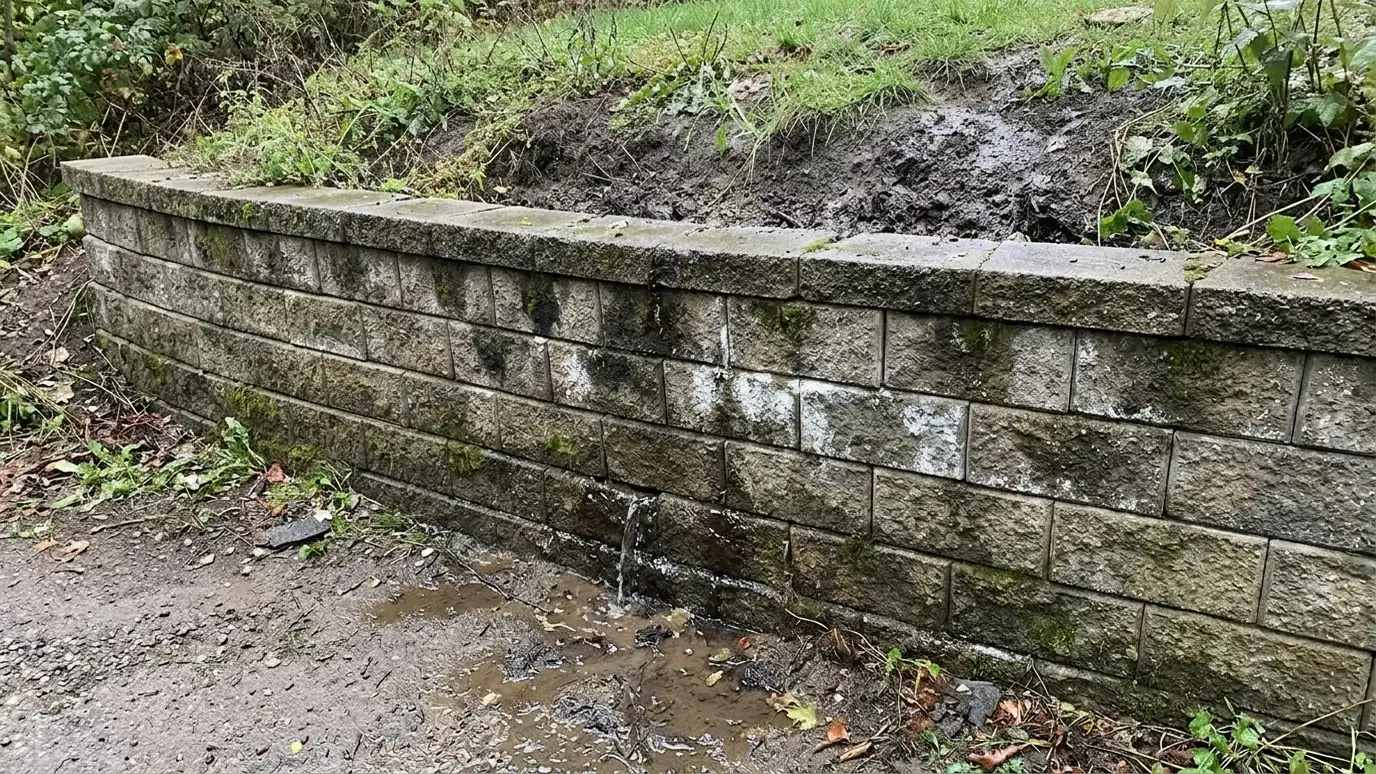
Why retaining walls lean, crack, bulge or collapse, from poor drainage and weak bases to roots, overloading and age.
Most retaining wall failures trace back to a short list of causes. Poor drainage lets water build pressure behind the wall. A weak or uneven base lets the wall settle and rotate. Missing reinforcement leaves taller walls unable to resist soil. Overloading from added fill, a new driveway or a building next to the wall adds forces the design did not expect. Tree roots, erosion at the toe and age can also play roles.
Warning signs usually show before a collapse: leaning, bulging, new cracks, stair-step cracking, mud at weep holes, standing water and soil falling out. Catching them early gives more repair options. In Nashville, heavy rain is a frequent trigger. We explain what we look for during an inspection and help you decide whether to monitor, repair or replace, and we recommend an engineer when a wall is large or risky.
Water pressure is the leading cause.
Settling and rotation start at the bottom.
Taller walls often need geogrid or structure.
Added fill, vehicles and buildings add force.
Growing roots can push or lift walls.
Materials weather and timber rots.
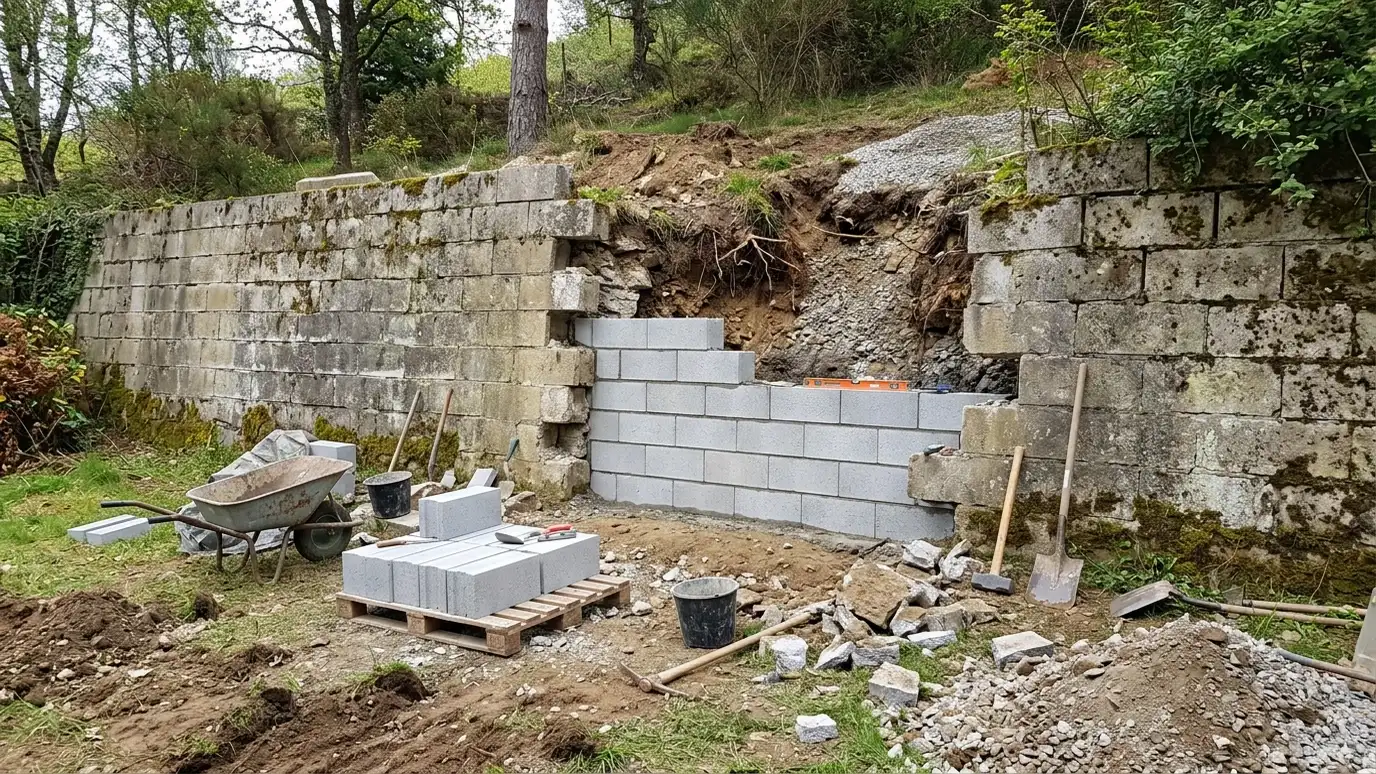 Retaining Wall RepairHonest inspection and repair of leaning, cracked, bulging or draining walls, with a clear view of what can…Explore
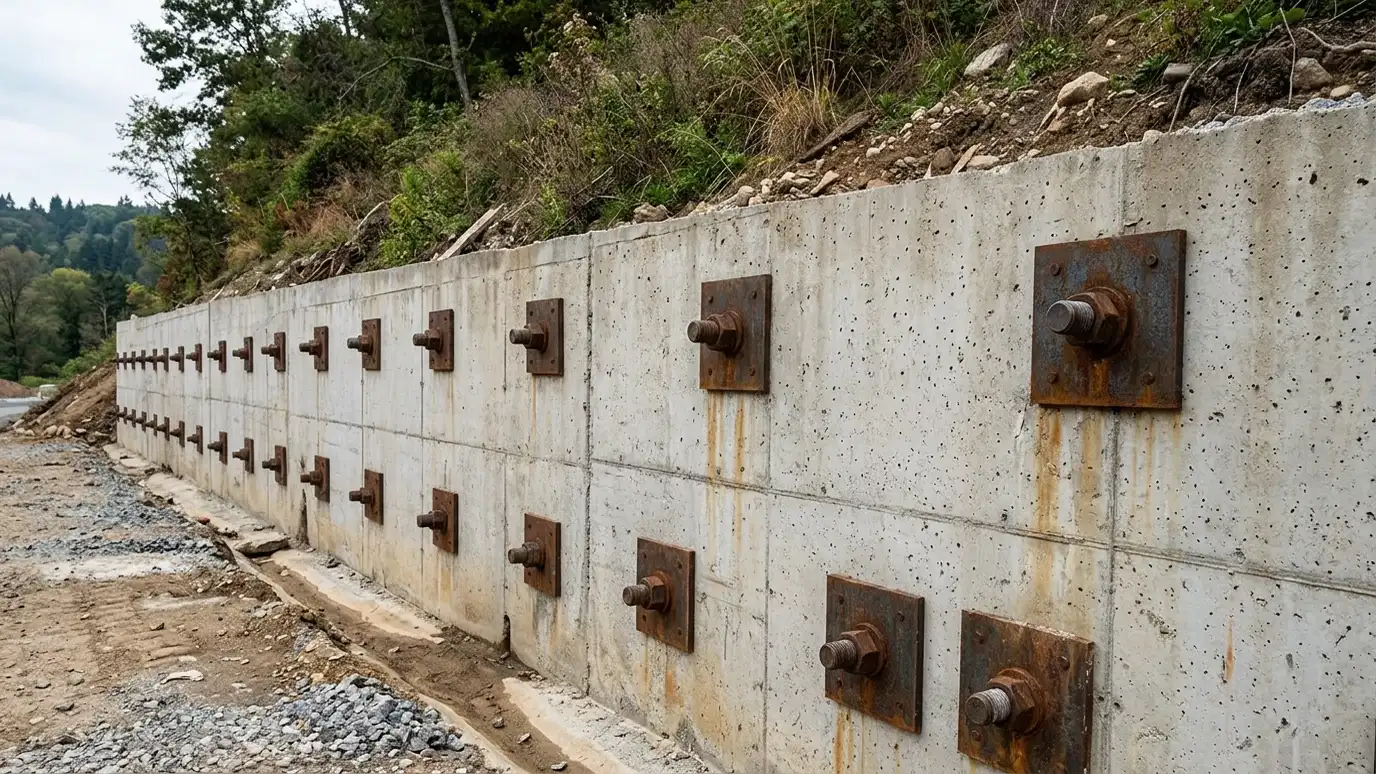 Tieback and Anchor StabilizationEngineered anchors and tiebacks that secure leaning walls and slopes back into stable ground.Explore
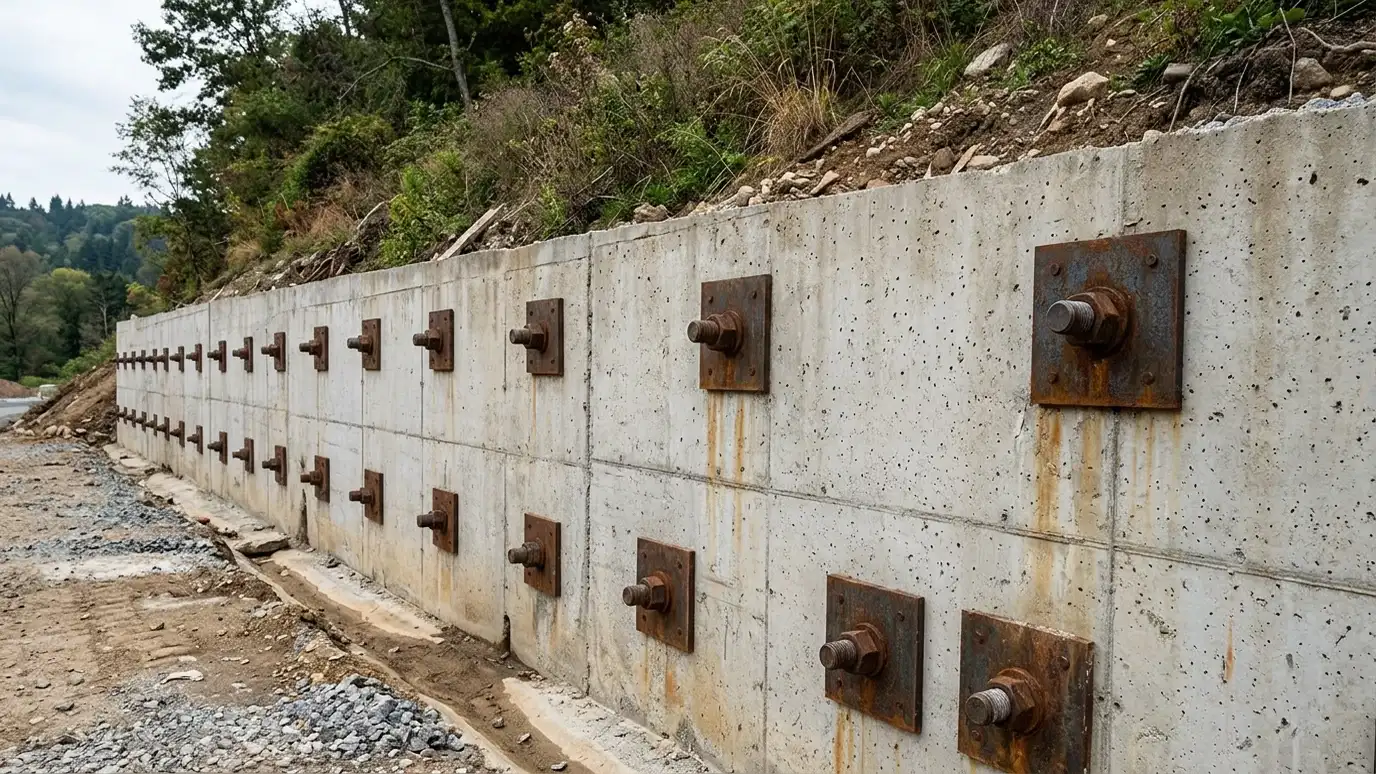 Helical Pier Wall SupportSteel helical piers and anchors that support settling walls, footings and structures on weak soil.Explore
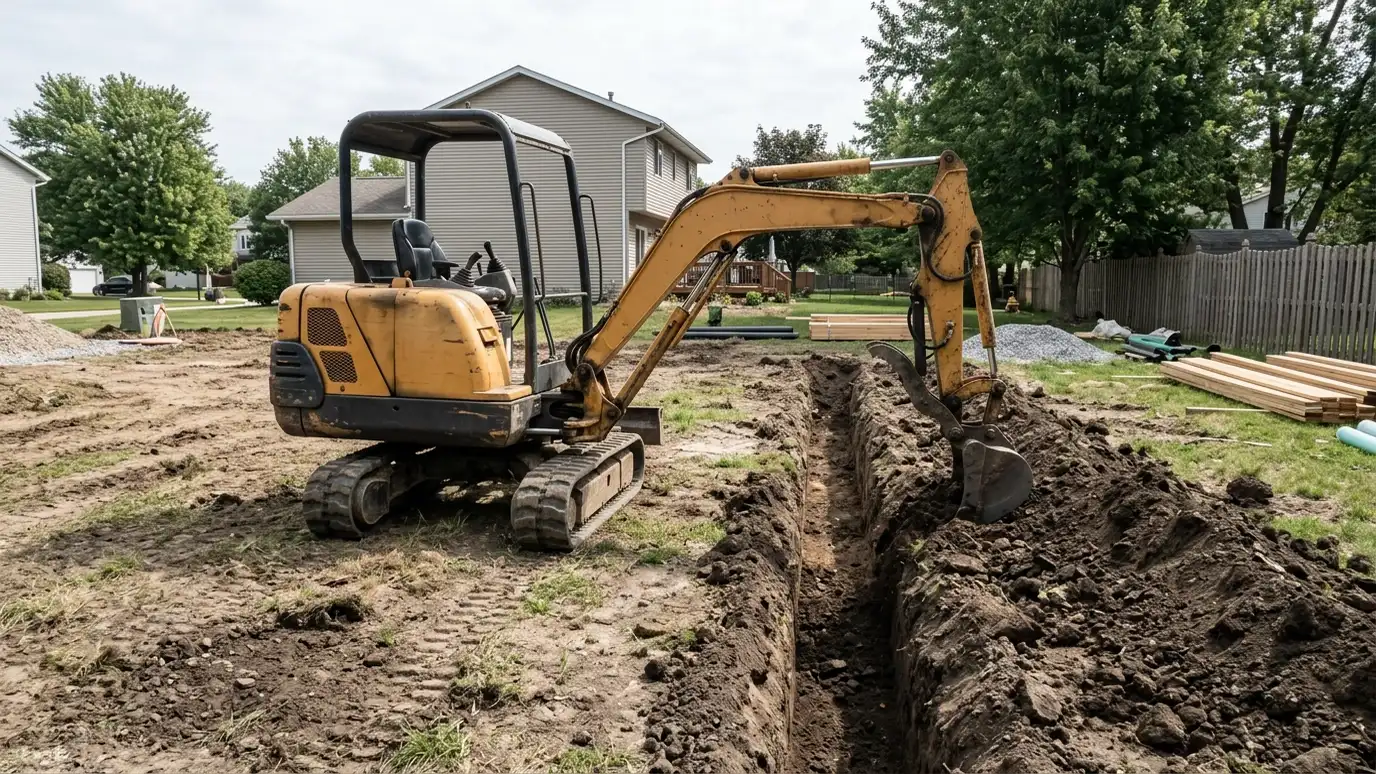 Excavation and Soil RemovalCareful digging, hauling and disposal of soil and debris for wall footings, drains and site changes.Explore
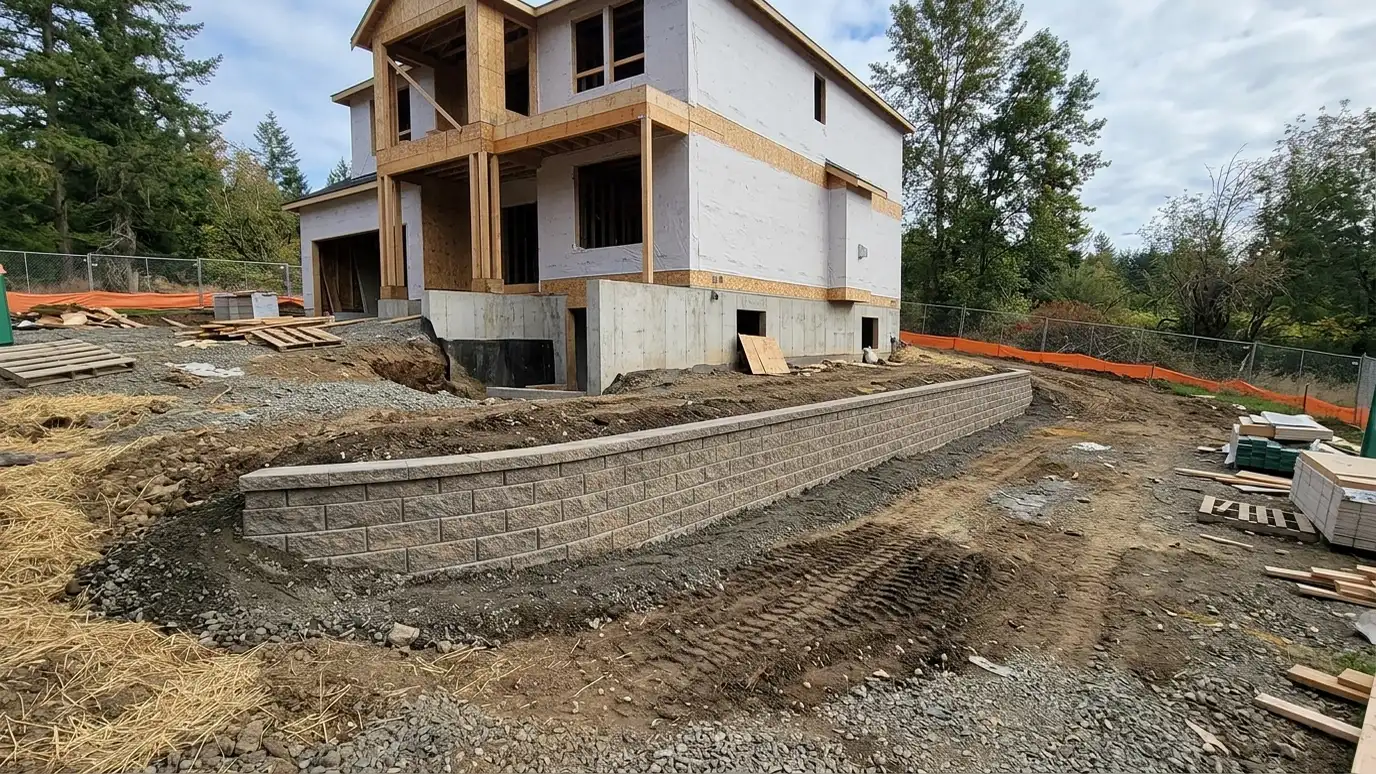 Builder and Landscaper PartnershipsWall construction for builders, landscape designers and contractors who need a dependable wall crew for their projects.Explore
Size a wall, plan tiers or ballpark a budget.
 Retaining Wall Size and Material CalculatorEnter wall length and height to see face area, block count, base stone, drain pipe and geogrid layers to plan for.Try it
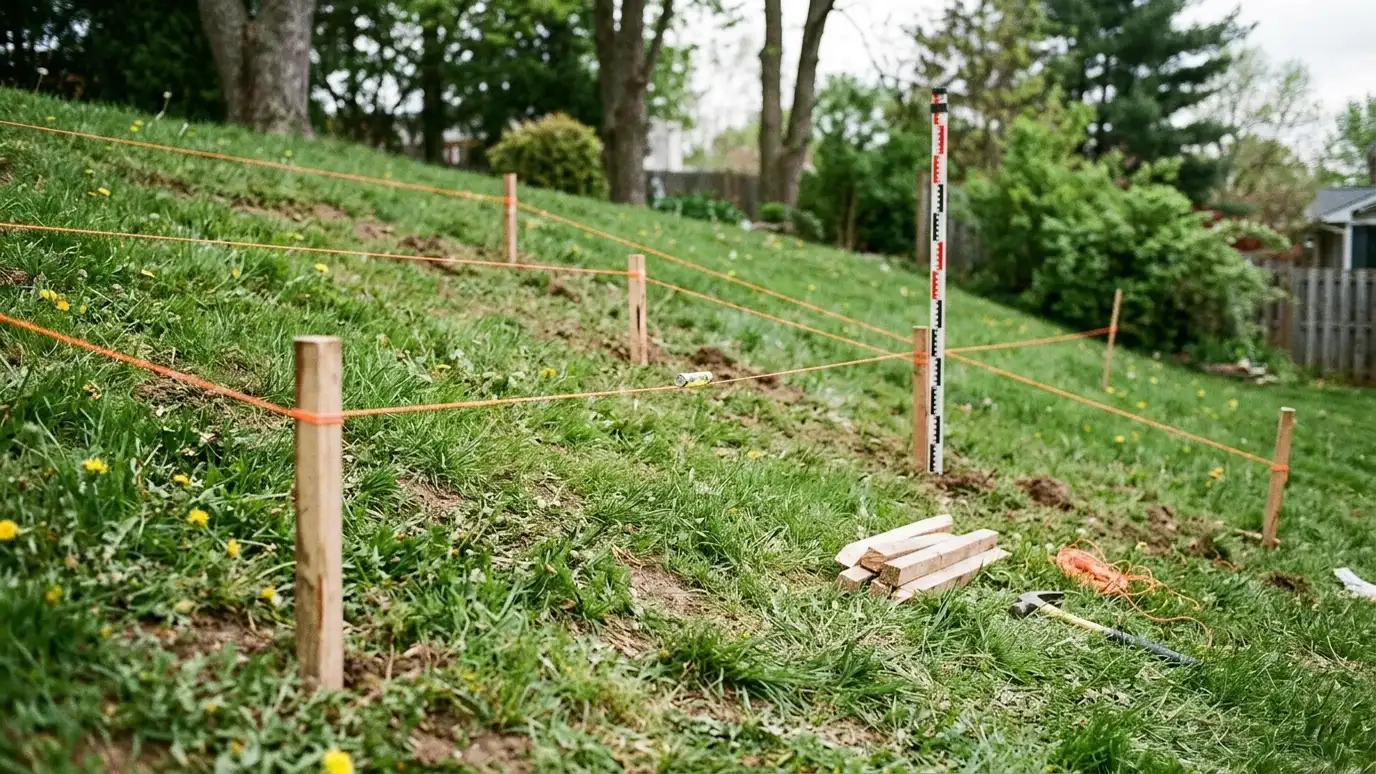 Retaining Wall Tier and Slope PlannerEnter slope height and distance to see how many tiers may suit the grade, how far apart to space them and how wide the shelves can be.Try it
 Retaining Wall Budget PlannerPick a wall type, set the size and add extras to see a ballpark planning range. Placeholder values only.Try it
Look for leaning, bulging, cracks, mud at the base and soil loss. Call for an inspection.
It can, especially after heavy rain, which is why early checks matter.
Sometimes. It depends on the cause and how far it has moved.
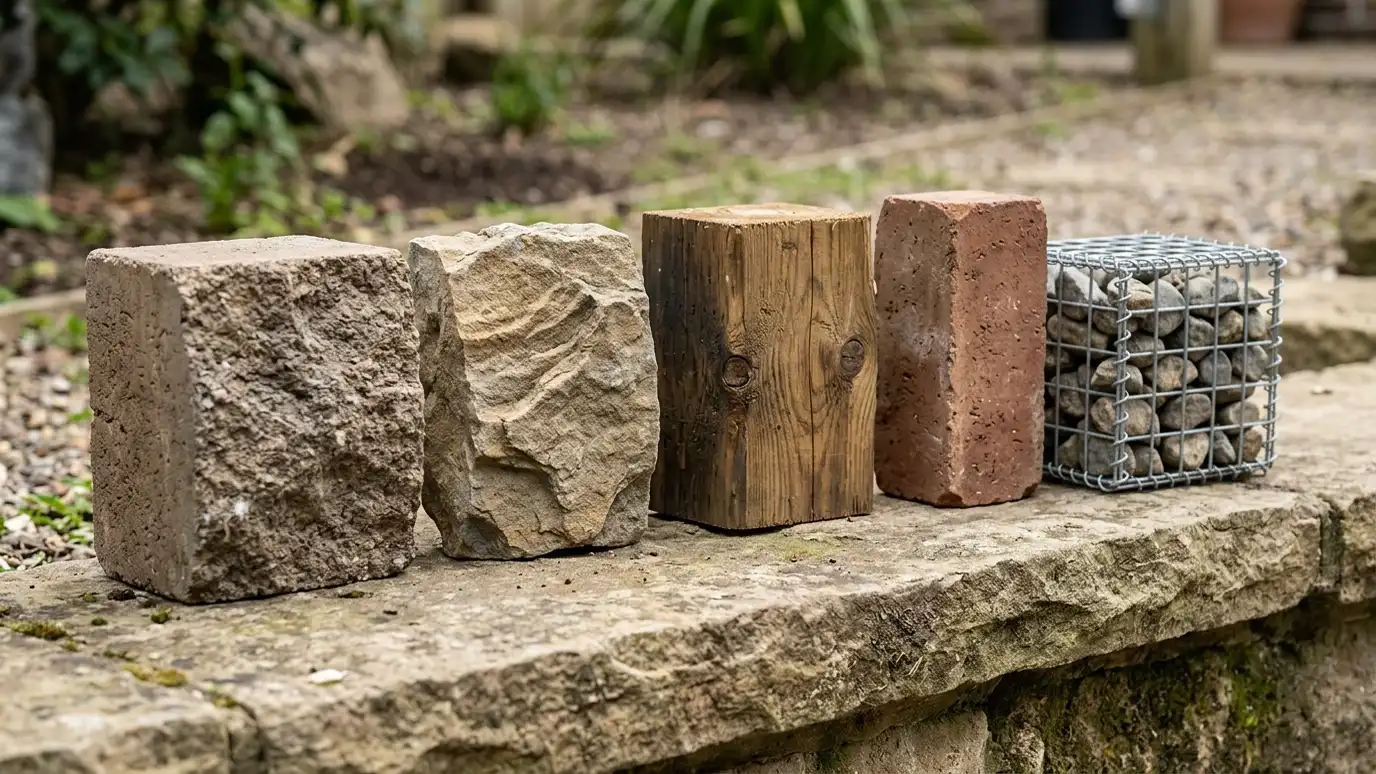 Comparison guideWall Materials ComparedSegmental block, poured concrete, natural stone, boulders, timber, brick and gabions compared by look, strength, drainage and care.Learn more
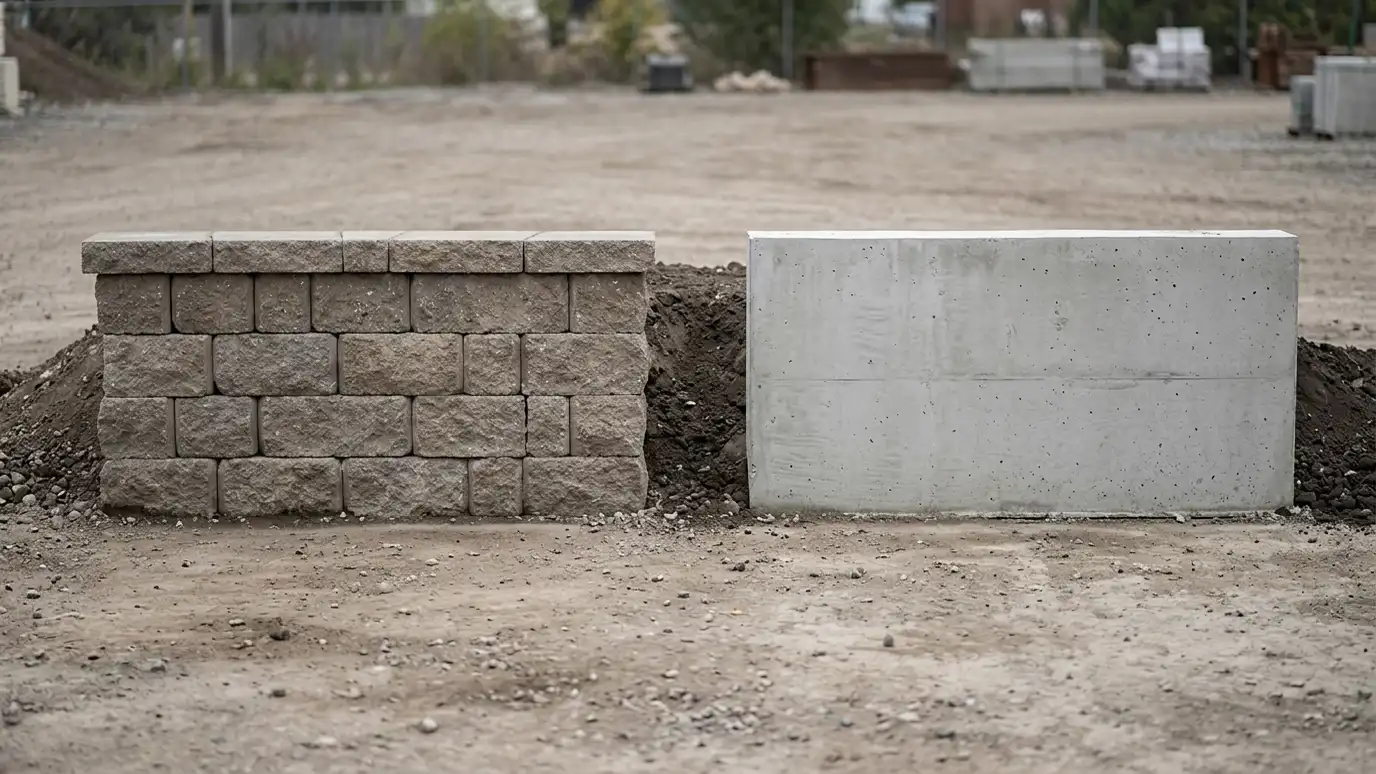 Comparison guideBlock vs Poured ConcreteInterlocking block walls and cast-in-place concrete walls compared by height, speed, flexibility, finish and repair.Learn more
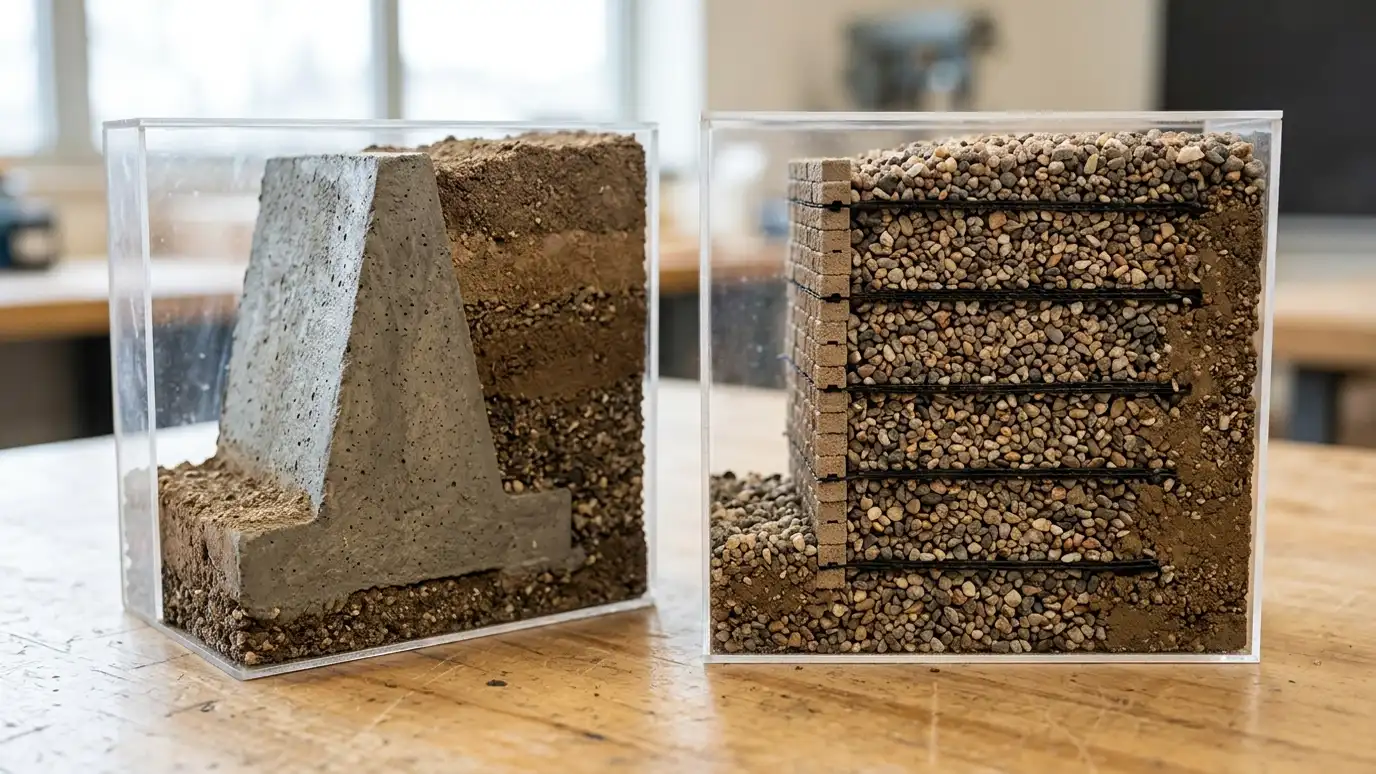 Comparison guideGravity vs Reinforced WallsWalls that resist soil with their own weight compared with walls that tie into reinforced soil, by height…Learn more
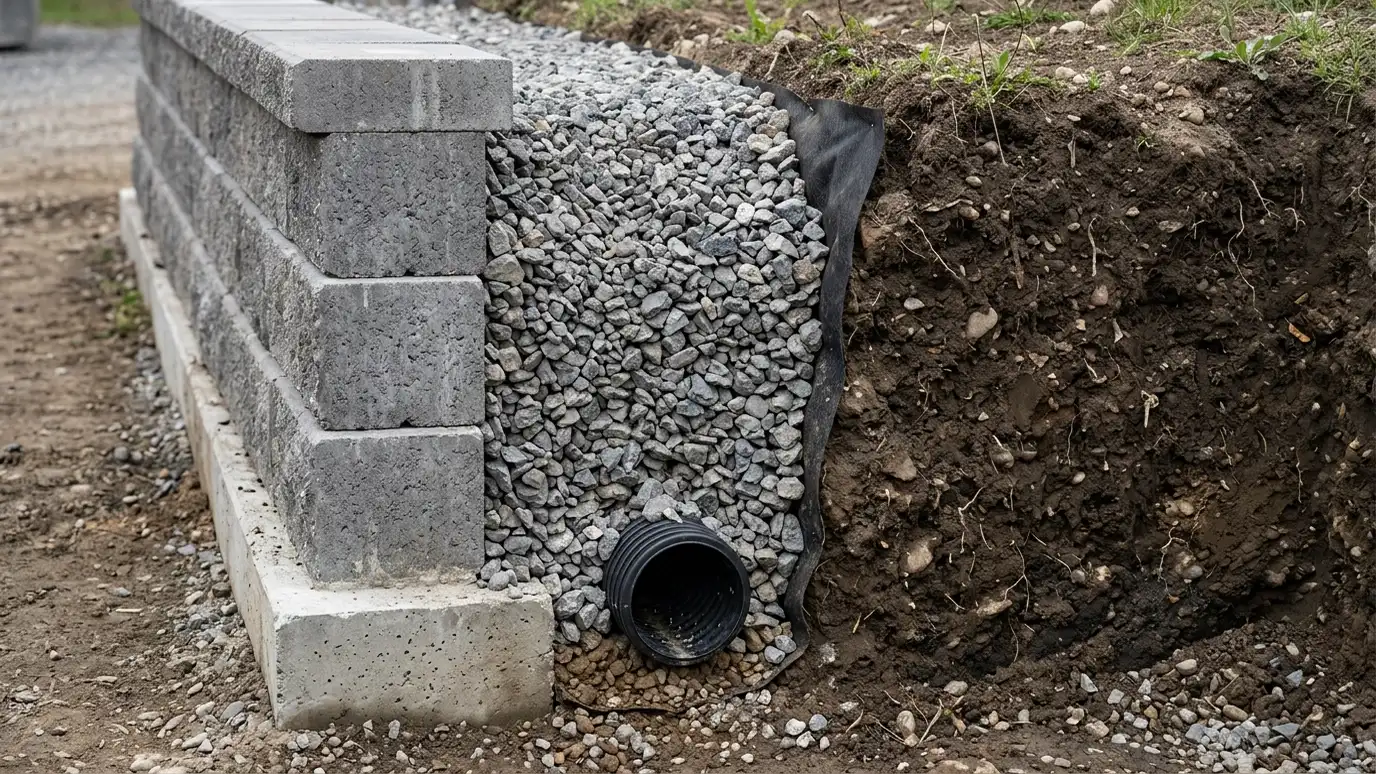 Comparison guideWall Drainage ExplainedHow drain pipe, clean stone, filter fabric and outlets work together to keep water pressure off a retaining…Learn more
Call us and describe your slope or your wall. We will look at your site, talk through options and give you a clear written estimate.
