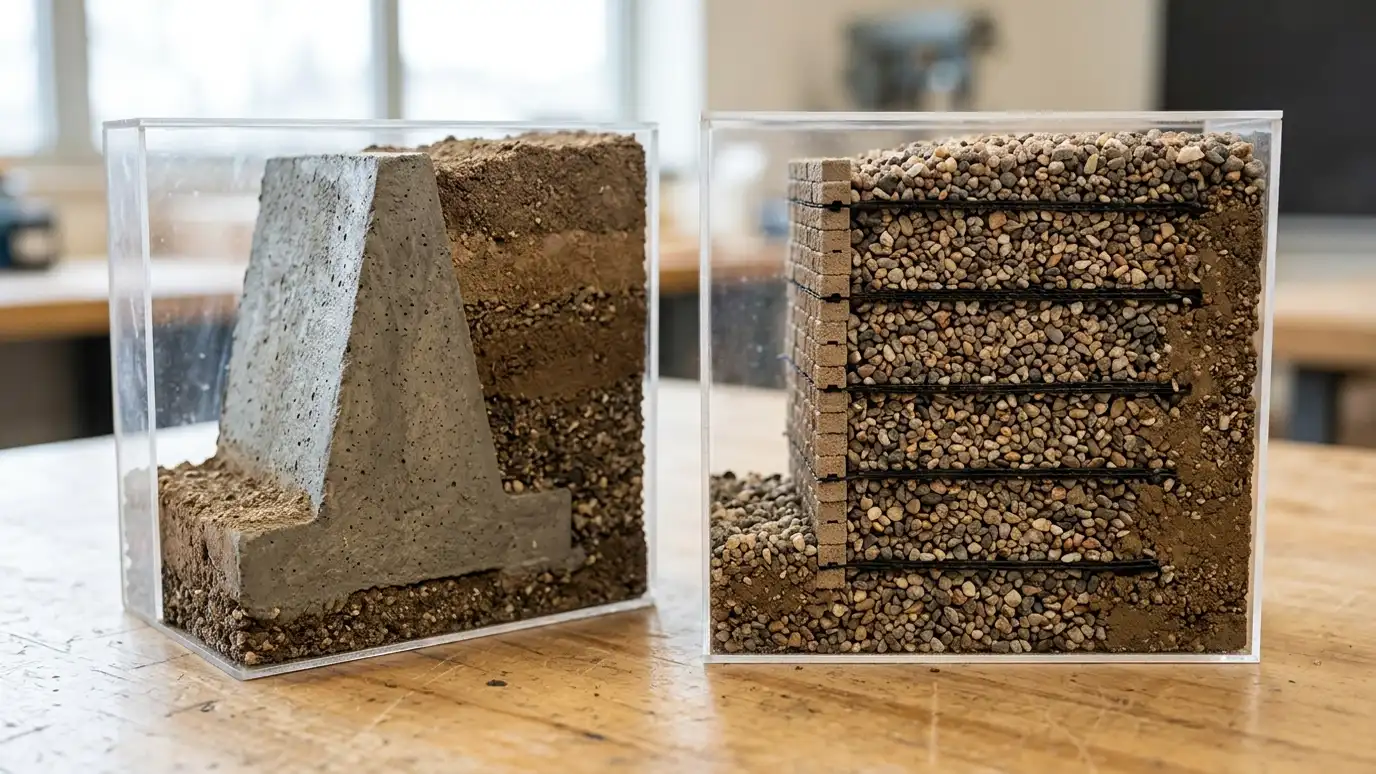
Walls that resist soil with their own weight compared with walls that tie into reinforced soil, by height, space and cost drivers.
A gravity wall resists soil pressure with its own weight and width. Stone, large block and mass concrete are common gravity materials, and they are simple, robust and well suited to short and moderate heights. A reinforced wall adds layers of geogrid or similar reinforcement buried in compacted soil, so the soil behind the facing helps hold the wall in place. That allows thinner facings and taller walls but needs room to excavate the reinforced zone.
Which one makes sense depends on height, loads above the wall, available space, access and soil. Gravity walls are often chosen for garden walls and short borders. Reinforced walls are common for hillside lots, driveways and taller structures. In Nashville, an engineer typically decides when walls are tall or loaded. We explain the tradeoffs in plain language and build either type with careful drainage and compaction.
Weight and width resist soil pressure.
Geogrid ties the facing to compacted soil.
Gravity suits shorter walls. Reinforced suits taller walls.
Reinforced walls need room behind for the grid zone.
Reinforced walls rely on careful compaction.
Both need drains and clean backfill.
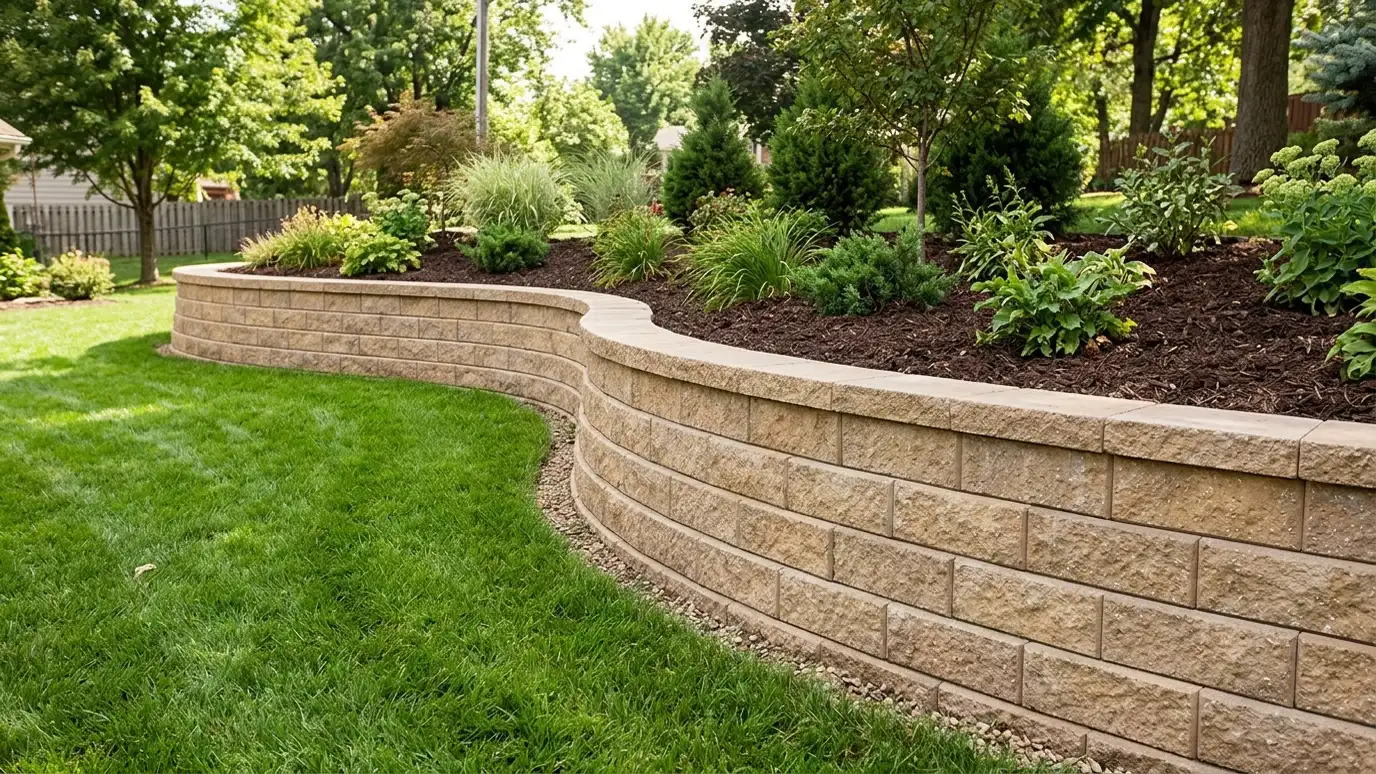 Segmental Block Retaining WallsInterlocking concrete block walls built on a compacted base with drainage and, when needed, geogrid reinforcement.Explore
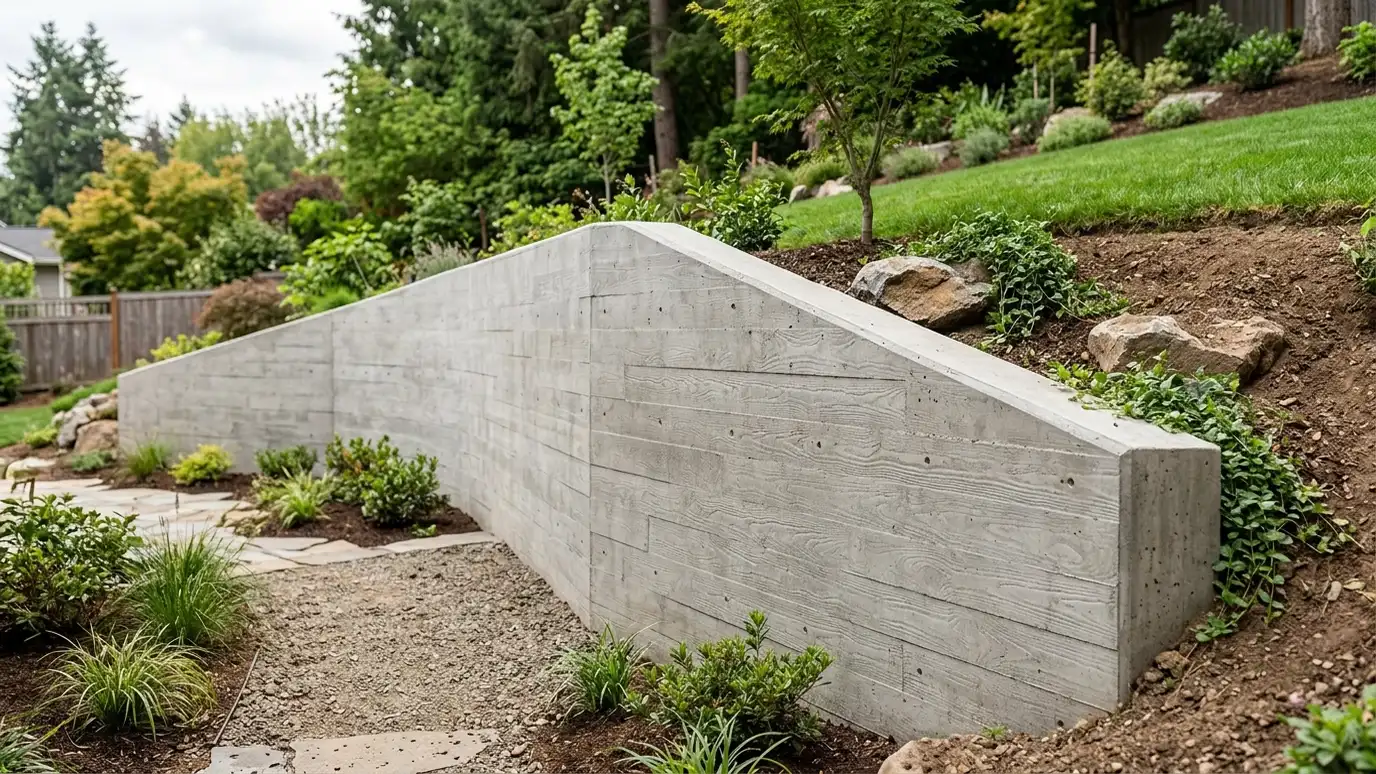 Poured Concrete Retaining WallsReinforced cast-in-place concrete walls for tall, heavily loaded or very clean-lined applications, with forms and finishes you choose.Explore
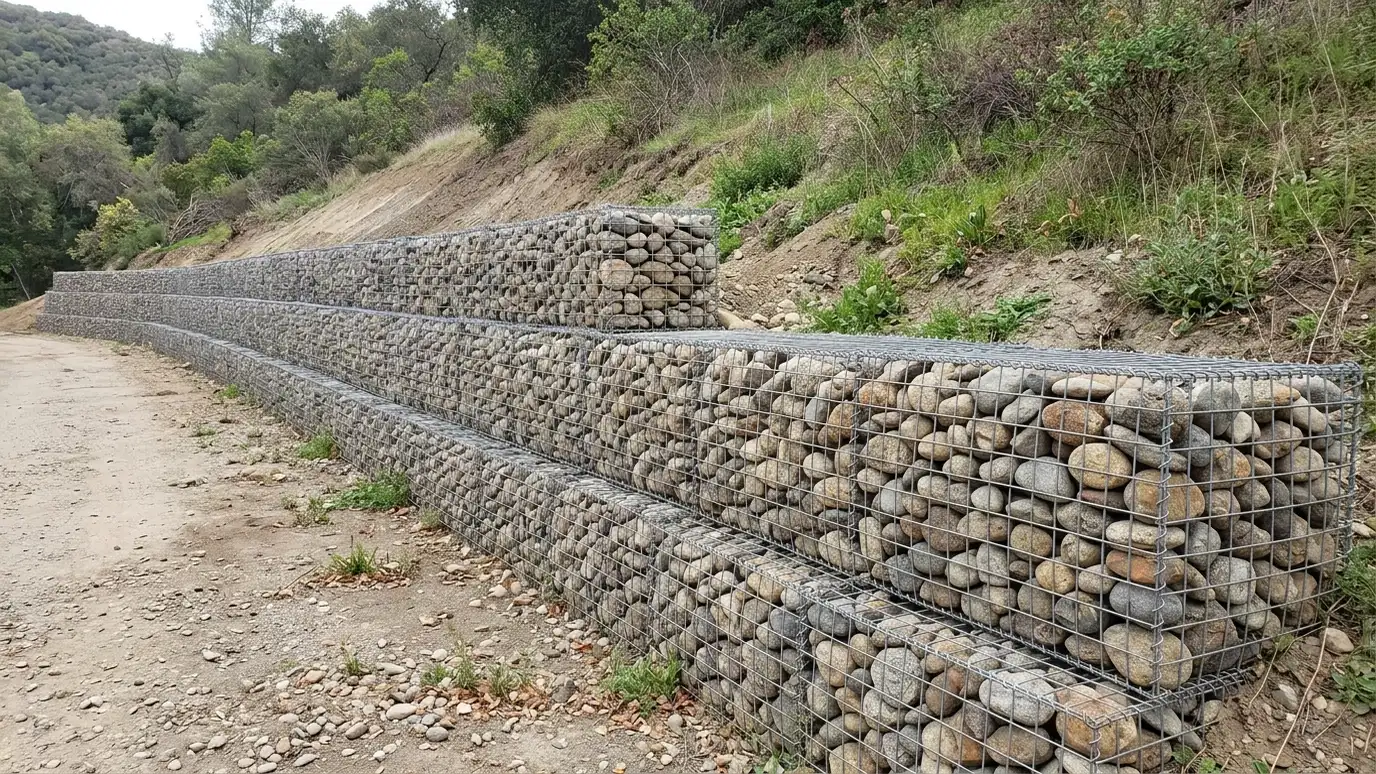 Gabion Retaining WallsWire baskets filled with stone, stacked to form free-draining walls with an industrial-natural look.Explore
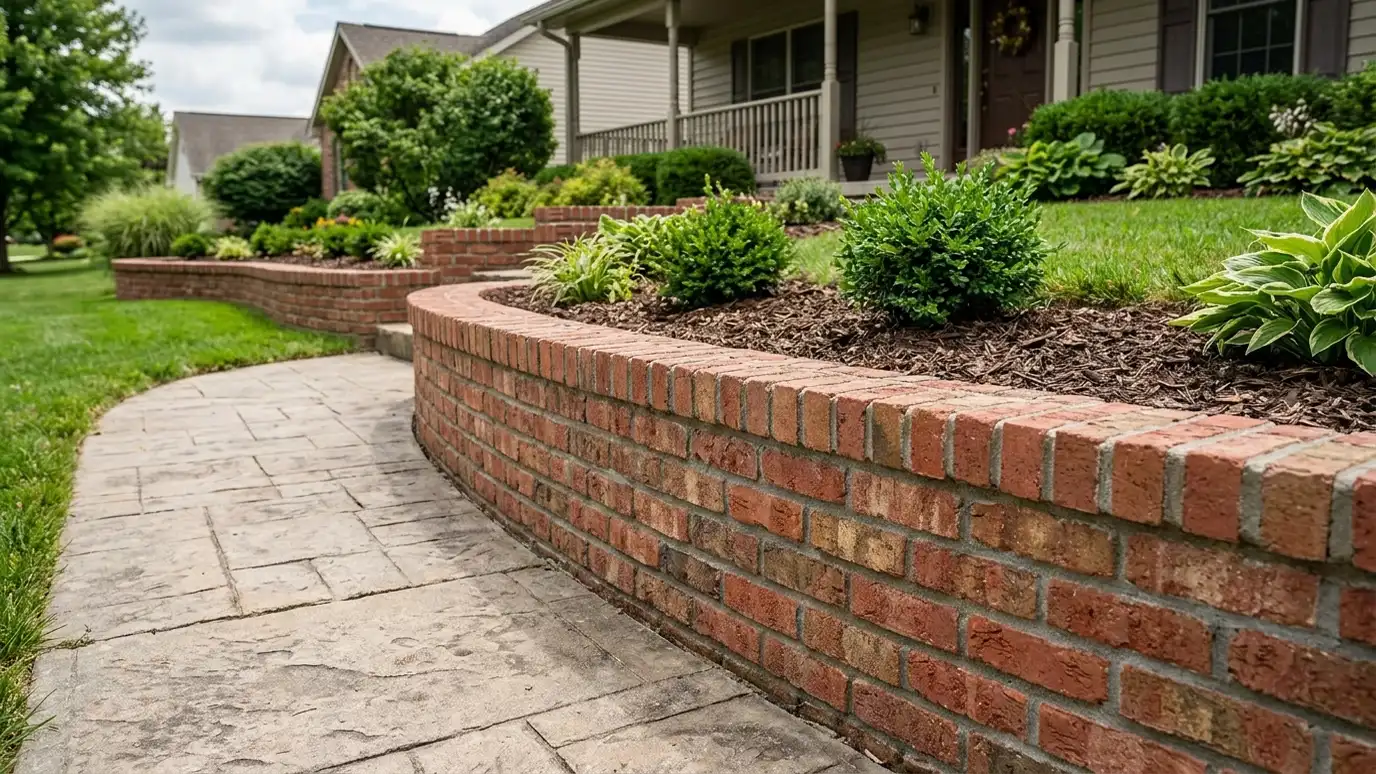 Brick Retaining WallsMortared brick walls with reinforced footings, drainage and caps that match historic homes and formal landscapes.Explore
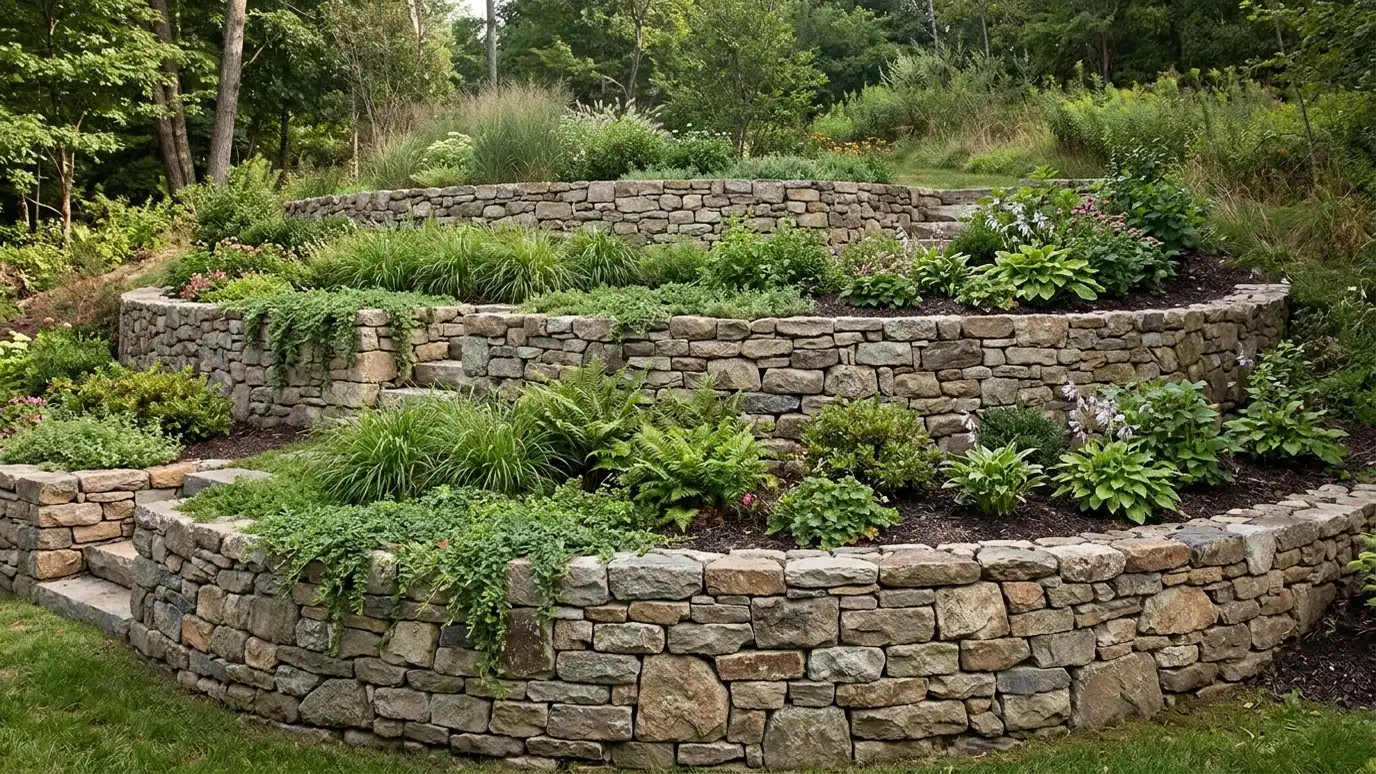 Tiered and Terraced Retaining WallsTwo or more shorter walls stepped up a slope, with planting shelves, paths and stairs between them.Explore
 Commercial Retaining WallsEngineered retaining walls for businesses, offices, shopping centers and mixed-use sites, built to plan and schedule.Explore
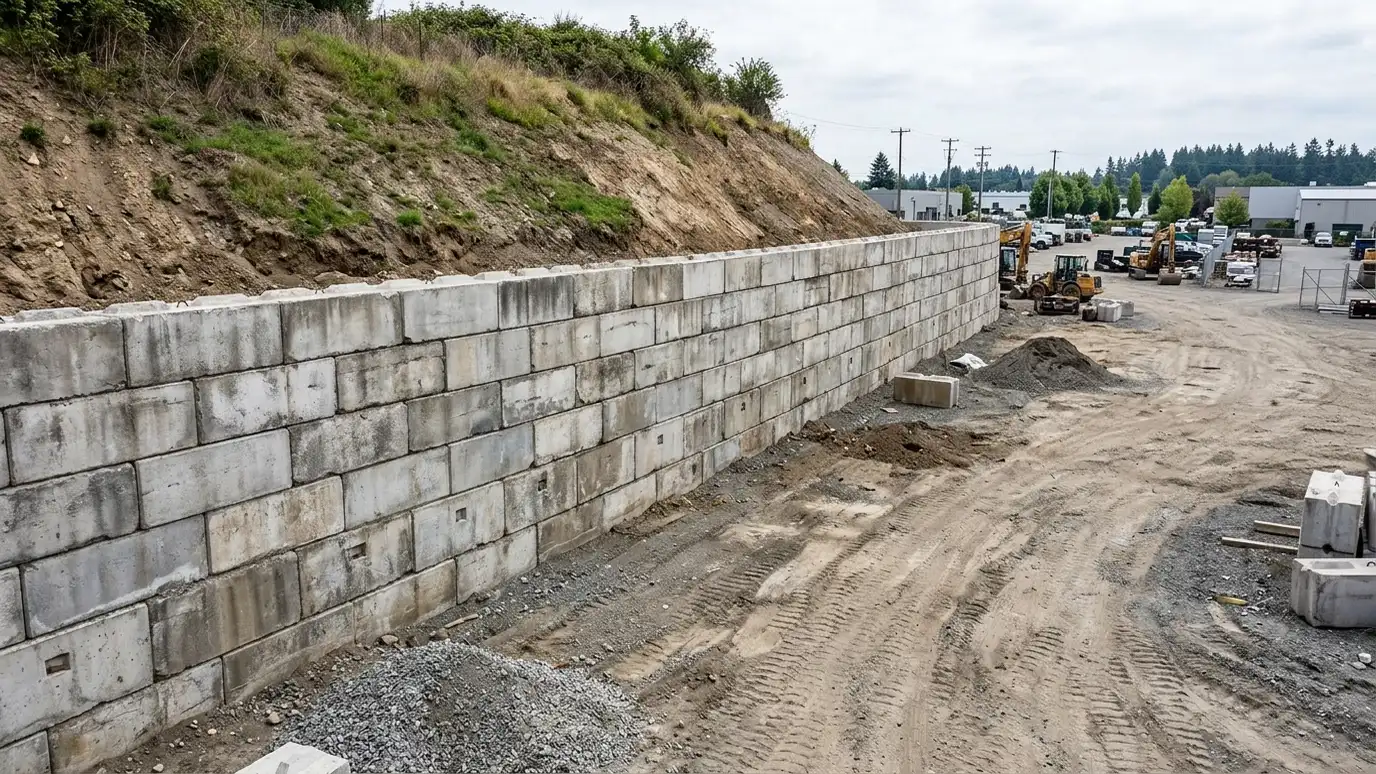 Big Block Retaining WallsLarge concrete block walls that stack like building blocks for fast, strong gravity and reinforced walls.Explore
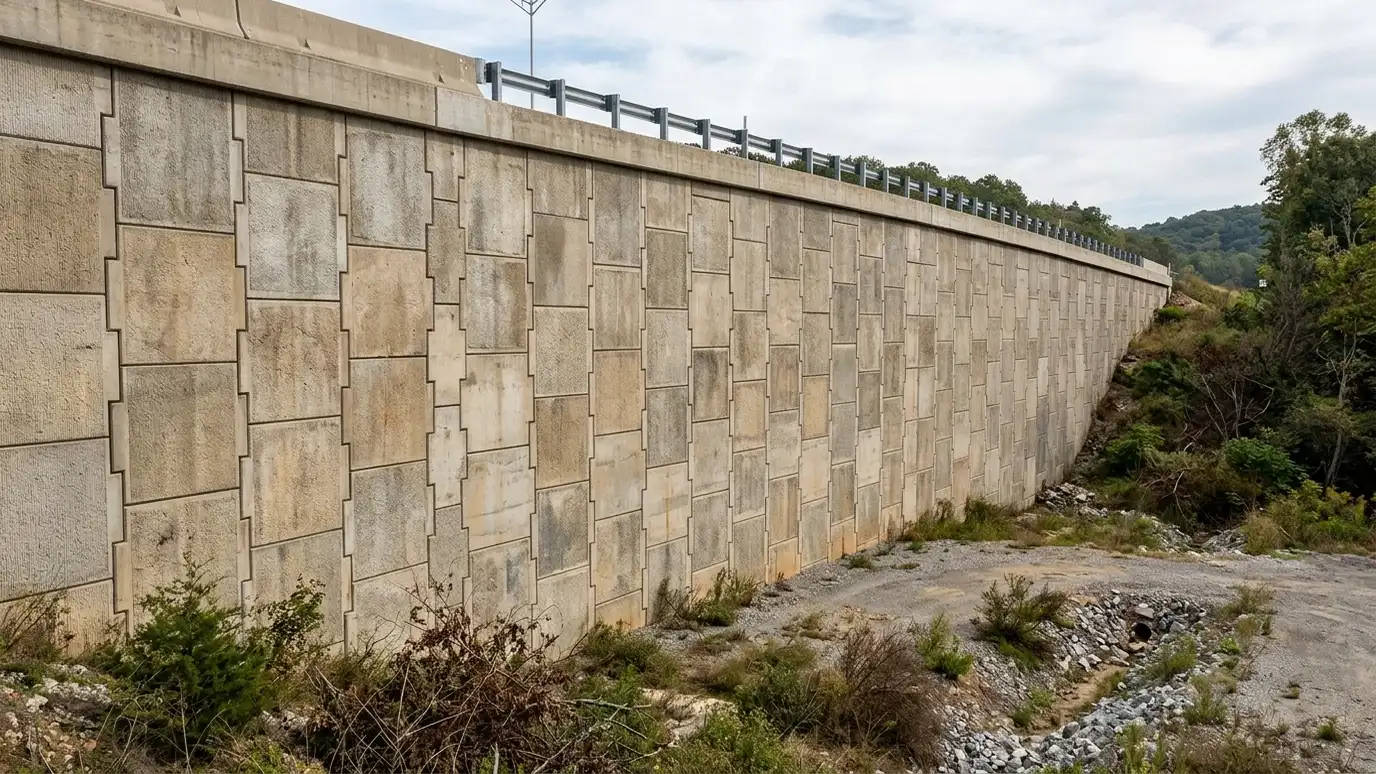 Mechanically Stabilized Earth WallsReinforced soil walls using layers of geogrid or steel strips with facing panels or blocks, for tall and…Explore
Size a wall, plan tiers or ballpark a budget.
 Retaining Wall Size and Material CalculatorEnter wall length and height to see face area, block count, base stone, drain pipe and geogrid layers to plan for.Try it
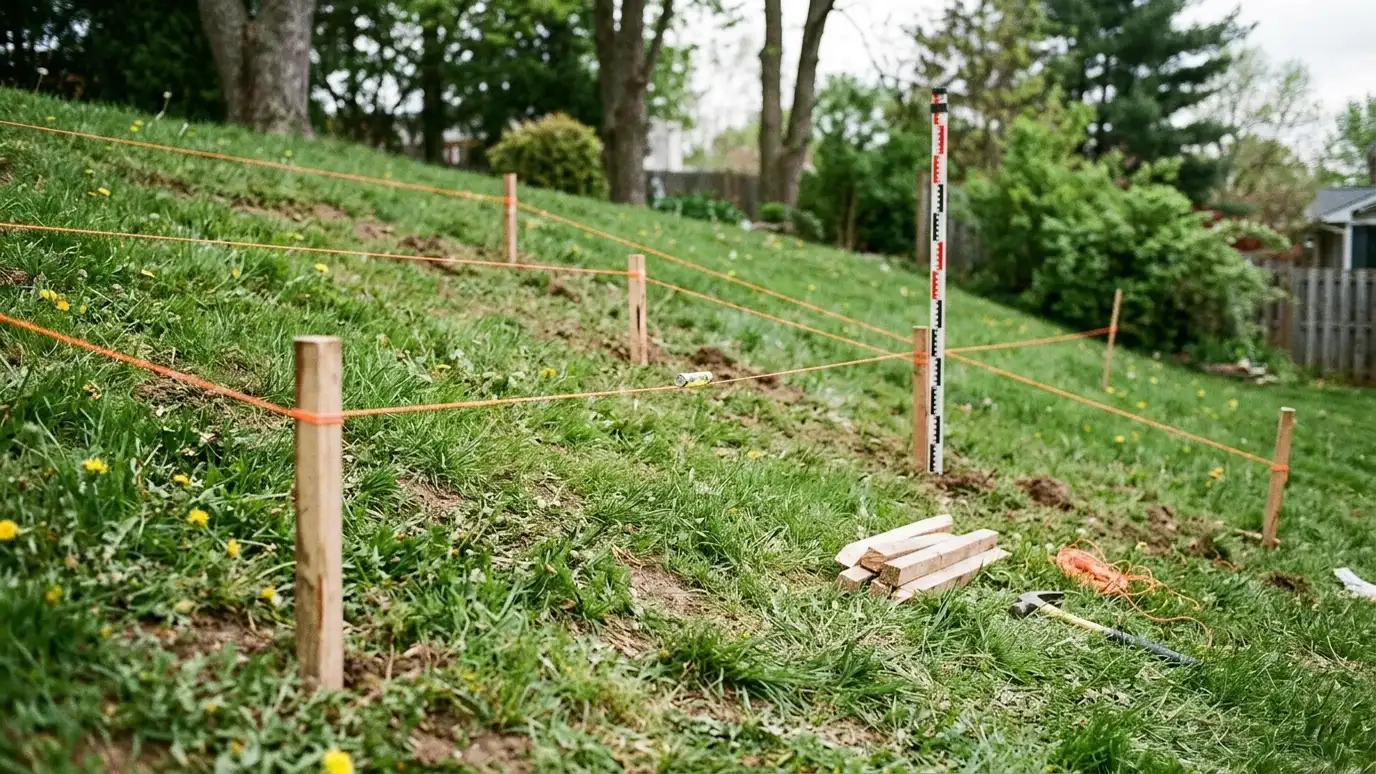 Retaining Wall Tier and Slope PlannerEnter slope height and distance to see how many tiers may suit the grade, how far apart to space them and how wide the shelves can be.Try it
 Retaining Wall Budget PlannerPick a wall type, set the size and add extras to see a ballpark planning range. Placeholder values only.Try it
Often for taller walls or loads above. An engineer decides for your project.
Often, for short walls. It still needs a good base and drainage.
Not easily. It is part of the original construction.
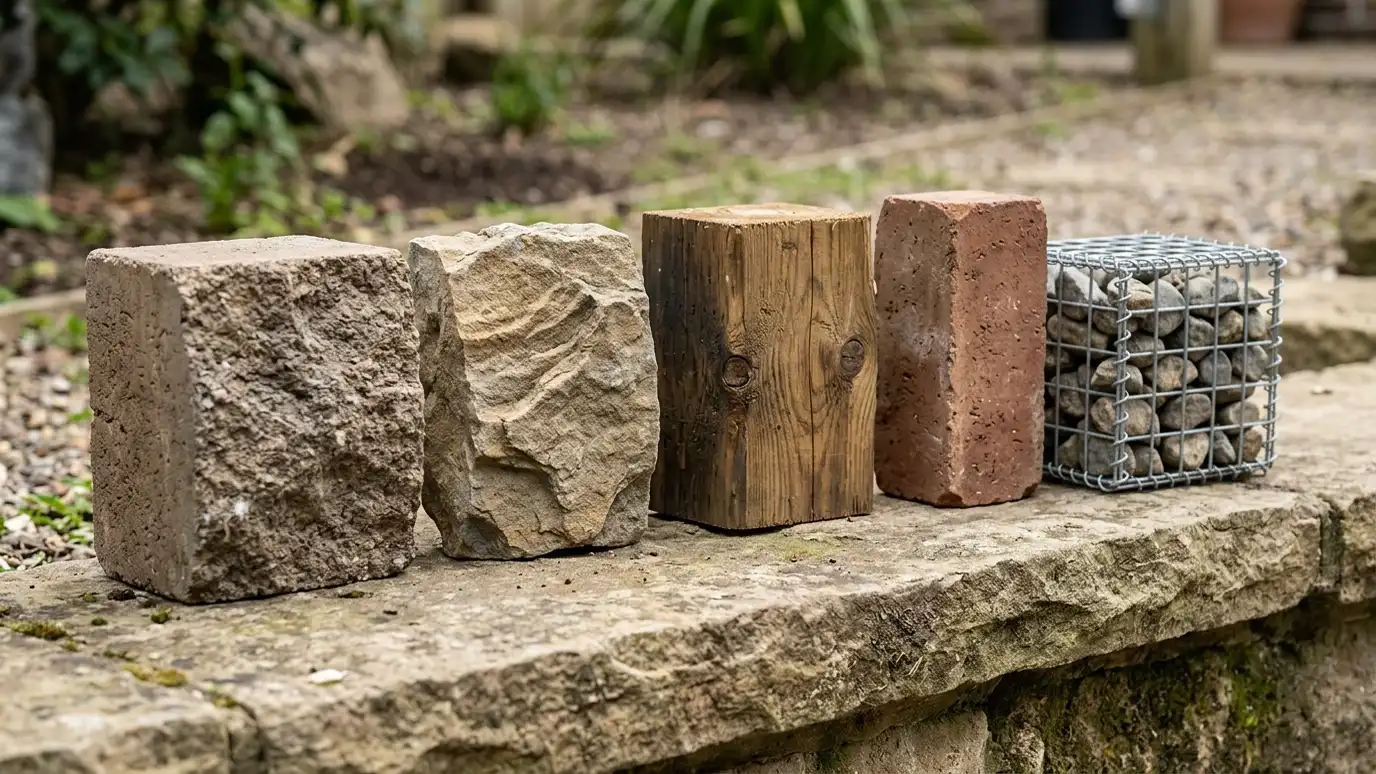 Comparison guideWall Materials ComparedSegmental block, poured concrete, natural stone, boulders, timber, brick and gabions compared by look, strength, drainage and care.Learn more
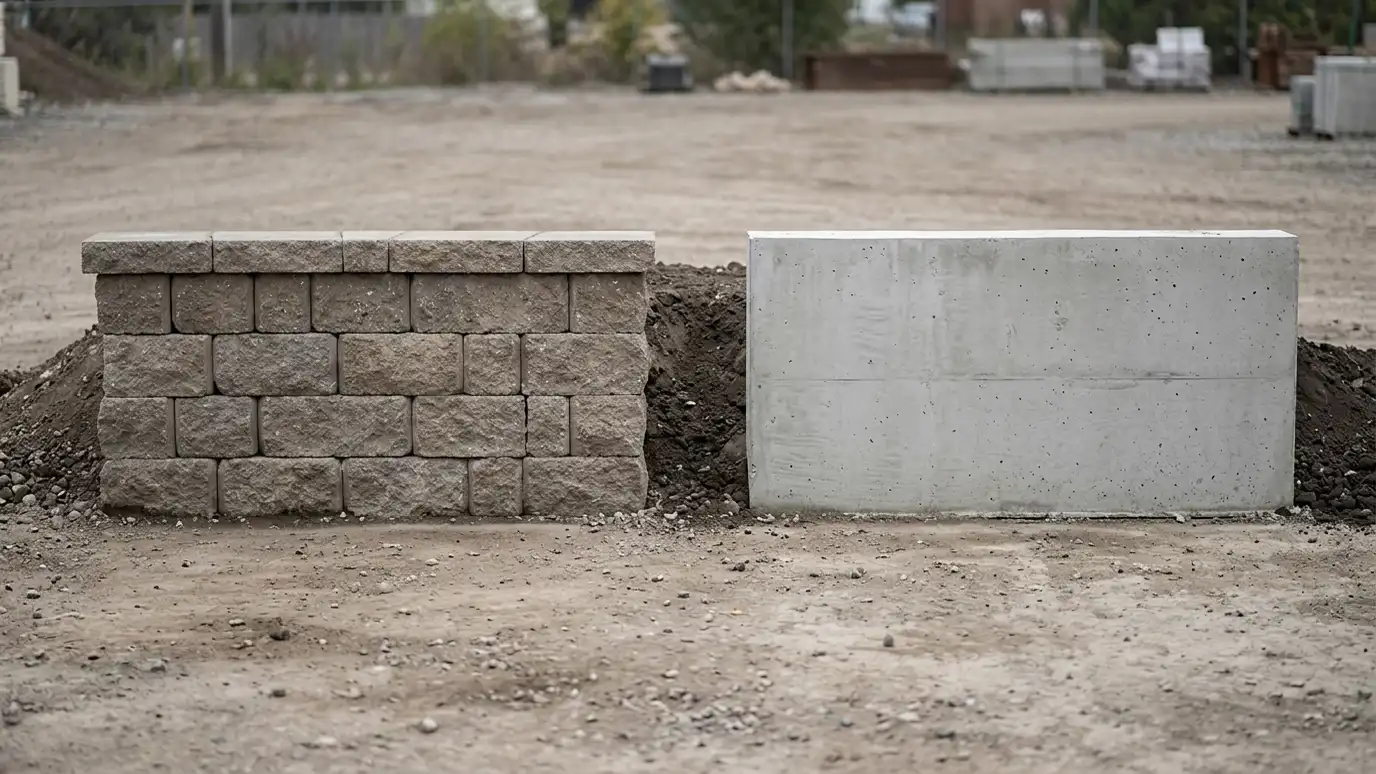 Comparison guideBlock vs Poured ConcreteInterlocking block walls and cast-in-place concrete walls compared by height, speed, flexibility, finish and repair.Learn more
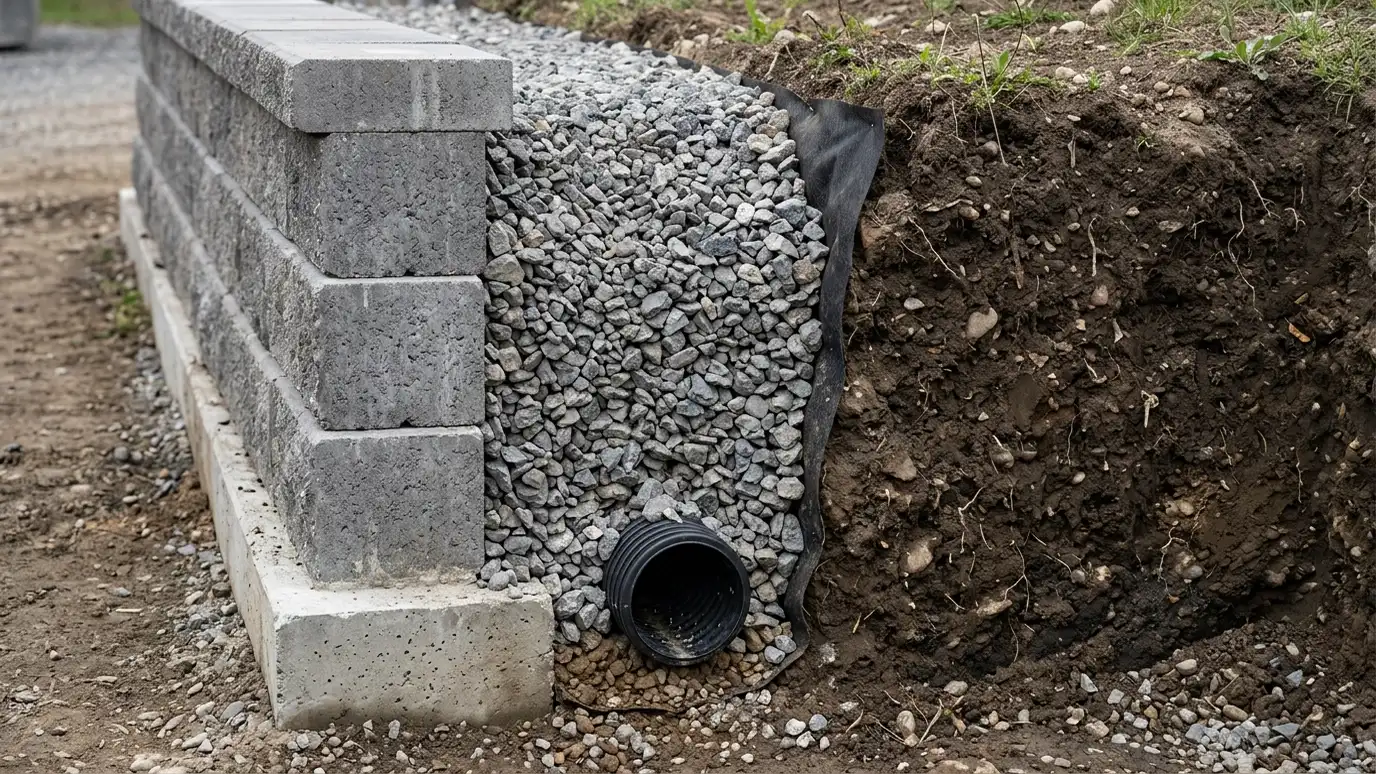 Comparison guideWall Drainage ExplainedHow drain pipe, clean stone, filter fabric and outlets work together to keep water pressure off a retaining…Learn more
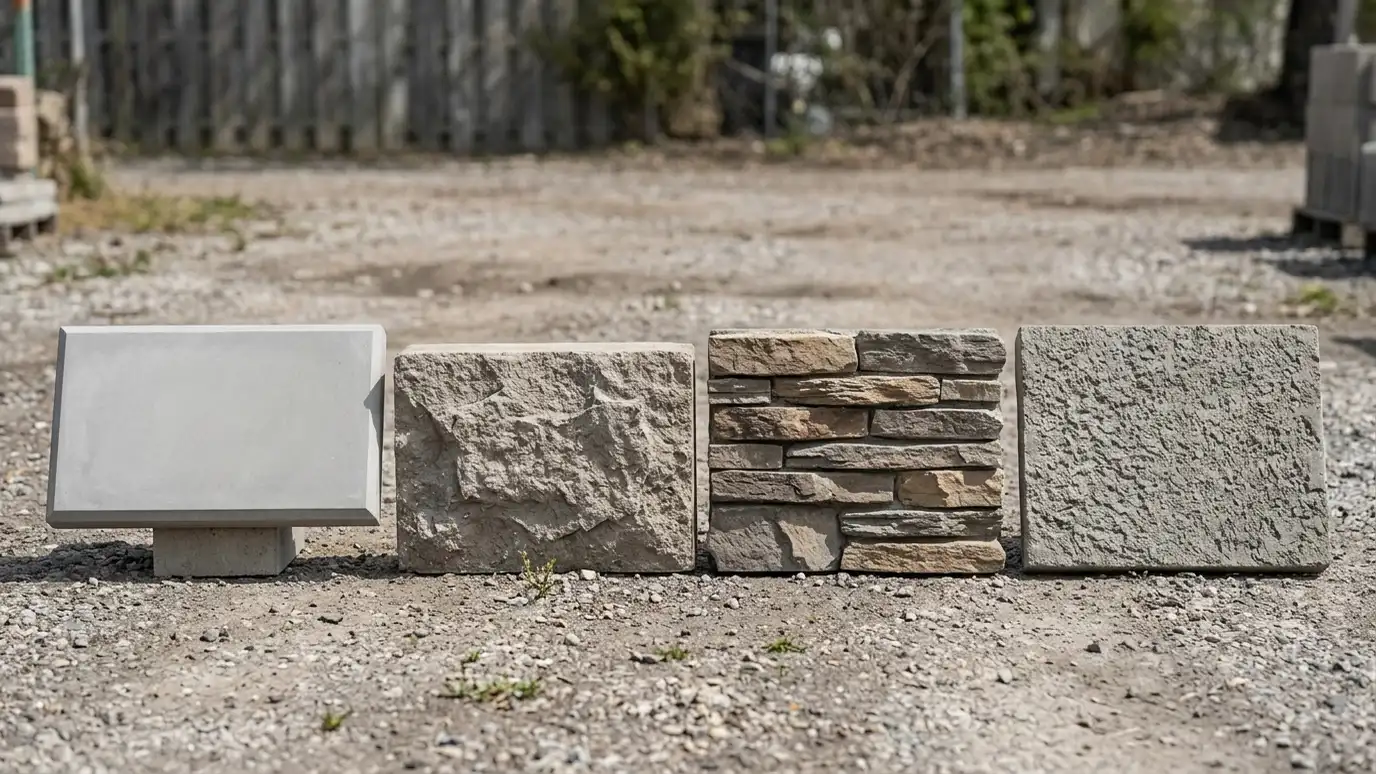 Comparison guideCaps and Finishes ComparedCap stones, manufactured caps, concrete tops, stucco and veneer compared by look, comfort, durability and care.Learn more
Call us and describe your slope or your wall. We will look at your site, talk through options and give you a clear written estimate.
