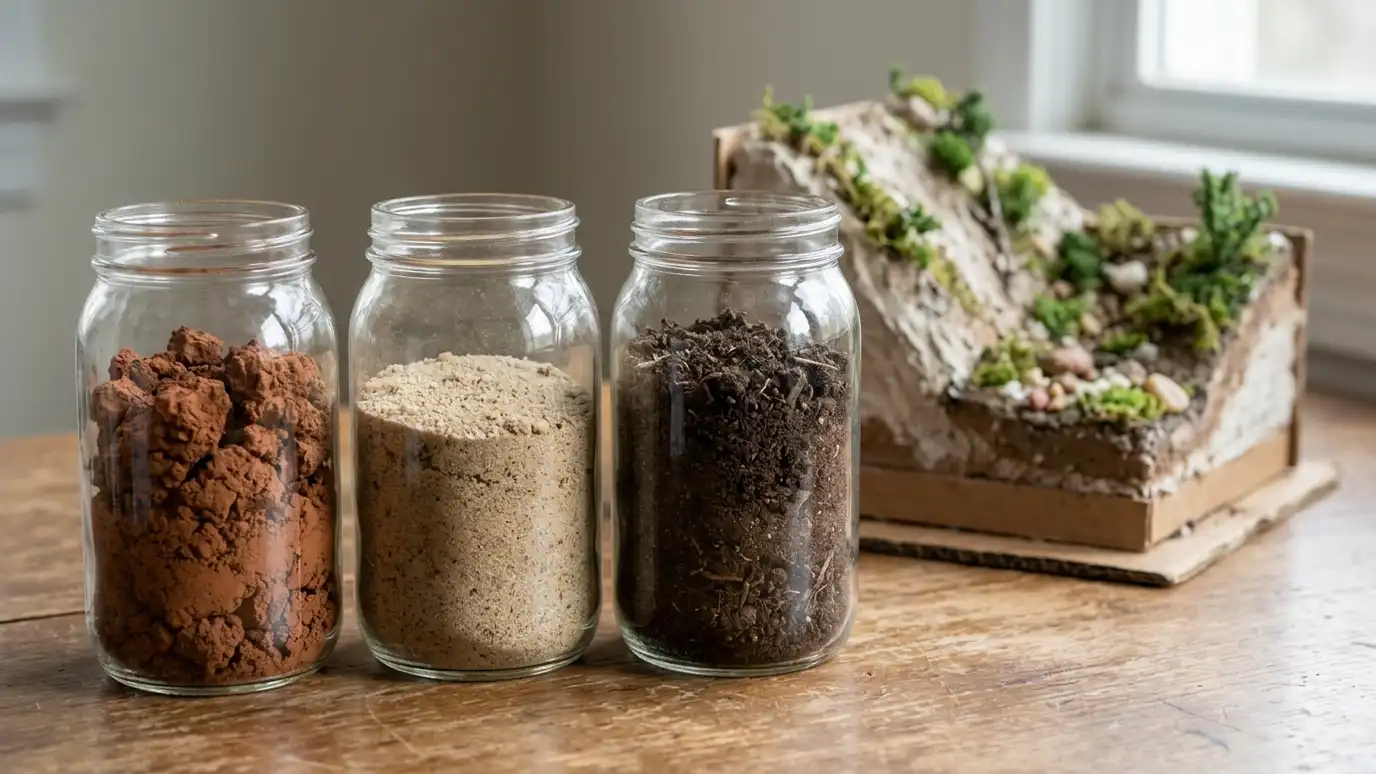
How clay, silt, sand, rock and fill behave behind a retaining wall and why slope angle, water and roots matter.
Soil is not just dirt. Clay holds water, swells when wet and can be slow to drain. Silt moves easily with water and loses strength when saturated. Sand drains fast and can shift. Rock can be excellent for support but hard to dig. Fill, soil placed by people, can be loose and uneven. Each type changes how much pressure a wall must resist and how drainage should be designed.
Slope matters too. Steeper slopes carry more soil weight and shed water faster, and long slopes collect more runoff. Roots help hold soil, while clearing vegetation can speed erosion. In Nashville, clay soils and rock ledges are common, and many yards include fill from earlier construction. We read the site, dig test holes and use public soil maps to understand what is likely, and we recommend a geotechnical professional when conditions are uncertain.
Holds water, swells and drains slowly.
Weakens when saturated and moves with water.
Drains quickly and can shift.
Strong support that can be hard to excavate.
Loose and variable, often needs extra care.
Steeper slopes load walls more and shed water faster.
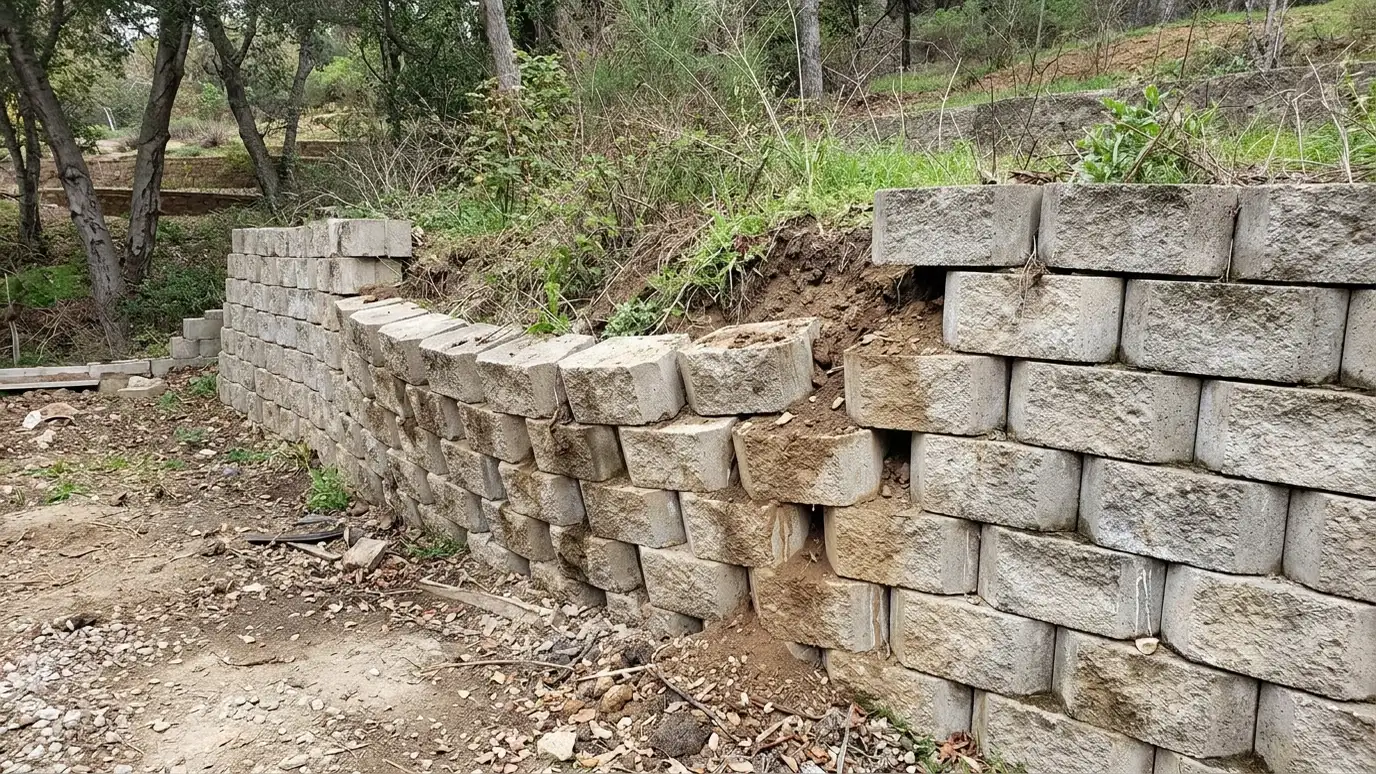 Leaning and Bulging Wall RepairDiagnosis and correction for walls that lean forward, bow outward or show a bulge in the face.Explore
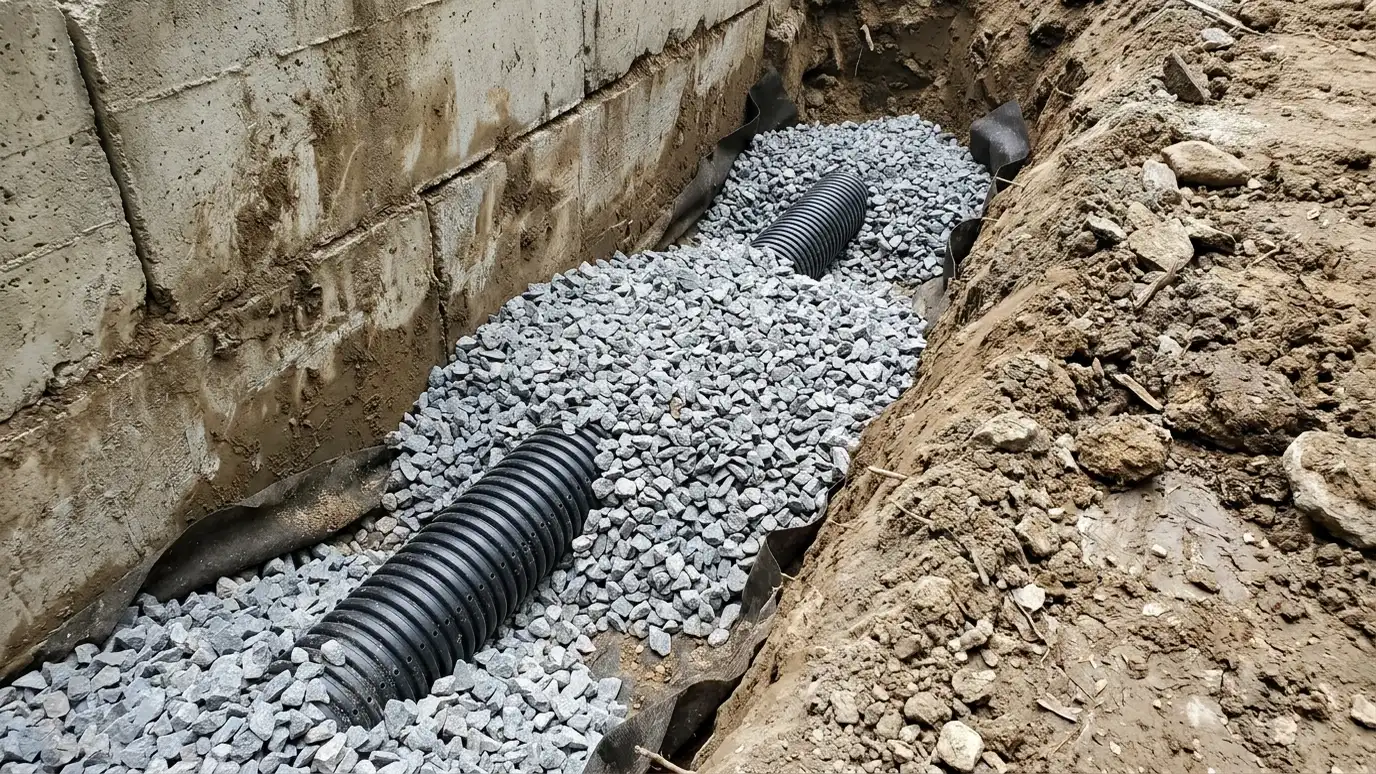 Drainage Repair Behind WallsFinding and fixing clogged, crushed or missing drains and saturated backfill that push on walls.Explore
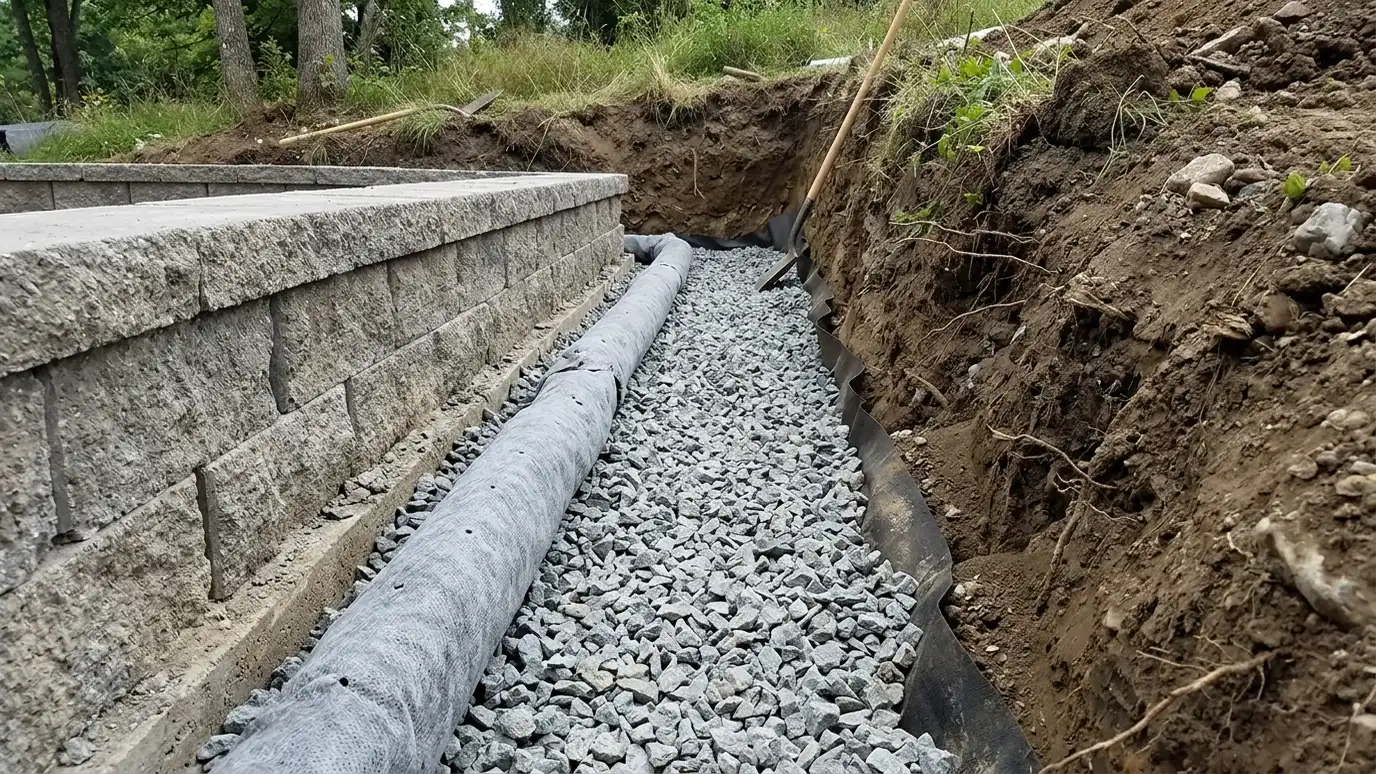 Retaining Wall Drainage SystemsPerforated drain pipe, clean gravel, filter fabric and clear outlets that keep water pressure off your wall.Explore
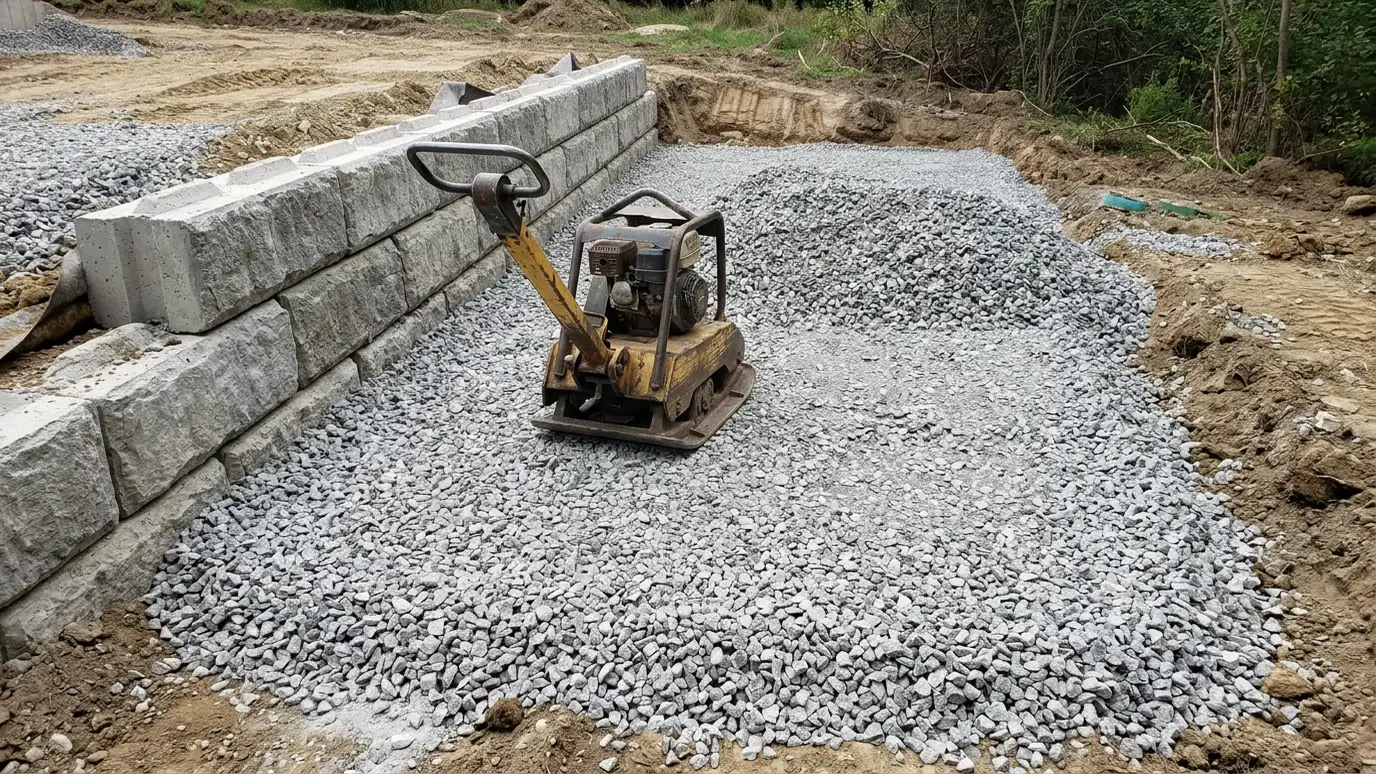 Backfill and CompactionPlacing clean drainage stone and engineered soil in thin lifts and compacting each lift so walls and patios…Explore
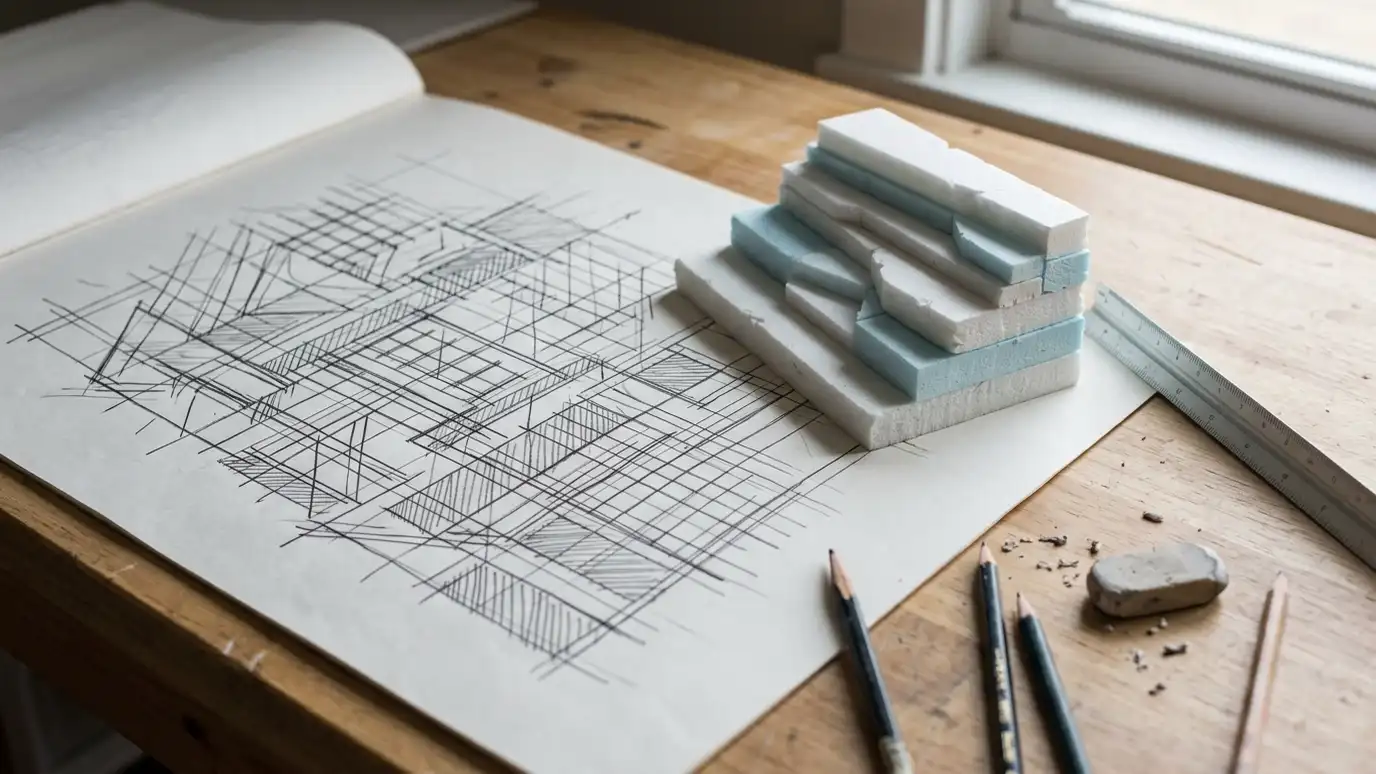 Retaining Wall DesignDesign that fits your slope, soil, budget and style, from simple garden walls to multi-tier systems.Explore
 Utility Locating and CoordinationCalling for utility locates, protecting buried lines and planning around gas, electric, water and communications.Explore
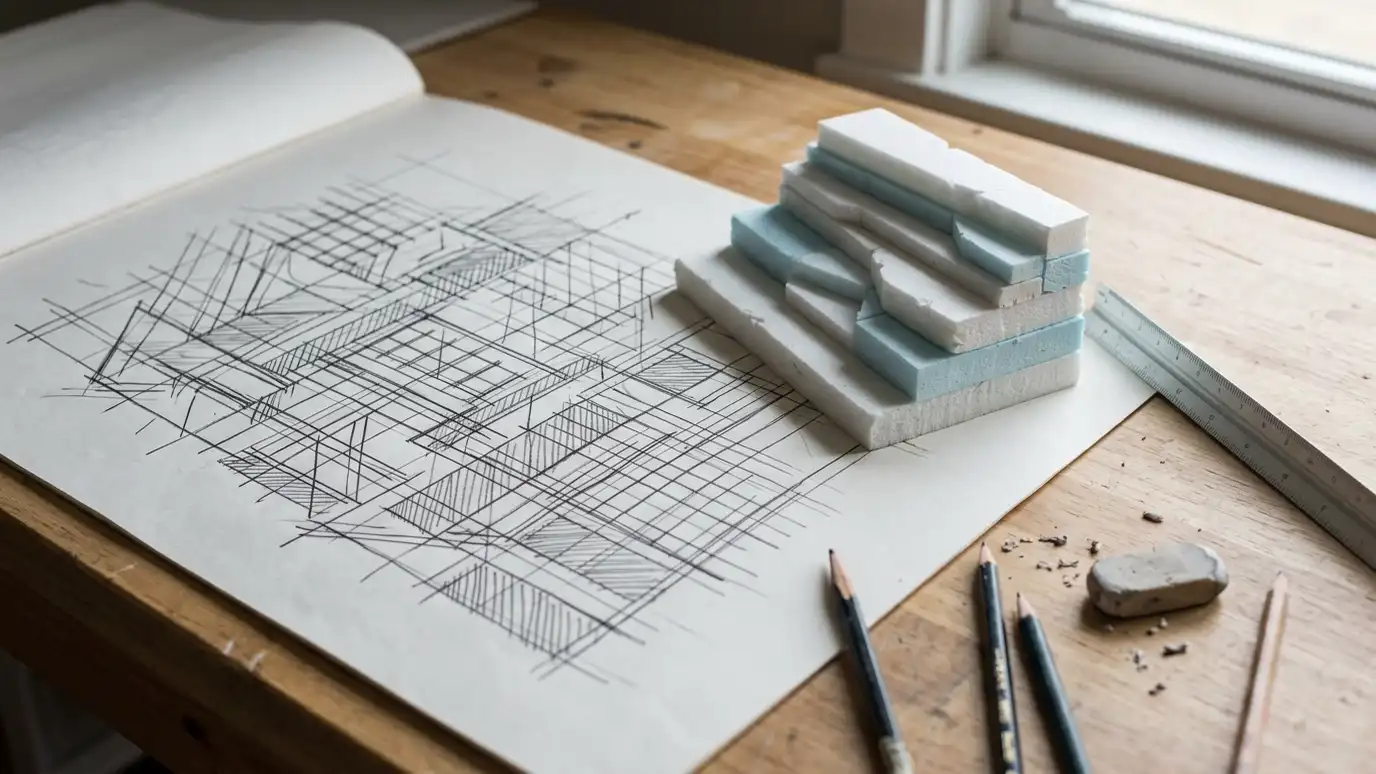 Wall Design VisualizationSketches, photo overlays and 3D views that help you see a wall in your yard before it is…Explore
Size a wall, plan tiers or ballpark a budget.
 Retaining Wall Size and Material CalculatorEnter wall length and height to see face area, block count, base stone, drain pipe and geogrid layers to plan for.Try it
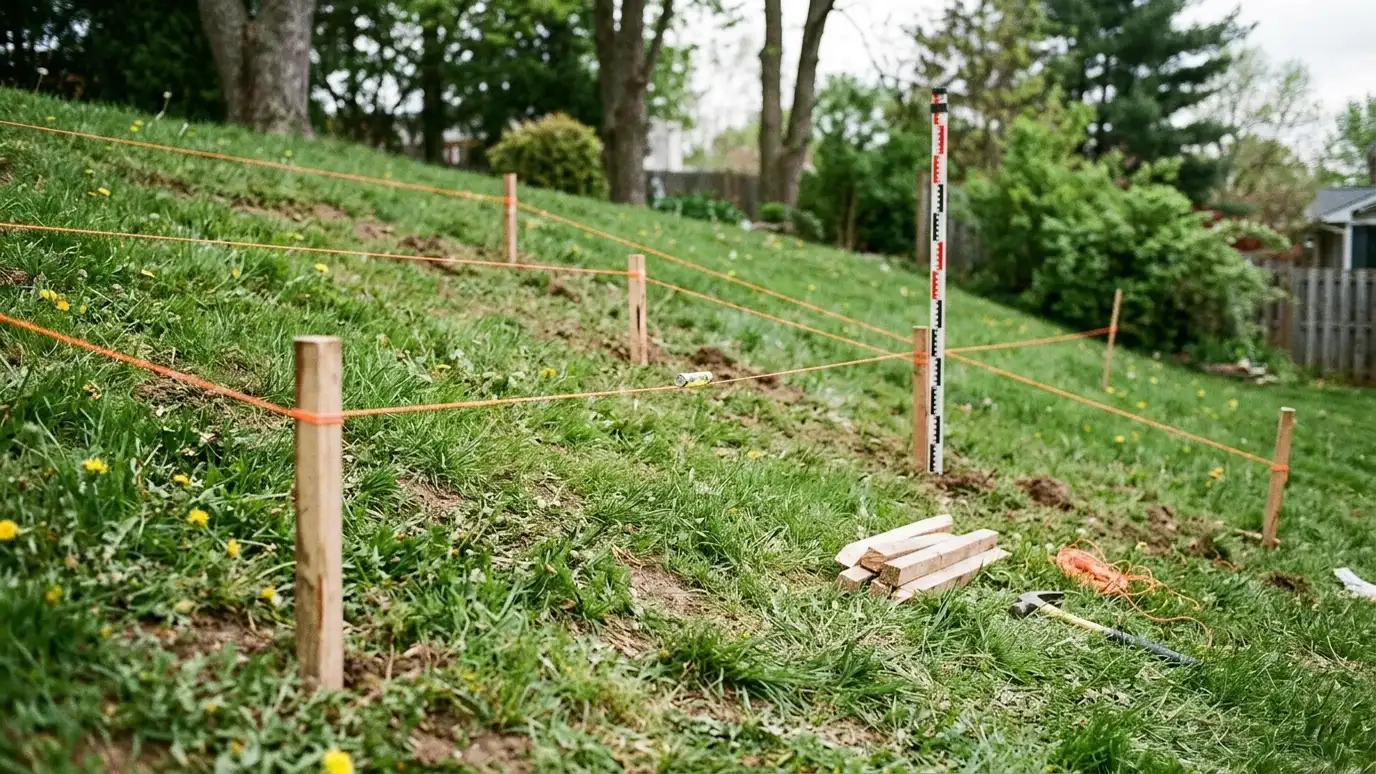 Retaining Wall Tier and Slope PlannerEnter slope height and distance to see how many tiers may suit the grade, how far apart to space them and how wide the shelves can be.Try it
 Retaining Wall Budget PlannerPick a wall type, set the size and add extras to see a ballpark planning range. Placeholder values only.Try it
Sometimes roughly, but test holes and maps give better answers.
It needs careful drainage and design. Many good walls are built in clay.
For taller walls, signs of movement or heavy loads, a geotechnical review is wise.
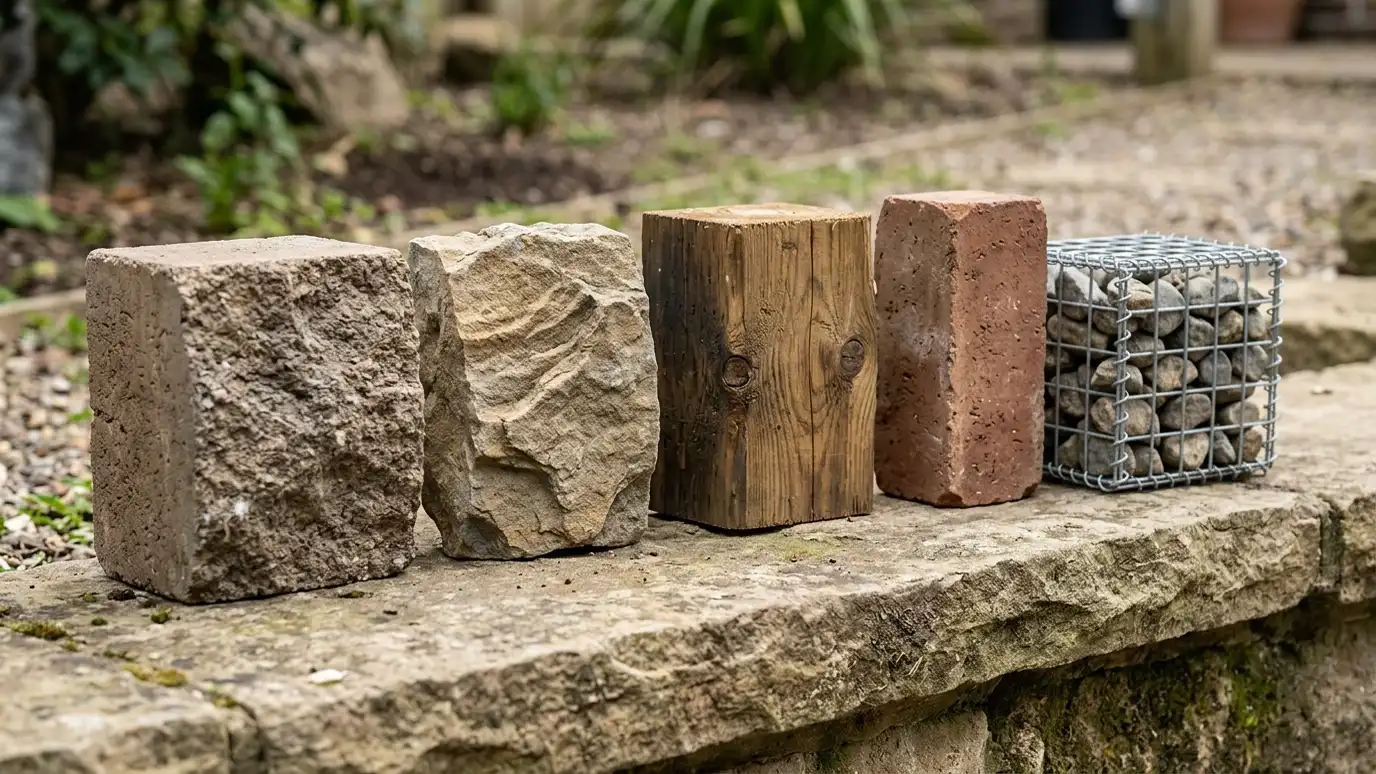 Comparison guideWall Materials ComparedSegmental block, poured concrete, natural stone, boulders, timber, brick and gabions compared by look, strength, drainage and care.Learn more
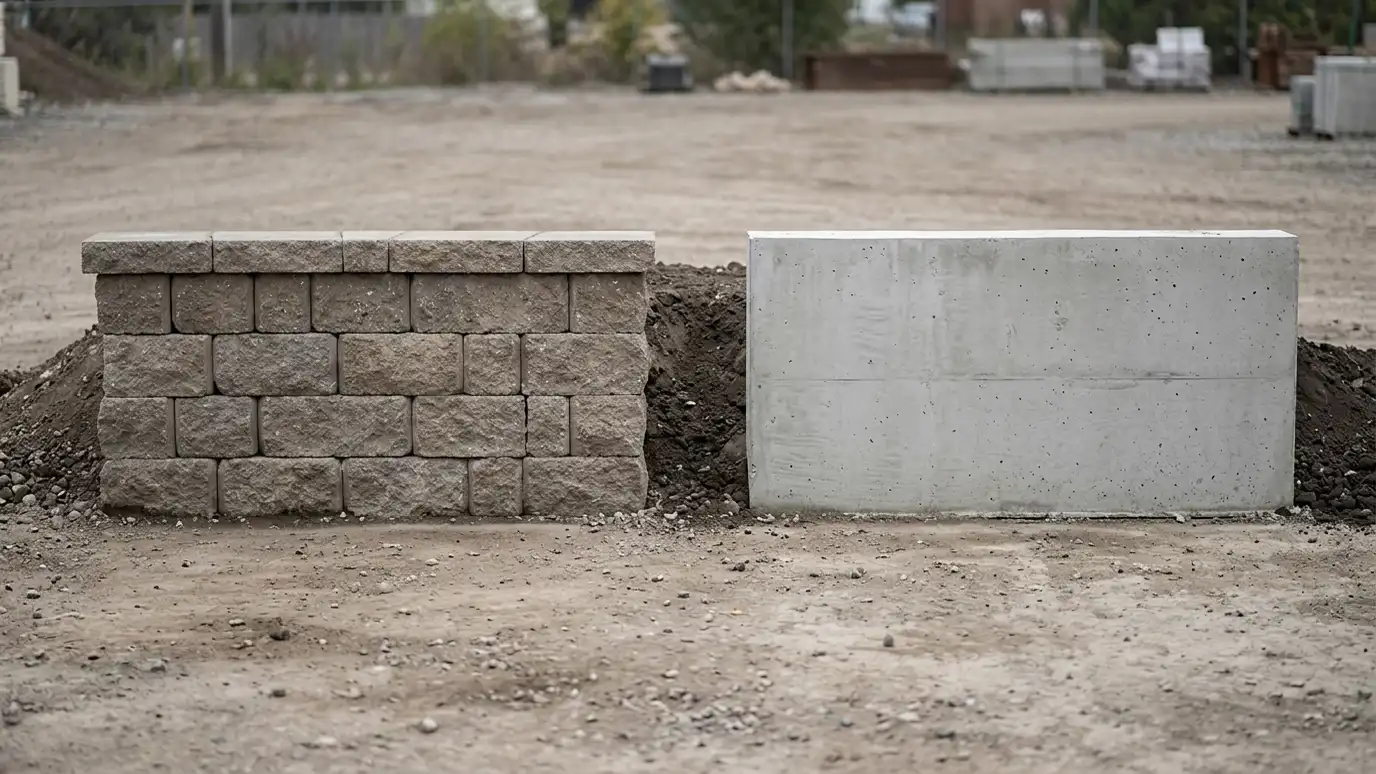 Comparison guideBlock vs Poured ConcreteInterlocking block walls and cast-in-place concrete walls compared by height, speed, flexibility, finish and repair.Learn more
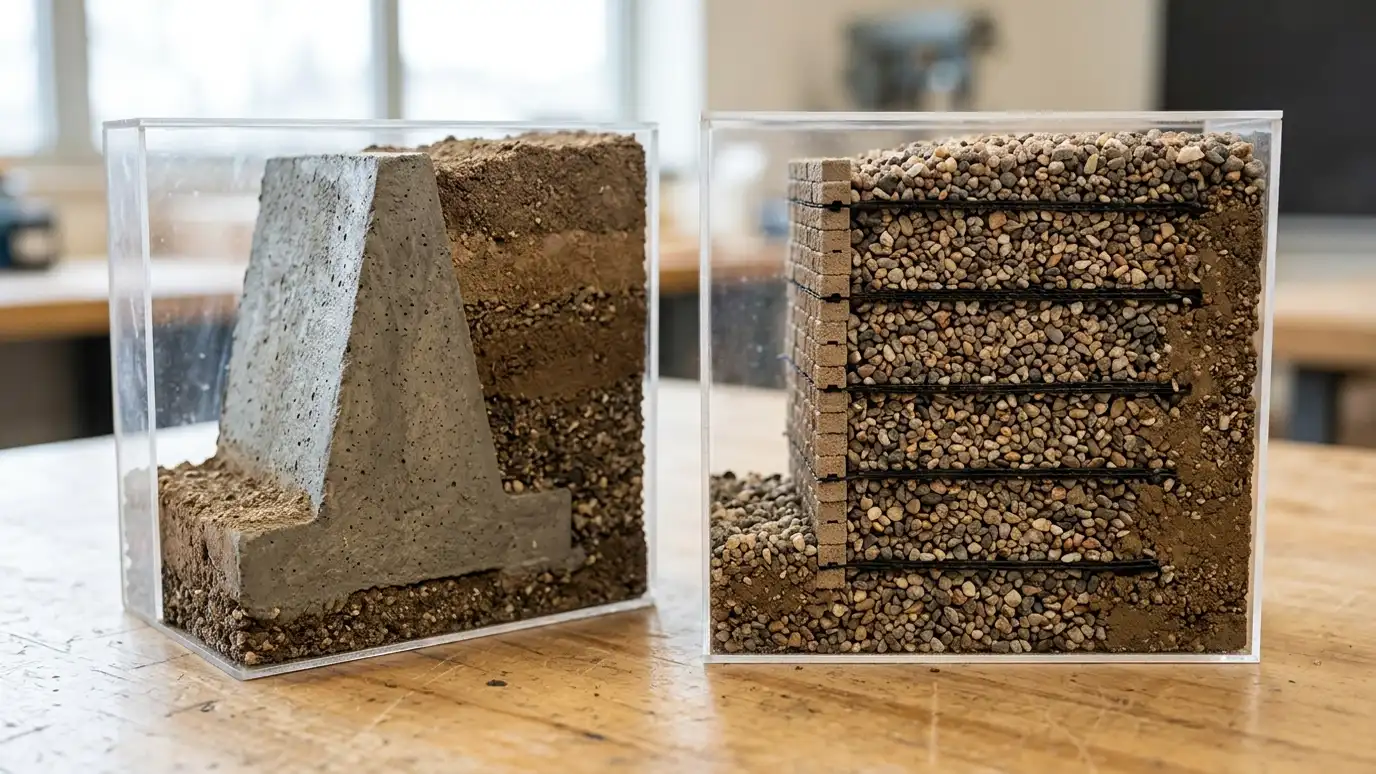 Comparison guideGravity vs Reinforced WallsWalls that resist soil with their own weight compared with walls that tie into reinforced soil, by height…Learn more
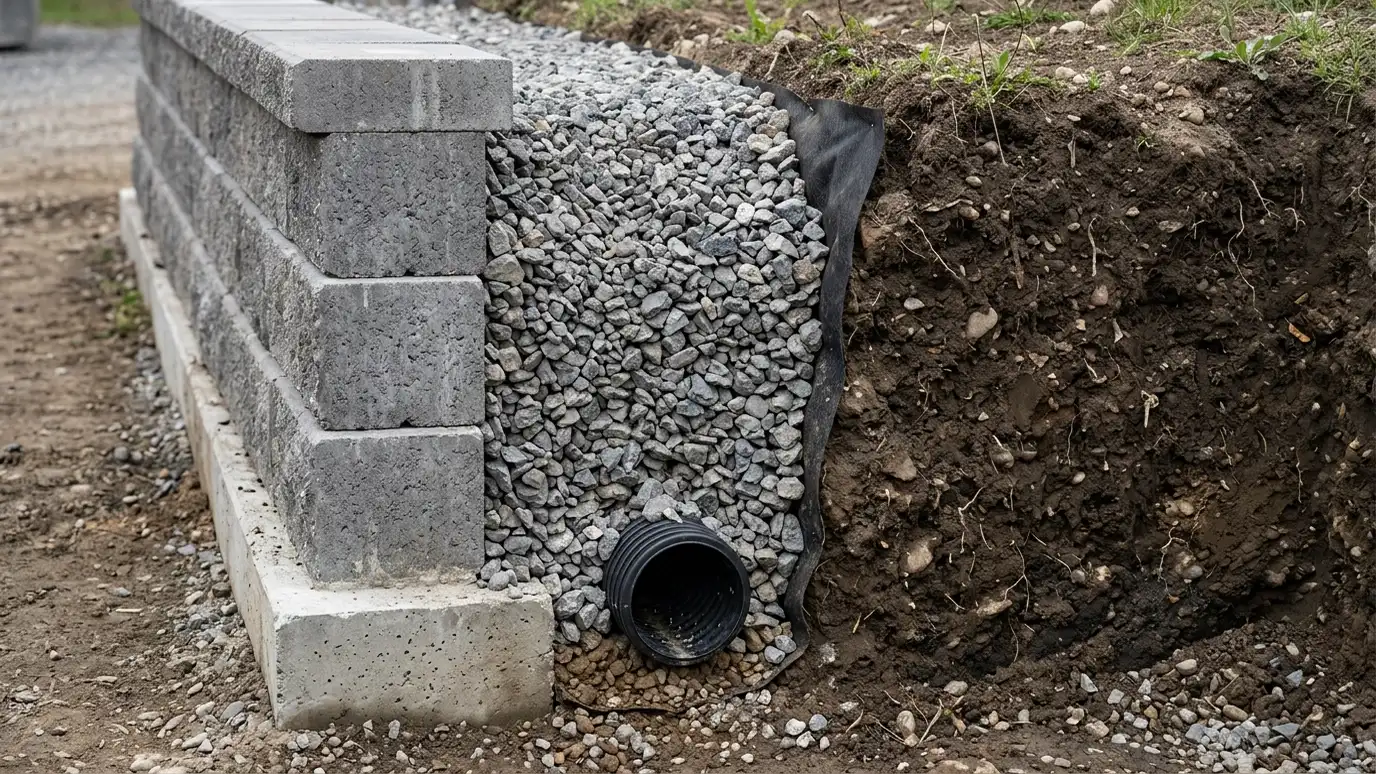 Comparison guideWall Drainage ExplainedHow drain pipe, clean stone, filter fabric and outlets work together to keep water pressure off a retaining…Learn more
Call us and describe your slope or your wall. We will look at your site, talk through options and give you a clear written estimate.
