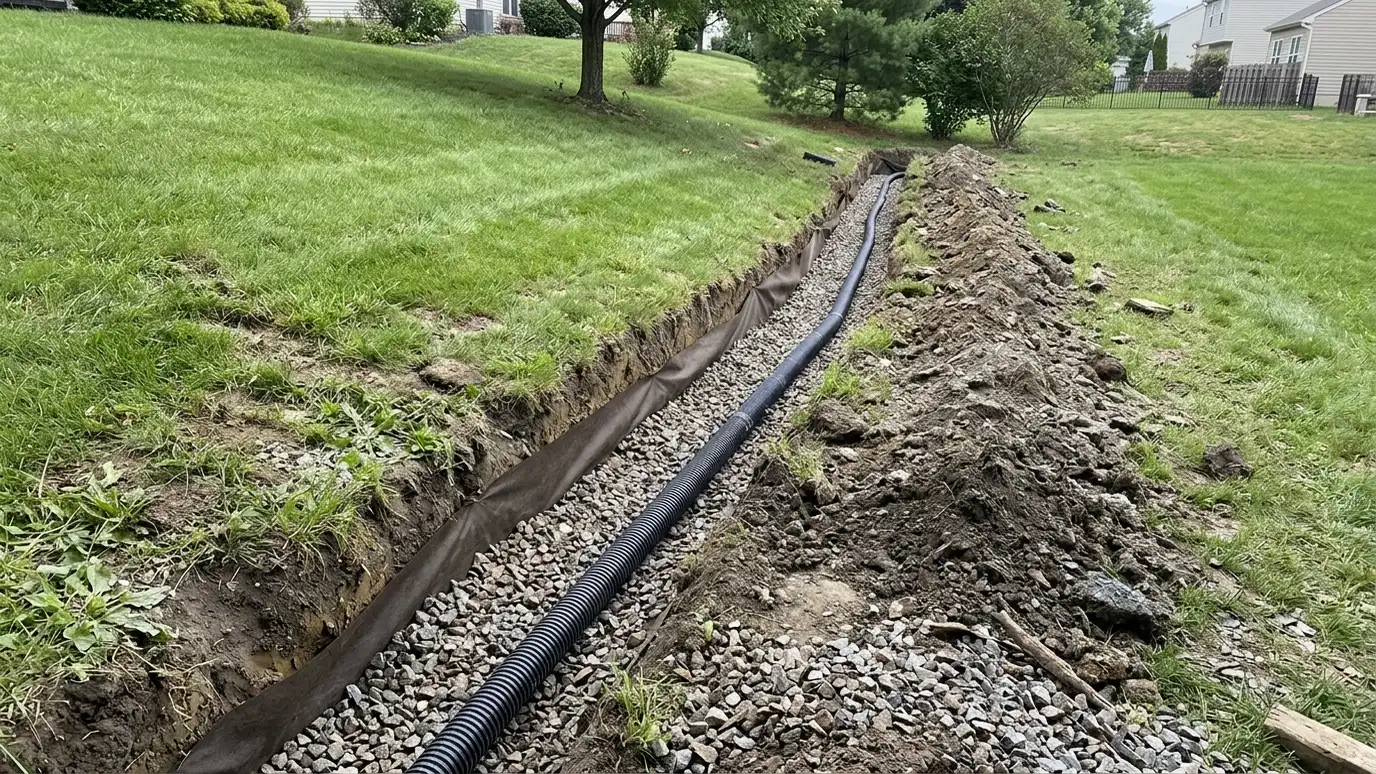
Gravel-filled trenches with perforated pipe that collect and carry away groundwater and runoff.
A French drain is a simple idea that works well: a sloped trench with perforated pipe and clean gravel that intercepts water and carries it somewhere safe. They help wet lawns, soggy slopes and the area behind retaining walls. Homeowners in Nashville use them to dry out yards and protect walls and foundations.
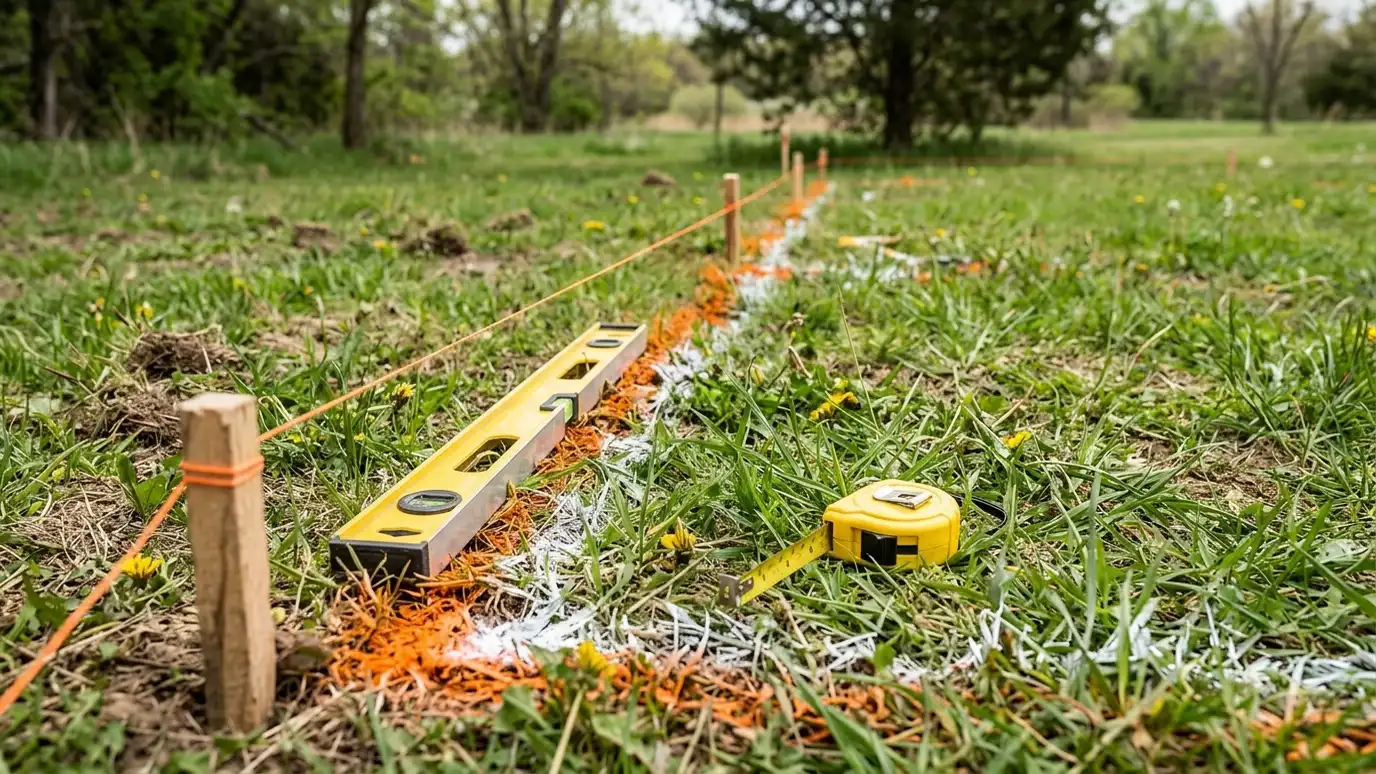
We start with a Free Estimate and walk the site after rain, if we can, to see where water collects and where it should go. We lay out the trench with a steady slope, excavate, line it with filter fabric, add gravel and pipe, wrap the fabric and cover with soil, sod or decorative stone. We connect the drain to a safe outlet and can add catch basins and cleanouts. We keep the outlet away from neighbors and from your foundation. Where a French drain surfaces matters as much as where it starts. We try to run outlets to a natural low spot, a swale or an approved storm connection, with a stone apron so the water does not scour the soil. Along the trench, we can place catch basins at low points to collect surface water too. After the work, grass or decorative stone covers the trench, and in most yards you will see little evidence of it except dry ground where it used to be soggy.
Trenches catch water before it saturates the ground you care about.
Even a gentle, consistent grade keeps water moving.
Water leaves to daylight, swales or approved connections.
Cleanouts and catch basins make future flushing simple.
Drag the handle to compare.
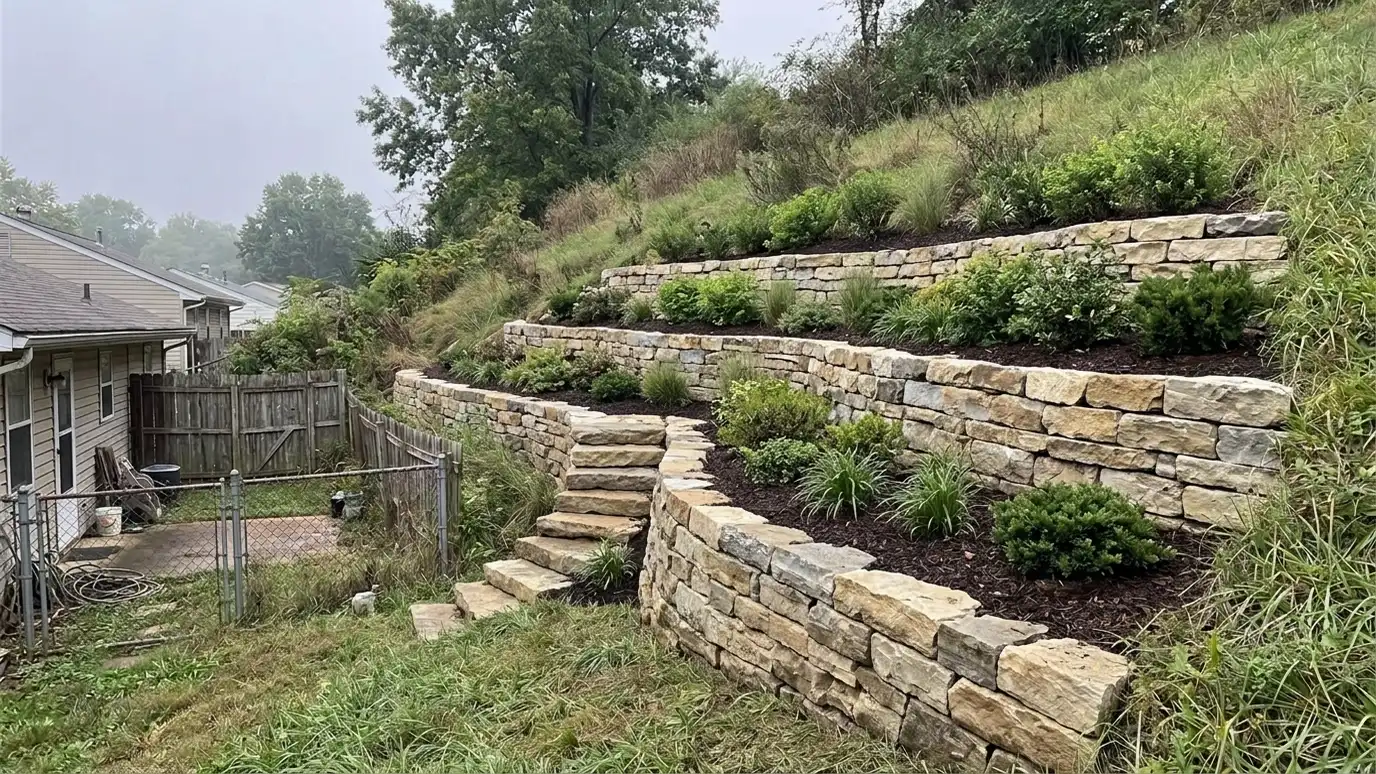
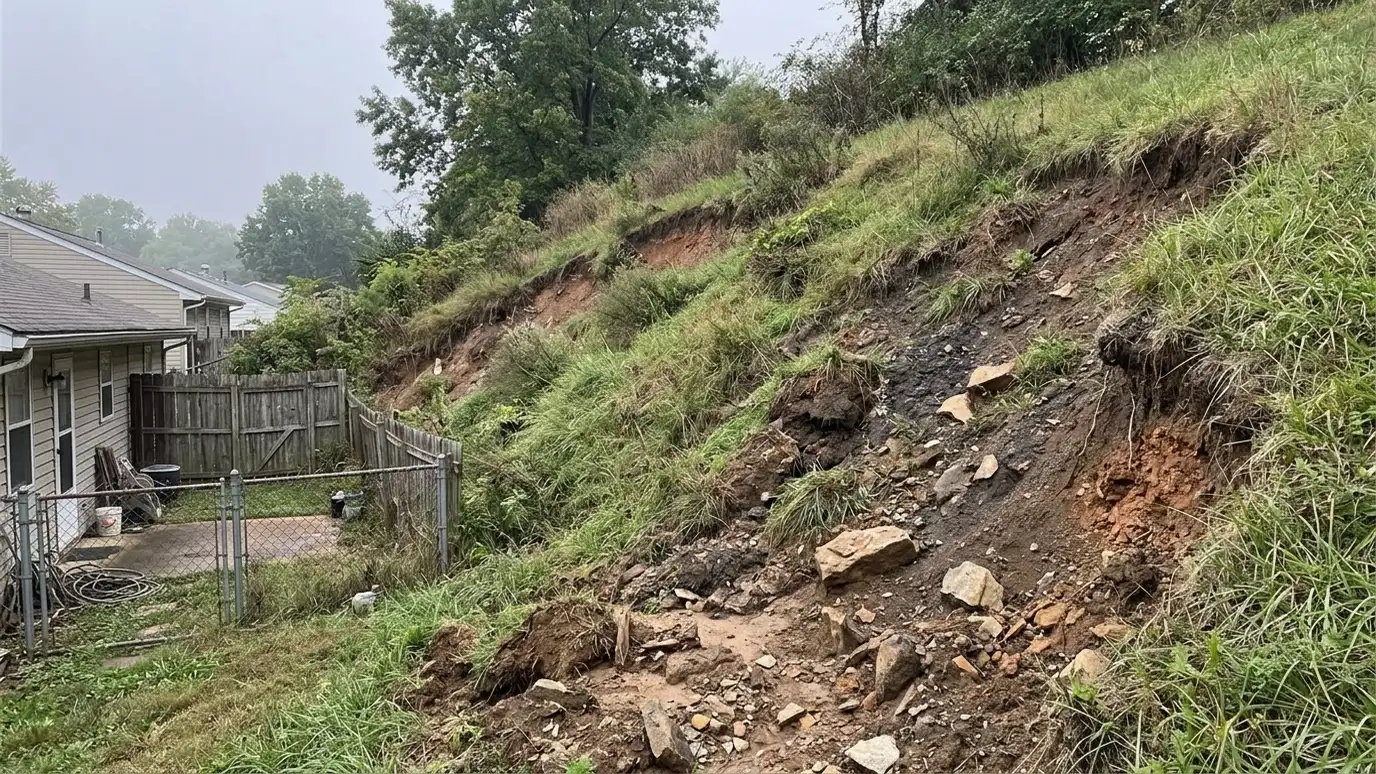 BeforeAfter
Wet areas and paths studied.
Slope and outlet planned.
Trench dug.
Drain built.
Water safely discharged.
Surface finished.
Every topic has its own page with what to expect and how we approach it.
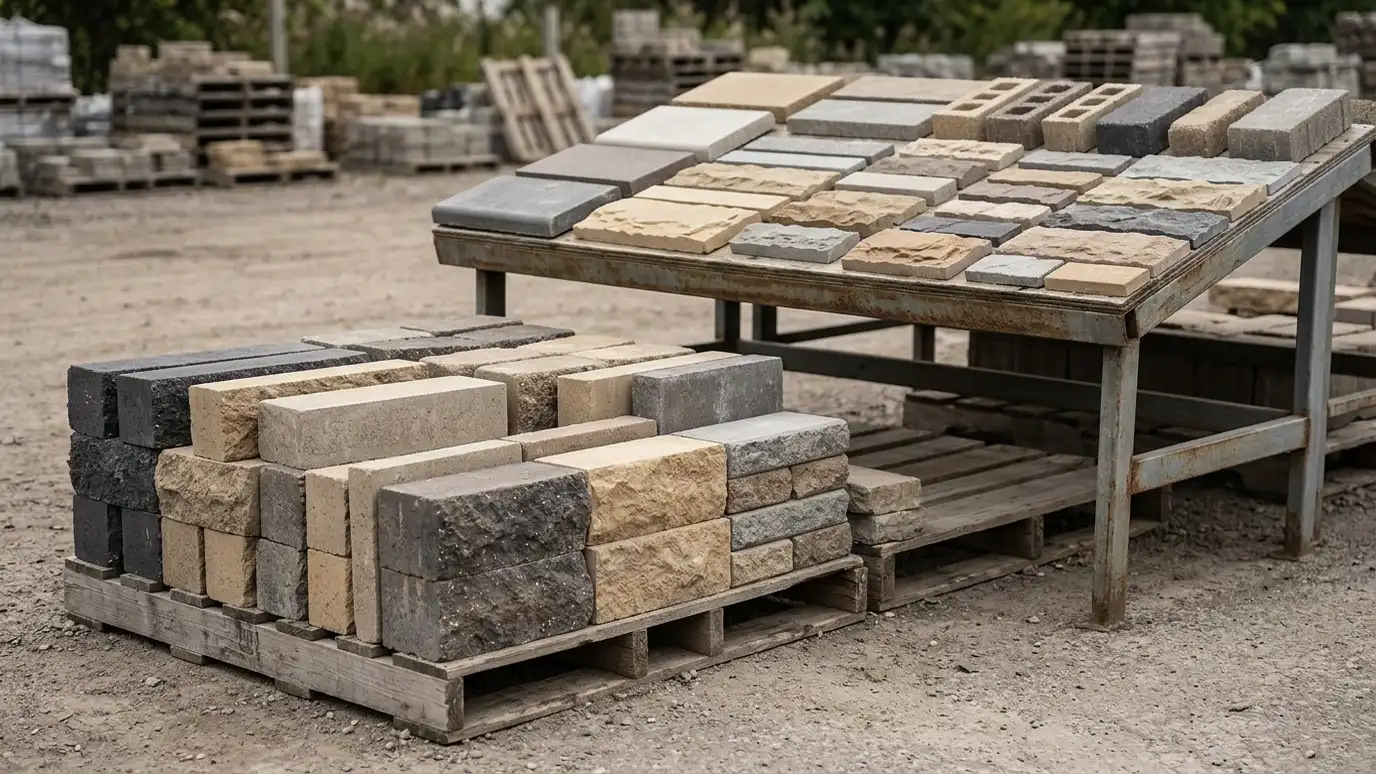 ResourceADSA maker of corrugated drainage pipe and stormwater products used for drains, culverts and water management.Learn more
 ResourceEPAFederal information on controlling stormwater runoff and sediment from construction sites.Learn more ResourceMetro WaterThe local department that handles water, sewer and stormwater programs for Nashville and Davidson County.Learn more
Pick a wall type, set the size and add extras to see a ballpark planning range. Placeholder values only.
You tell us what is wrong or what you want to build, and we set a visit that fits your day.
We walk the site, measure heights and lengths, look at soil and water paths and talk through what you want the space to do.
You receive a plain written scope with materials, drainage, engineering needs and the schedule before work begins.
We locate utilities, stake the wall line, excavate and build a compacted base that will carry the wall.
We build the wall course by course, add reinforcement as designed, install drains and place and compact clean backfill.
We add caps, steps and planting, clean up, restore the site and walk through the finished wall with you.
Depth depends on the water source and the outlet. We design it for your yard.
To daylight, a dry well in suitable soil or an approved connection. Rules vary.
It often helps, depending on the cause. We evaluate first.
Yes. Drains behind or above a wall relieve water pressure.
With clean stone, fabric and outlets, they can serve for many years.
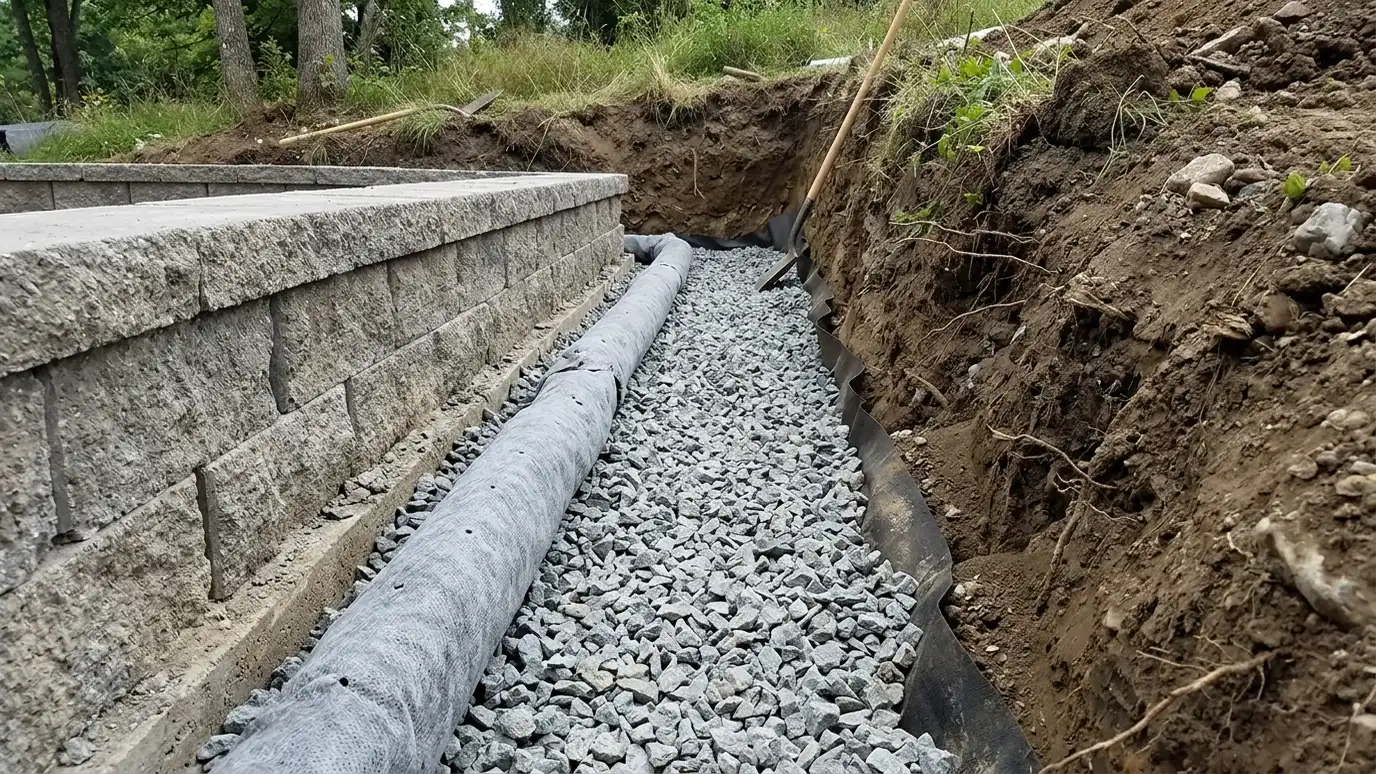 Retaining Wall Drainage SystemsPerforated drain pipe, clean gravel, filter fabric and clear outlets that keep water pressure off your wall.Explore
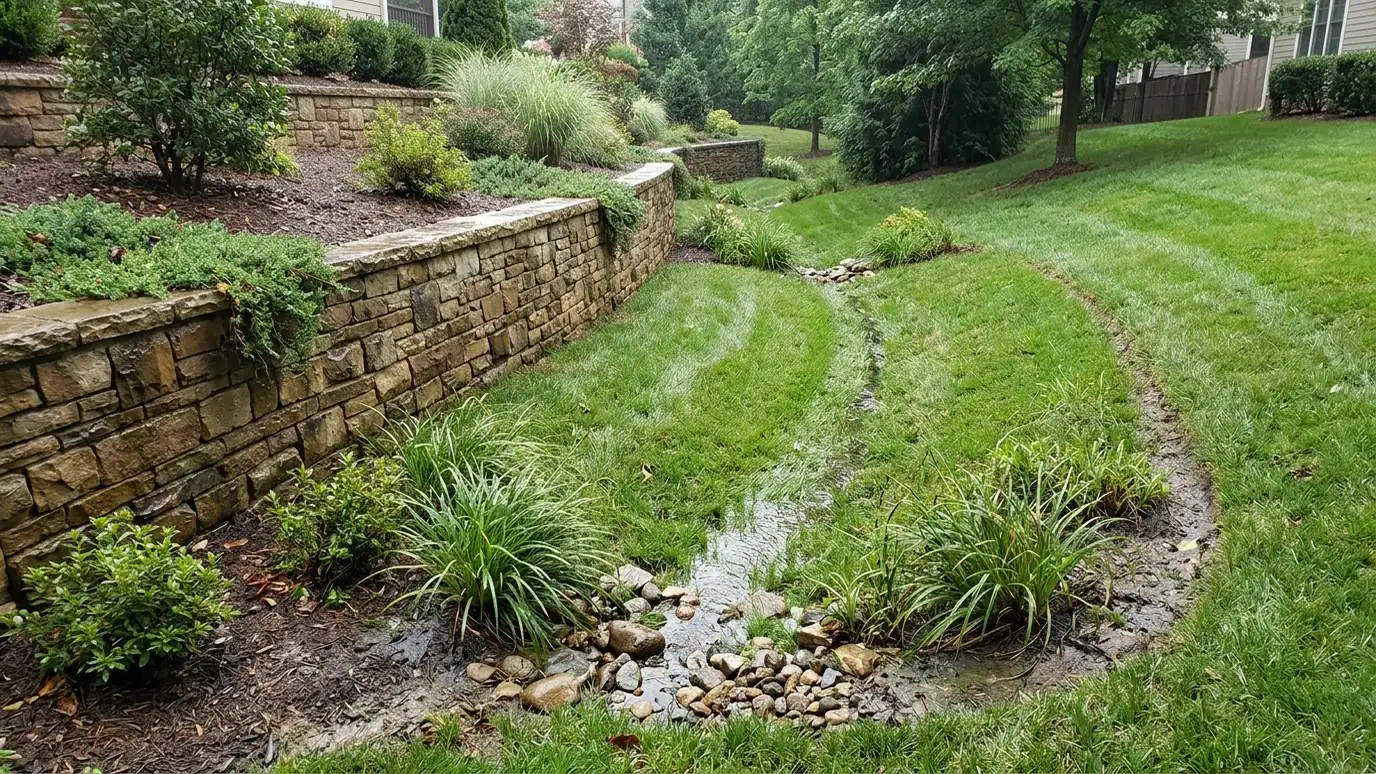 Stormwater and Swale ManagementSwales, grading and catch basins that move storm runoff around walls, homes and slopes without causing erosion.Explore
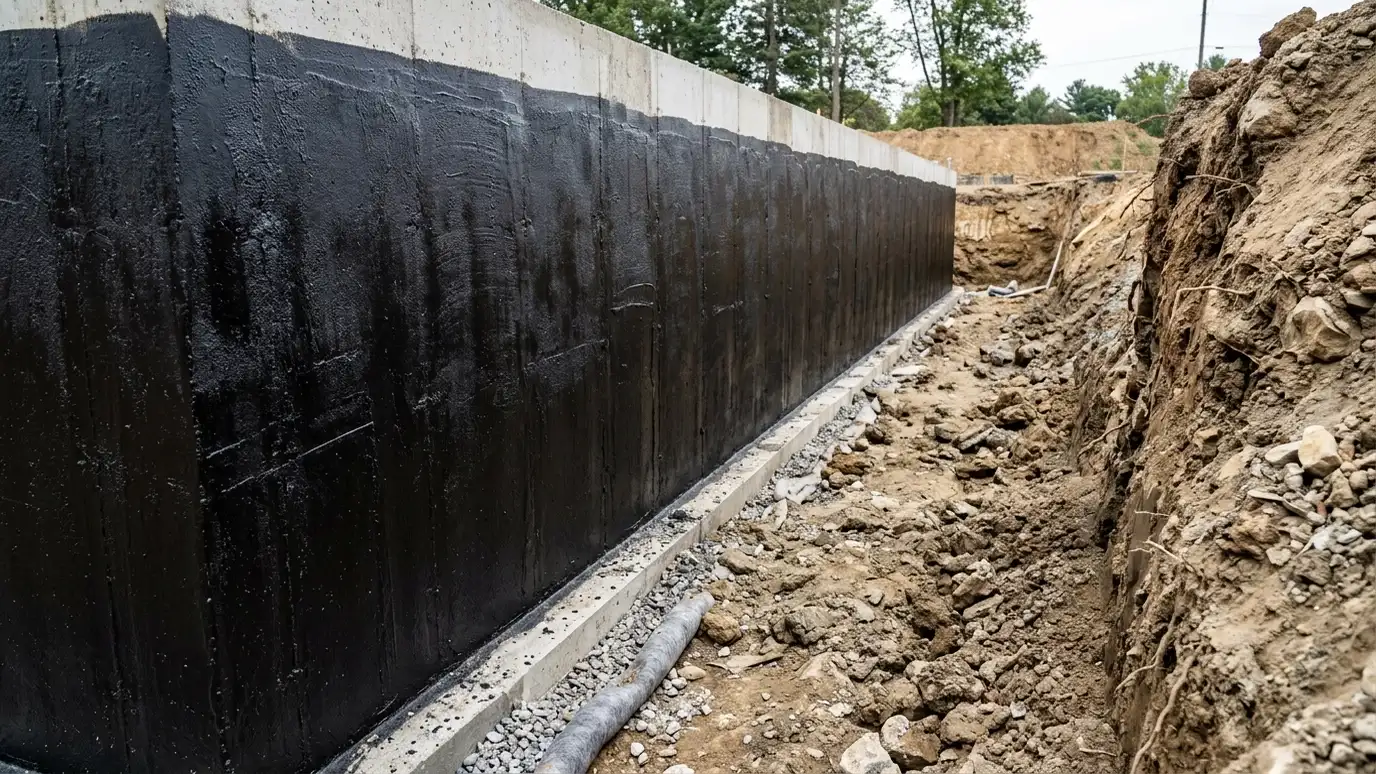 Waterproofing Behind WallsMembranes, drainage boards and sealants that keep moisture out of concrete walls and basement spaces.Explore
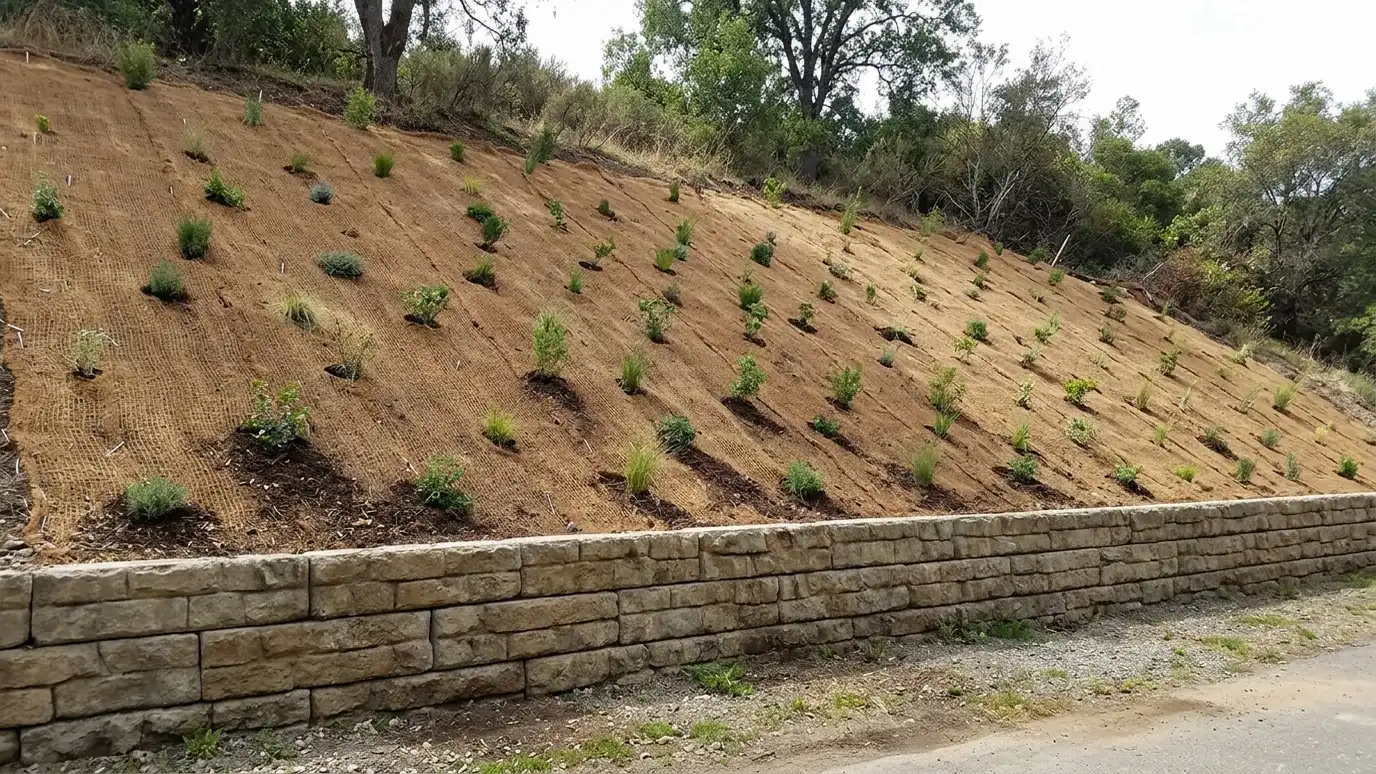 Erosion Control and Slope StabilizationWalls, matting, stone, plantings and drainage that stop soil loss on slopes, banks and construction sites.Explore
Tell us about your project and we will call you back to set up a visit.
Or call (615) 357-7797 to talk now.