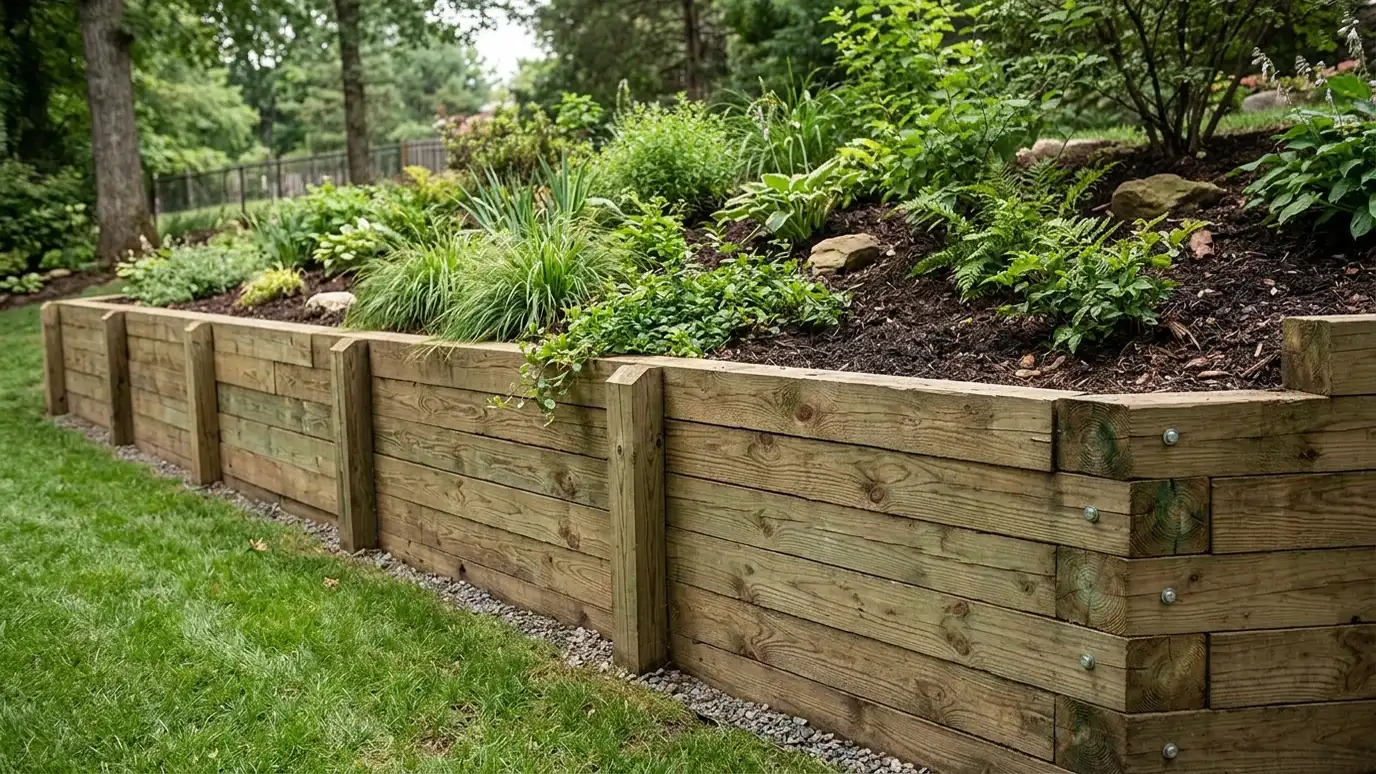
Pressure-treated timber walls for gardens and low slopes, built with deadmen, drainage and proper fasteners.
Timber walls offer a warm, rustic look at a modest cost, and they are a common choice for garden beds and low slopes. They have a shorter service life than stone or concrete, and good construction helps them last as long as possible. Homeowners in Nashville choose timber for simple, short walls and for situations where appearance and budget both matter.
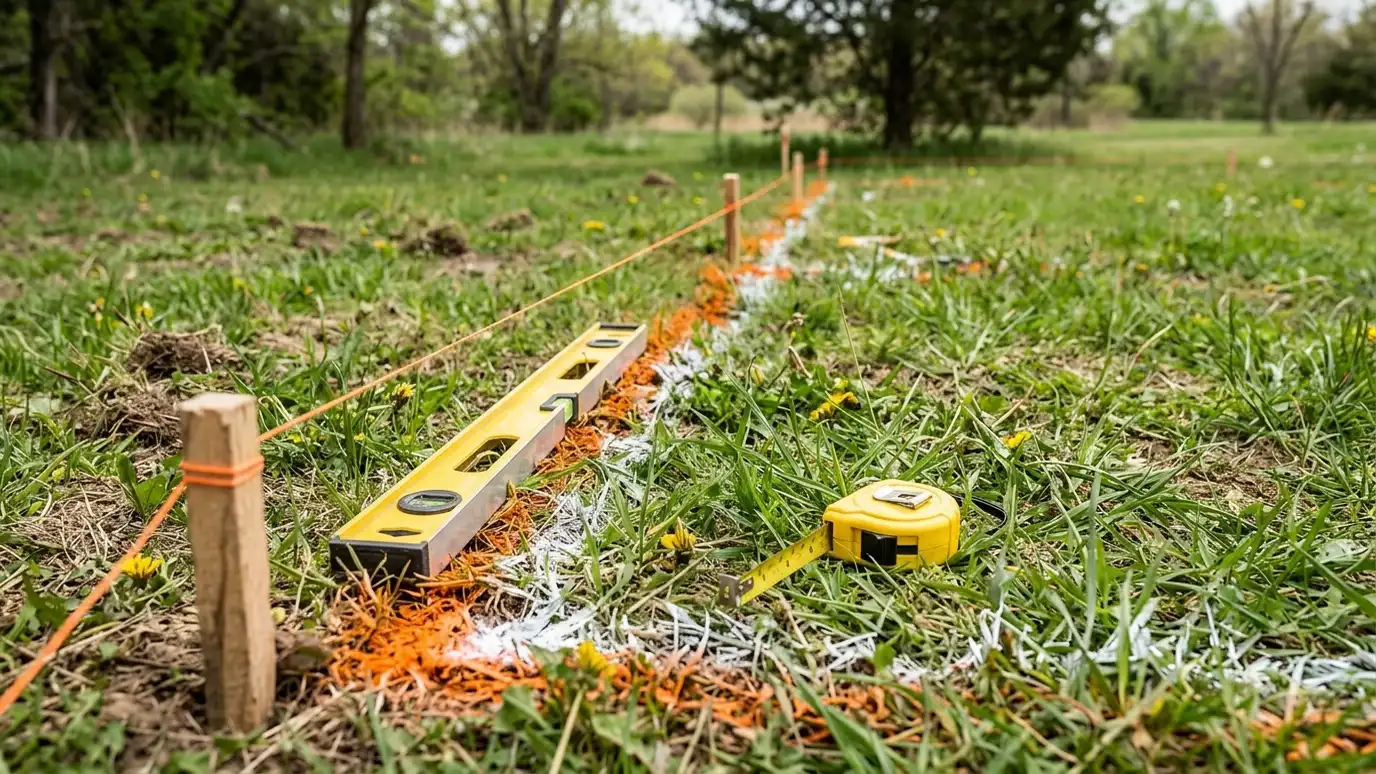
We begin with a Free Estimate and talk honestly about timber, including its lifespan compared with other materials. We excavate a trench, set the first course on compacted gravel, stack and fasten timbers with long spikes or rods, add deadmen tied back into the hill where needed, install drainage and backfill and finish the top neatly. For taller or longer-lived walls, we often suggest block, stone or concrete. A good timber wall depends on details most people never see. Gravel under the first course keeps timber off wet soil, long fasteners tie the courses together, and deadmen reach back into the hillside to resist the push of the soil. We also discuss end treatment, cut-end sealing and how the wall meets steps or planting beds. If the slope is steep or the wall is long, we explain why another material may serve you better, so you can choose with clear expectations.
Timber blends with gardens, play areas and rustic homes.
Pressure-treated timber, hardware and drainage extend life.
Timbers tied into the slope keep longer walls from leaning.
We tell you when another material is a better long-term investment.
Drag the handle to compare.
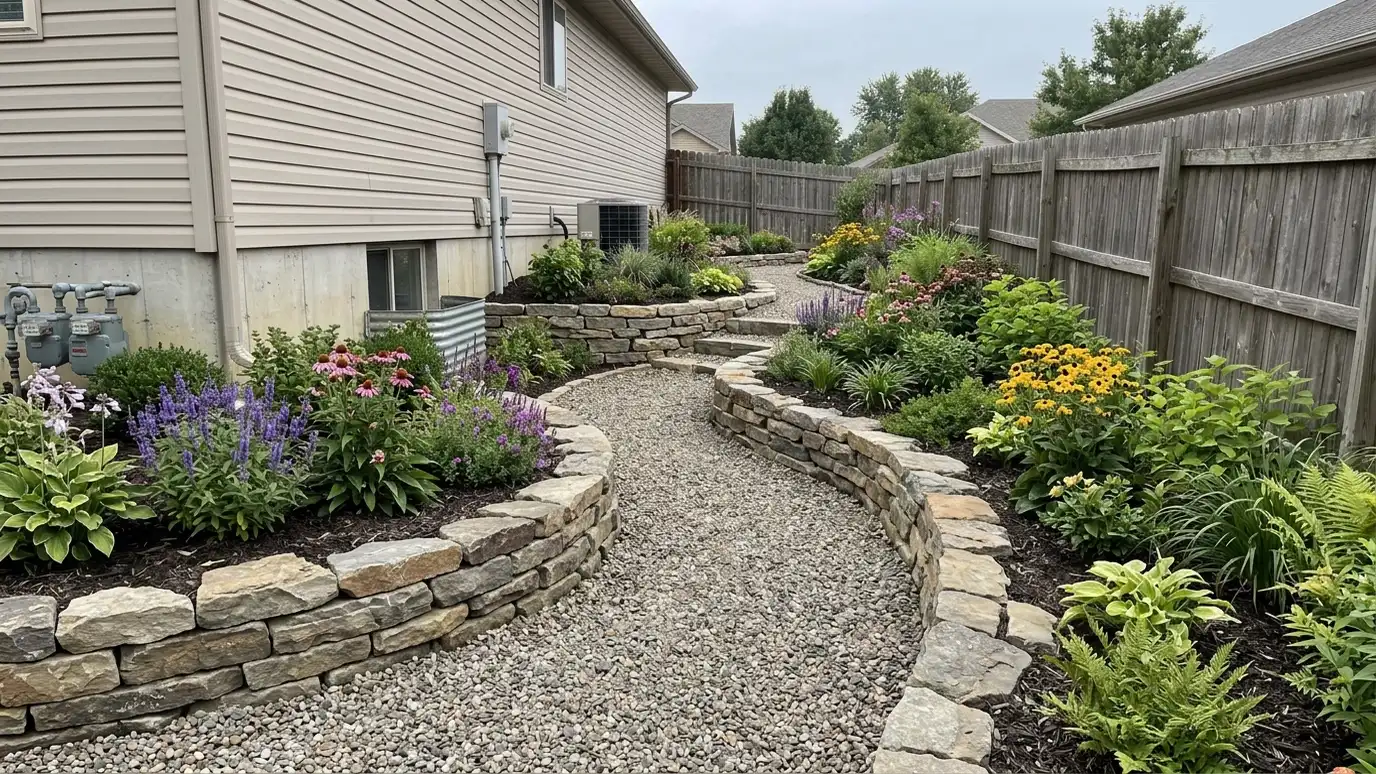
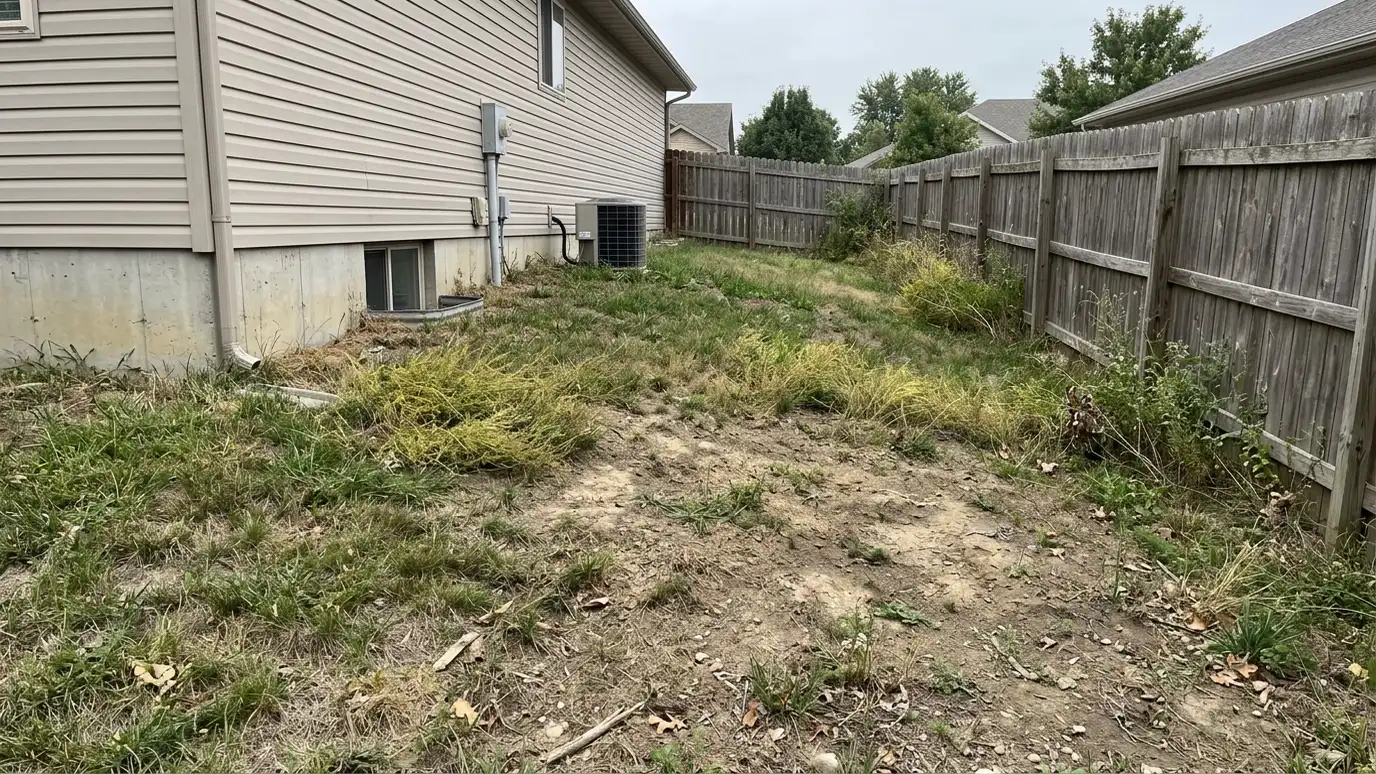 BeforeAfter
Timber compared with alternatives.
Alignment and base prepared.
Timbers pinned together.
Anchors set into the hill.
Gravel and pipe placed.
Neat top and tidy site.
Every topic has its own page with what to expect and how we approach it.
 ResourceCMHAA trade association for concrete masonry and hardscape products that shares technical resources, design guidance and industry news.Learn more
 ResourceASTMA standards organization that publishes technical standards for materials, testing and products used in construction.Learn more
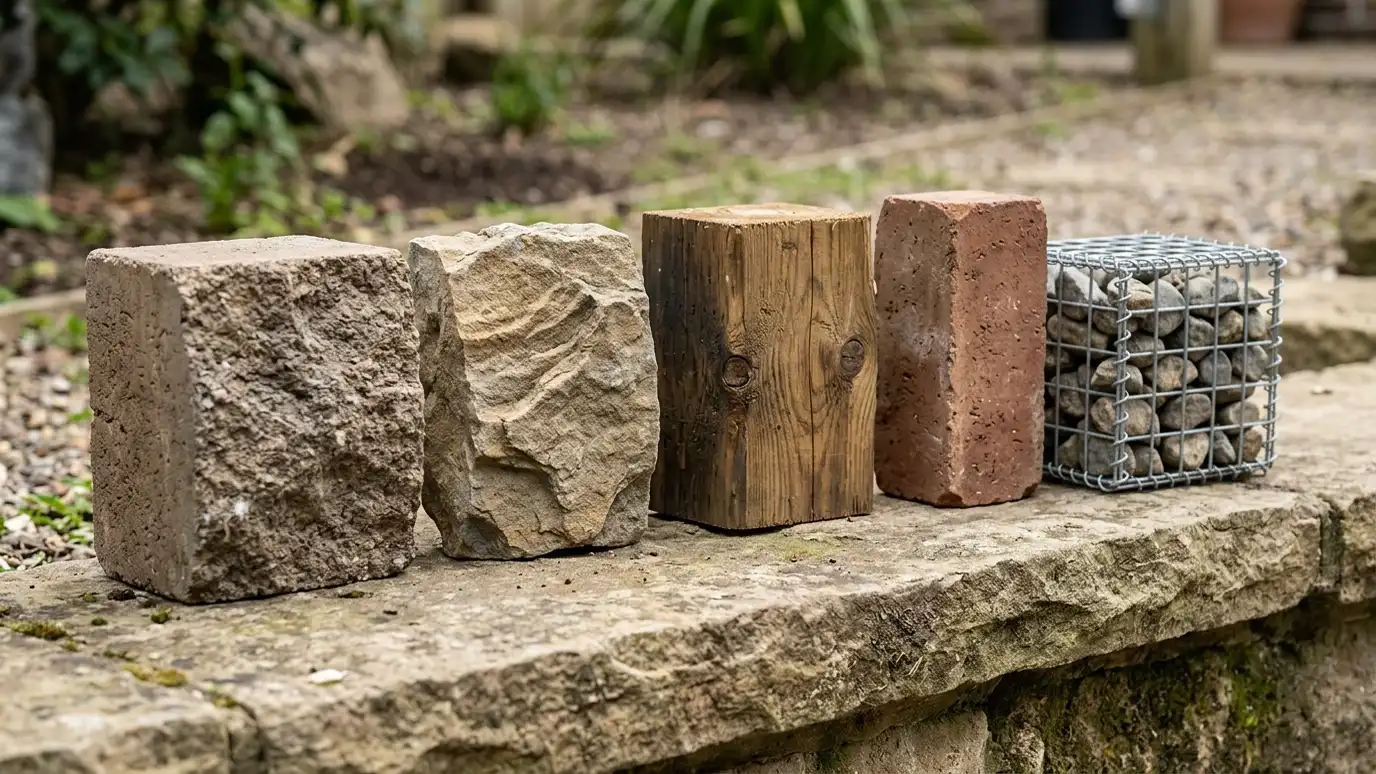 Comparison guideWall Materials ComparedSegmental block, poured concrete, natural stone, boulders, timber, brick and gabions compared by look, strength, drainage and care.Learn more
Answer a few questions about height, style, access and care to see which wall materials usually fit and what to look at next.
You tell us what is wrong or what you want to build, and we set a visit that fits your day.
We walk the site, measure heights and lengths, look at soil and water paths and talk through what you want the space to do.
You receive a plain written scope with materials, drainage, engineering needs and the schedule before work begins.
We locate utilities, stake the wall line, excavate and build a compacted base that will carry the wall.
We build the wall course by course, add reinforcement as designed, install drains and place and compact clean backfill.
We add caps, steps and planting, clean up, restore the site and walk through the finished wall with you.
Often fewer years than masonry walls. Treatment, drainage and soil conditions affect life.
They are best for short walls. Taller walls usually call for other materials.
Modern treated lumber is widely used, and we can discuss alternatives for edible beds.
Yes. We often replace failing timber with longer-lasting materials.
Treated timber, gravel contact and drainage help, and we discuss maintenance.
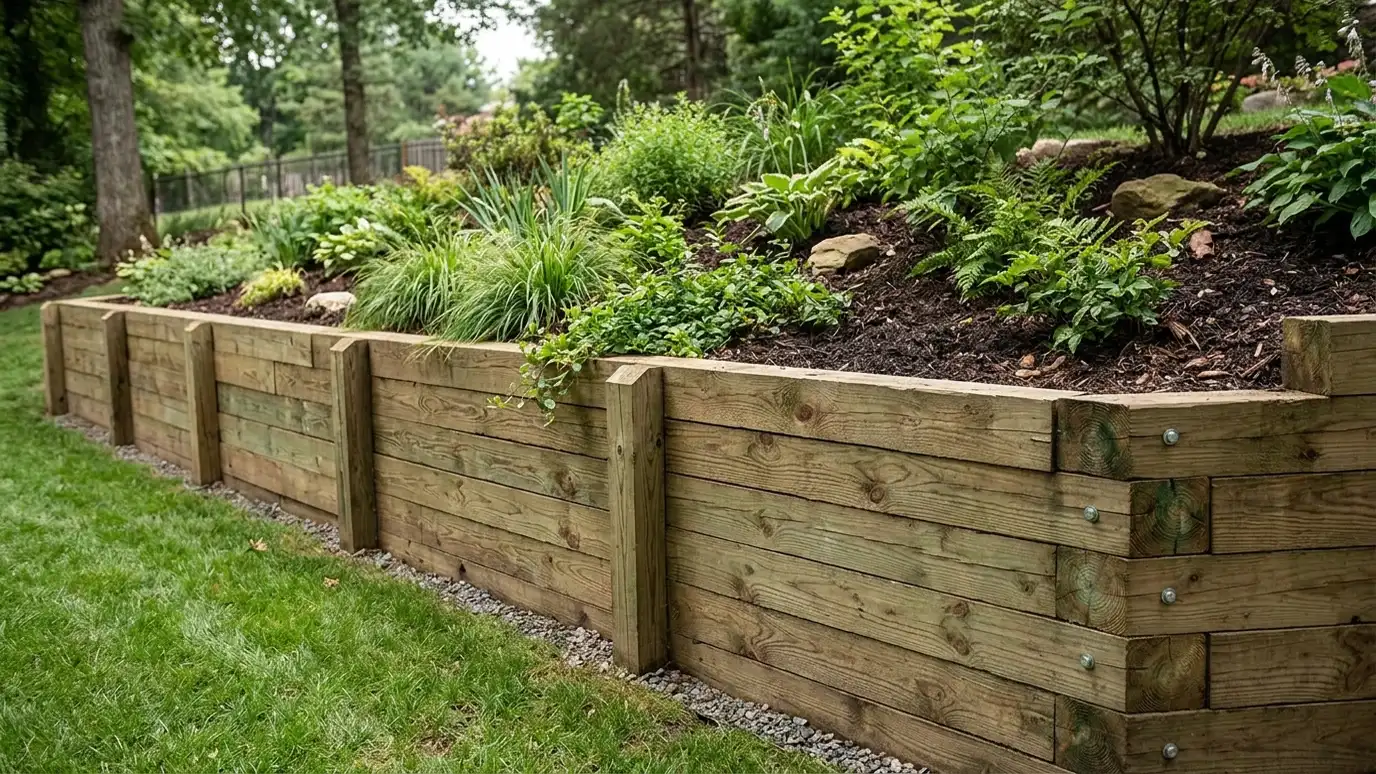 Timber Wall ReplacementReplacing rotting or failing timber walls with longer-lasting block, stone or concrete, or with new timber when that…Explore
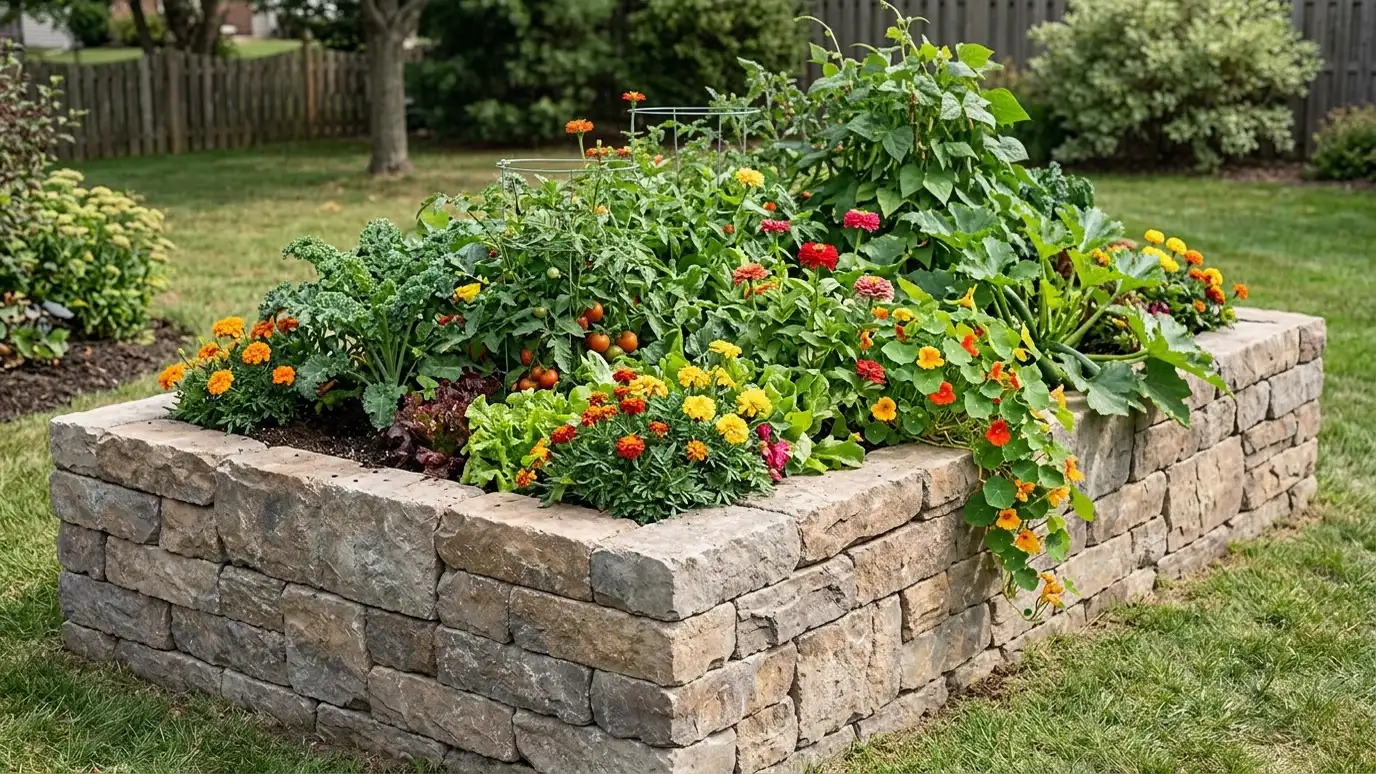 Garden Bed and Raised Planter WallsLow walls and raised beds in stone, block or timber that hold soil, define garden spaces and make…Explore
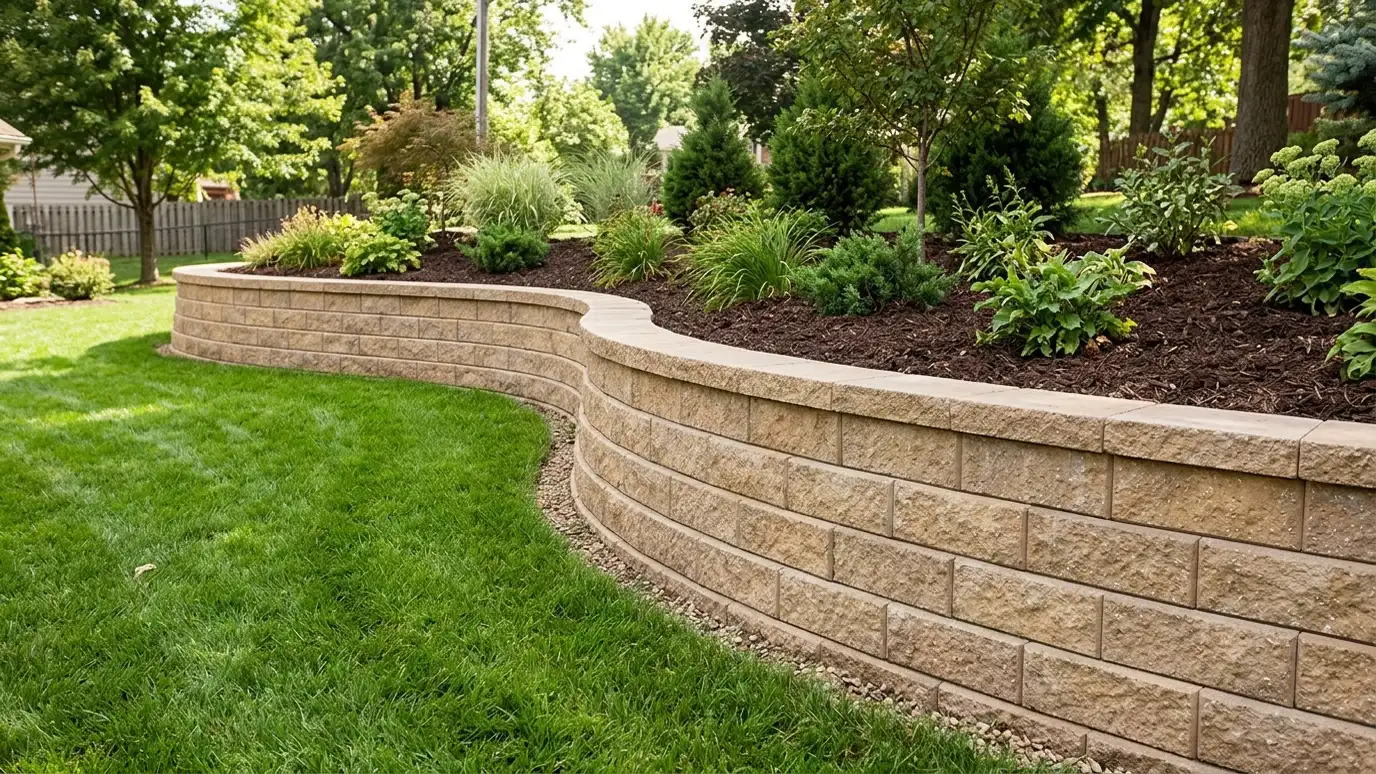 Segmental Block Retaining WallsInterlocking concrete block walls built on a compacted base with drainage and, when needed, geogrid reinforcement.Explore
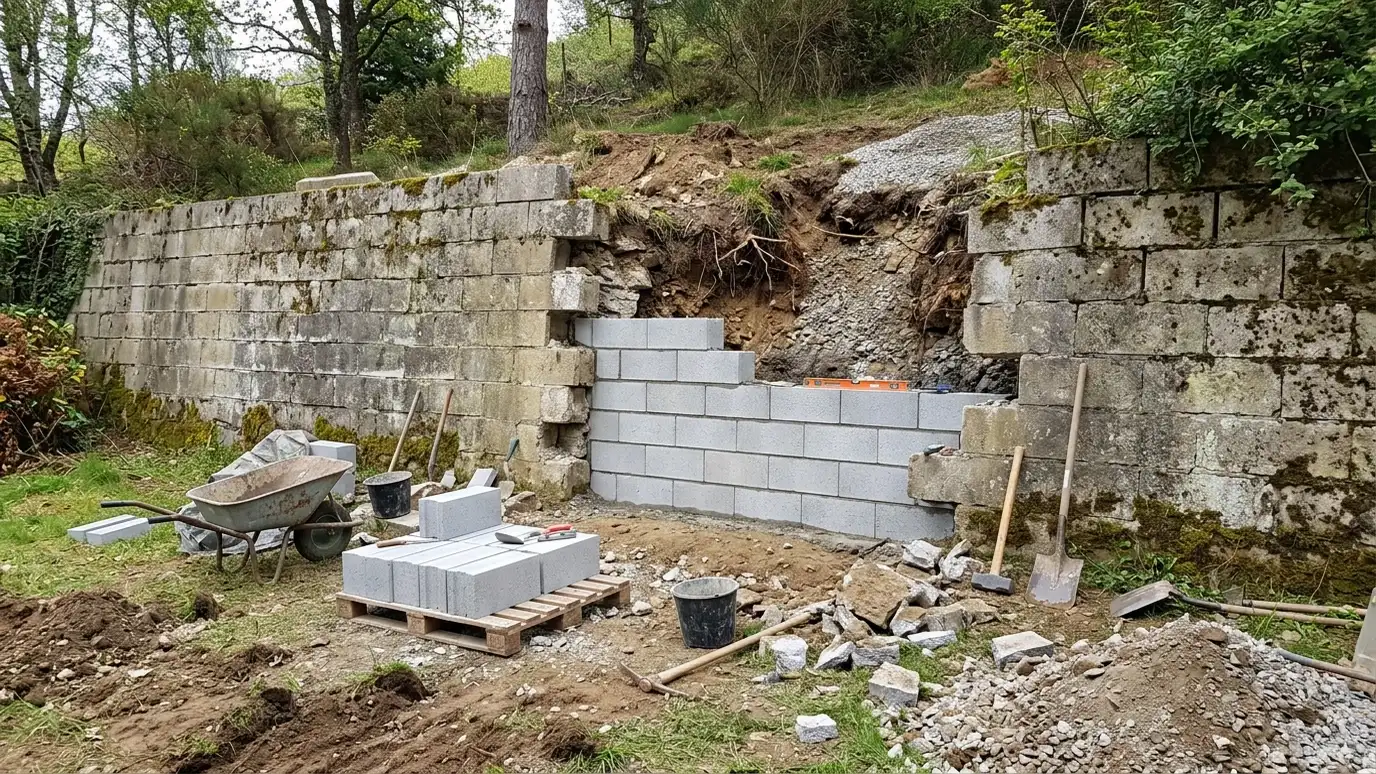 Retaining Wall RepairHonest inspection and repair of leaning, cracked, bulging or draining walls, with a clear view of what can…Explore
Tell us about your project and we will call you back to set up a visit.
Or call (615) 357-7797 to talk now.