Read the erosion
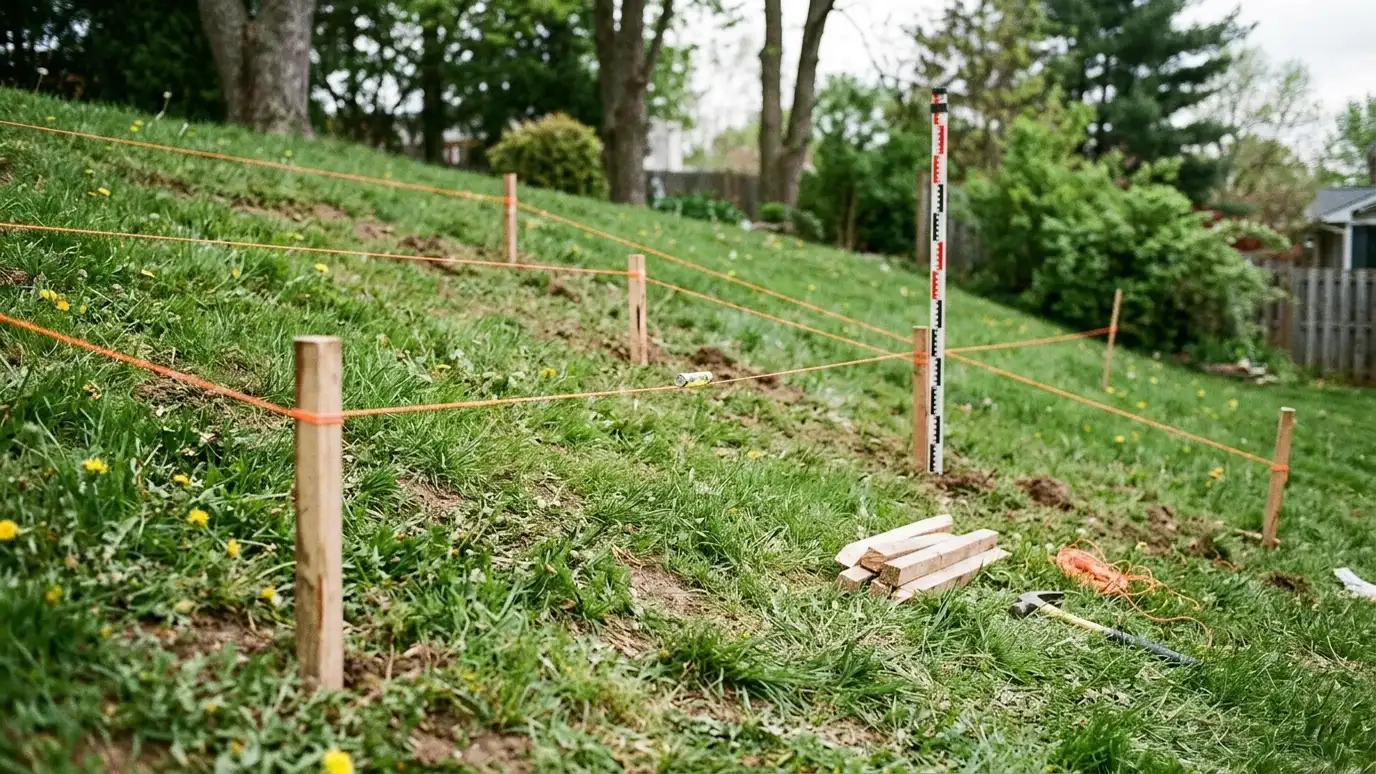
Rills, gullies, exposed roots, bare soil and muddy runoff show where water is cutting.
Follow the flow uphill to find the source.
Fix the source first.
Photograph the eroding area during and after rain. Seeing where water enters and leaves tells you where to place drains, swales and stone.
Walk the property during a rain if you safely can. Watching where water collects, speeds up and leaves teaches more than any plan. Take short videos, then compare them with the slope on a dry day to see where soil is being carried away.
Redirect water
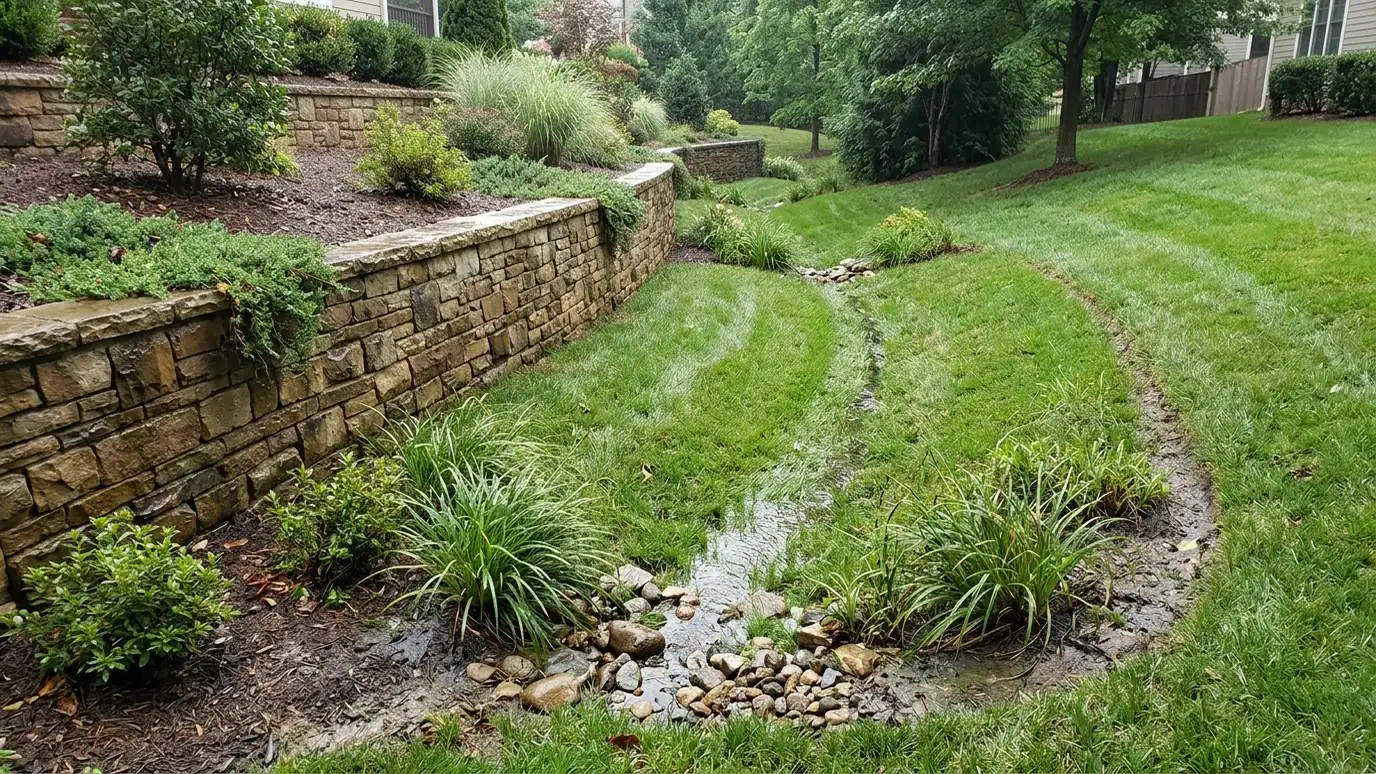
Swales, drains and grading slow and redirect runoff. Downspouts need safe discharge.
Rock aprons protect outlets.
Spread flow so it does not concentrate.
Spread flows where you can. Several small discharge points are often kinder to a slope than one large concentrated flow.
Structure
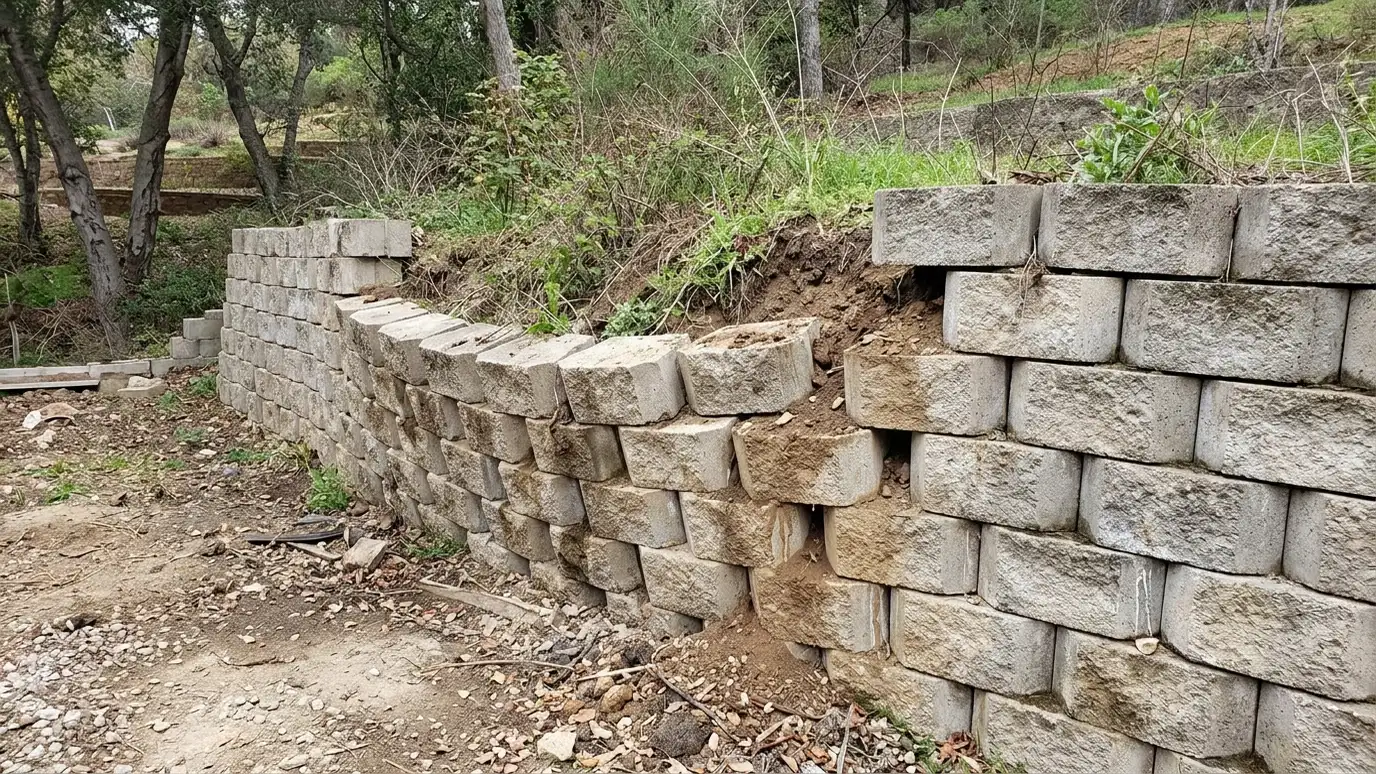
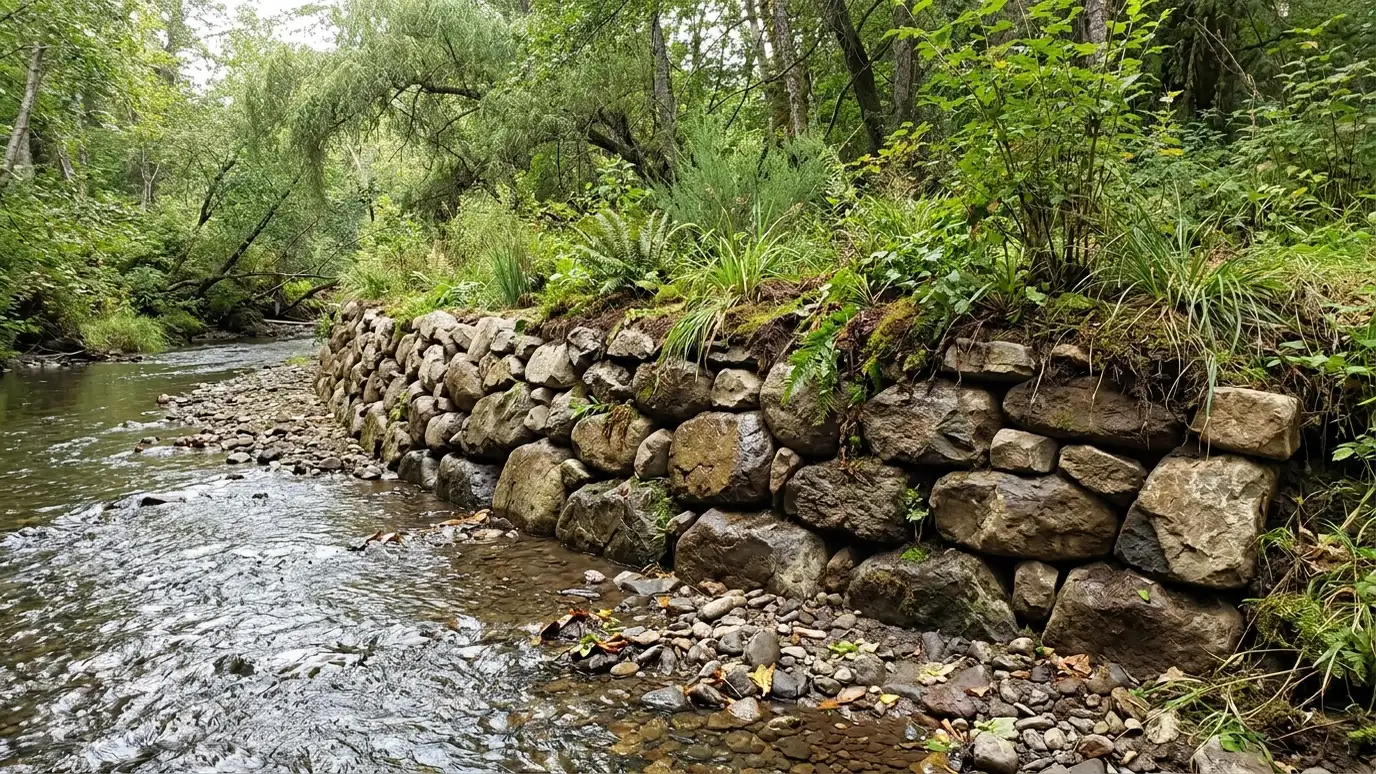
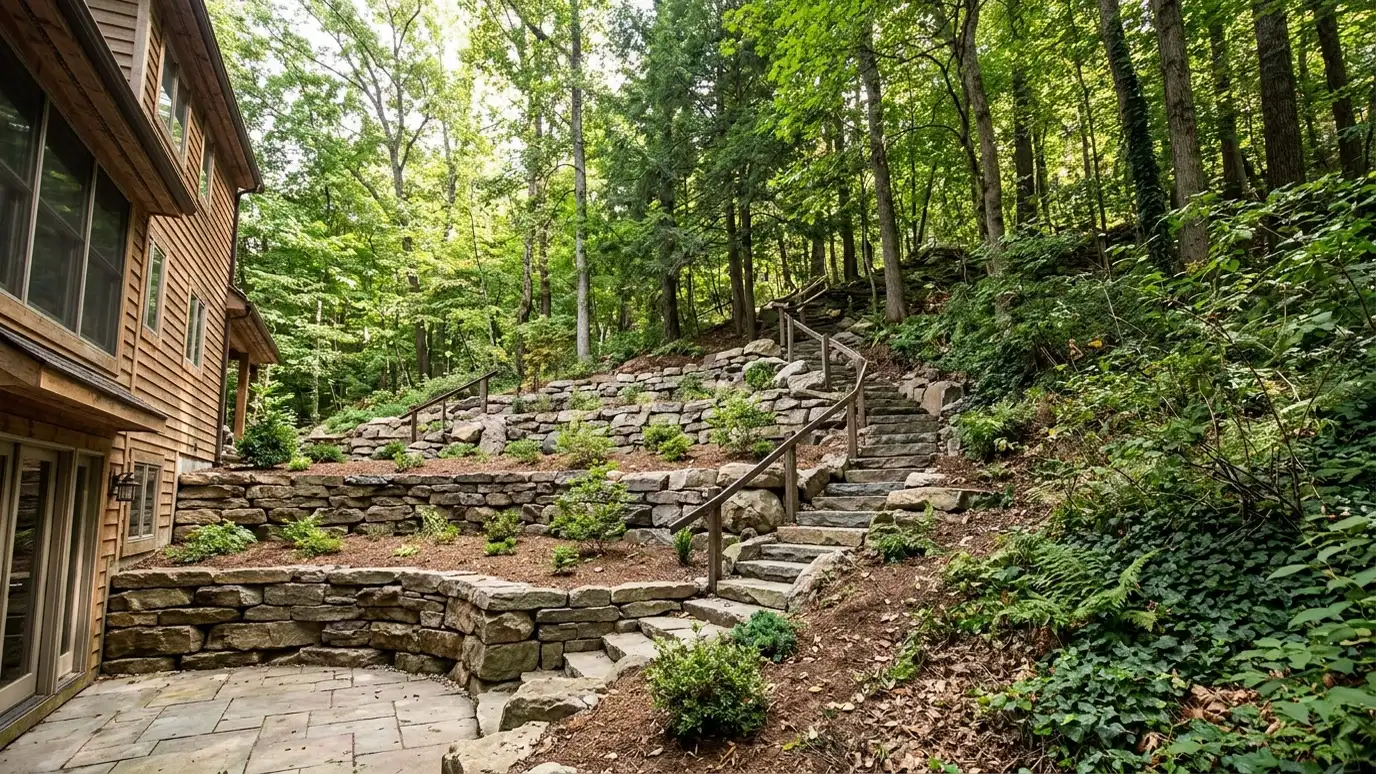
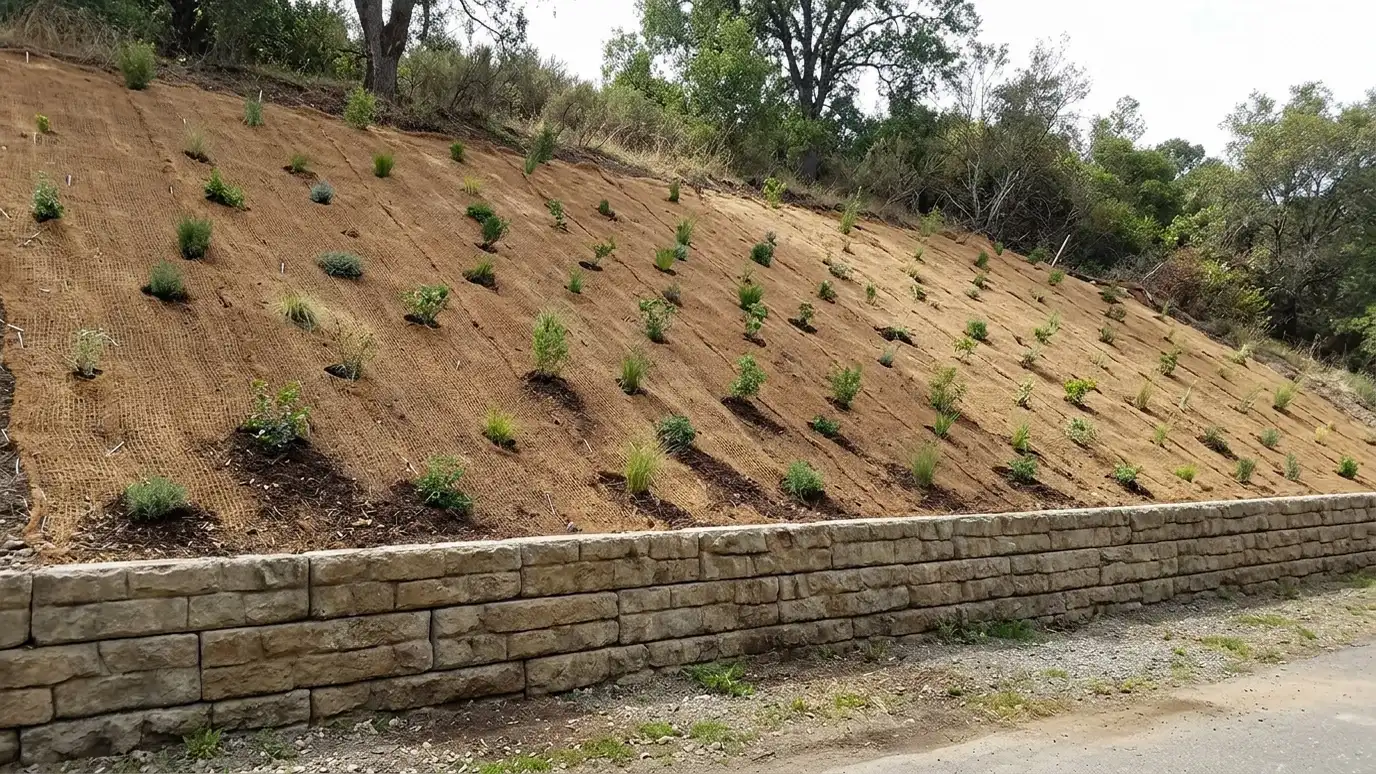
Retaining walls, terraces, rock checks and riprap hold soil in place.
Place structure where slopes are steepest or banks are cutting.
Design for expected flows.
Ask your contractor about stone size and placement. Properly sized stone, set on fabric, resists scour better than loose gravel.
Place structure where it will do the most good. A short wall or rock check at the foot of a long slope, or a stone apron where a pipe empties, can protect far more ground than a large wall in the wrong place.
Cover and plants
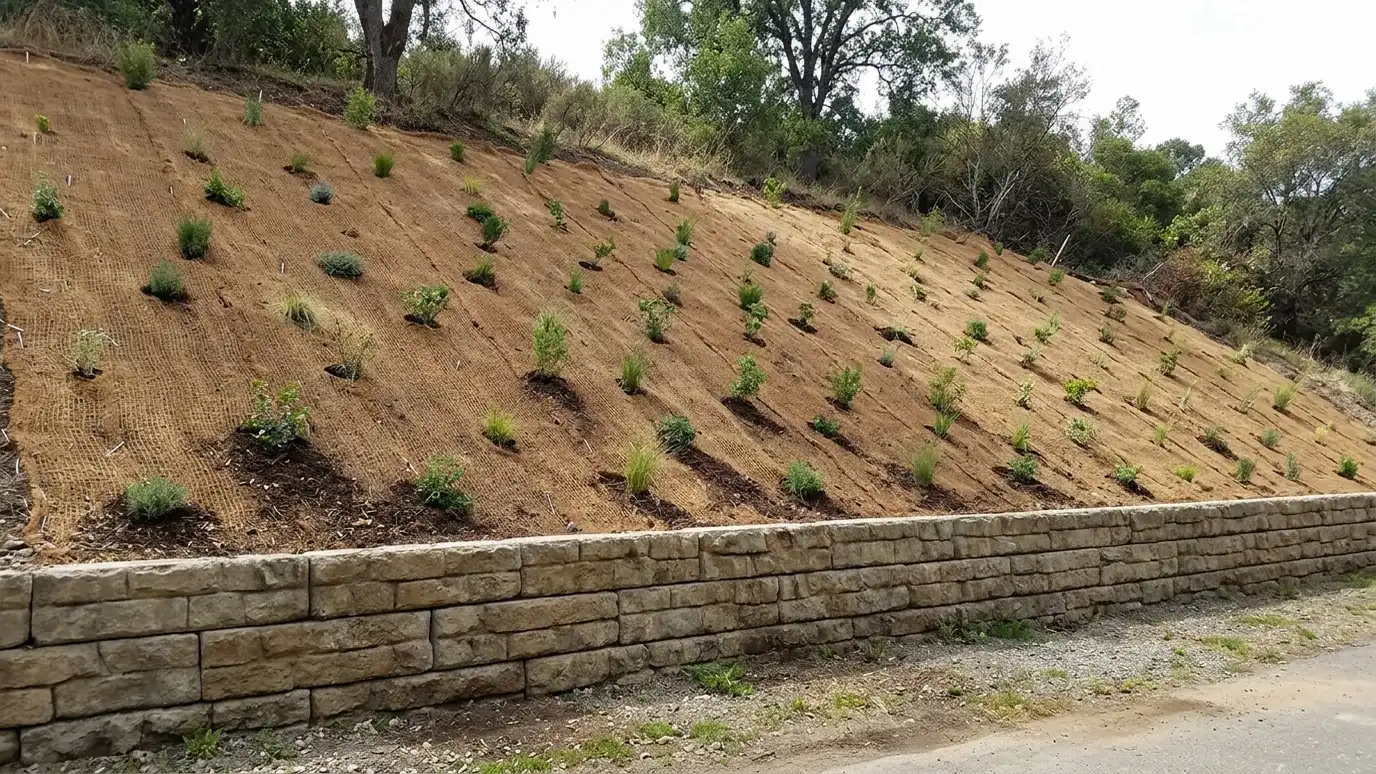
Matting, mulch, seed and native plants protect soil and hold it with roots.
Cover bare soil quickly.
Choose plants for slopes.
Choose native plants that suit your site, and plant them at the right time of year. Healthy roots are a powerful, long-lasting erosion fighter.
Construction controls
Silt fence, stabilized entrances and quick restabilization protect neighbors and streams.
Local rules may apply.
Inspect after storms.
If you are building, keep stockpiles away from drains and cover them when rain is expected. Small habits protect neighbors and streams.
Construction controls only work when they are maintained. Check silt fence after every storm, clean out sediment before it fills a third of the fence height, and keep stabilized entrances free of mud so roads and neighbors stay clean.
Maintenance
Check slopes after storms, fill small rills early and keep outlets clear.
Replant bare areas.
Keep notes of changes.
Walk your slope after the first big storms following any work. Early repairs of small rills prevent larger channels from forming.
Redirect water first, then add structure and plants, and cover bare soil quickly.