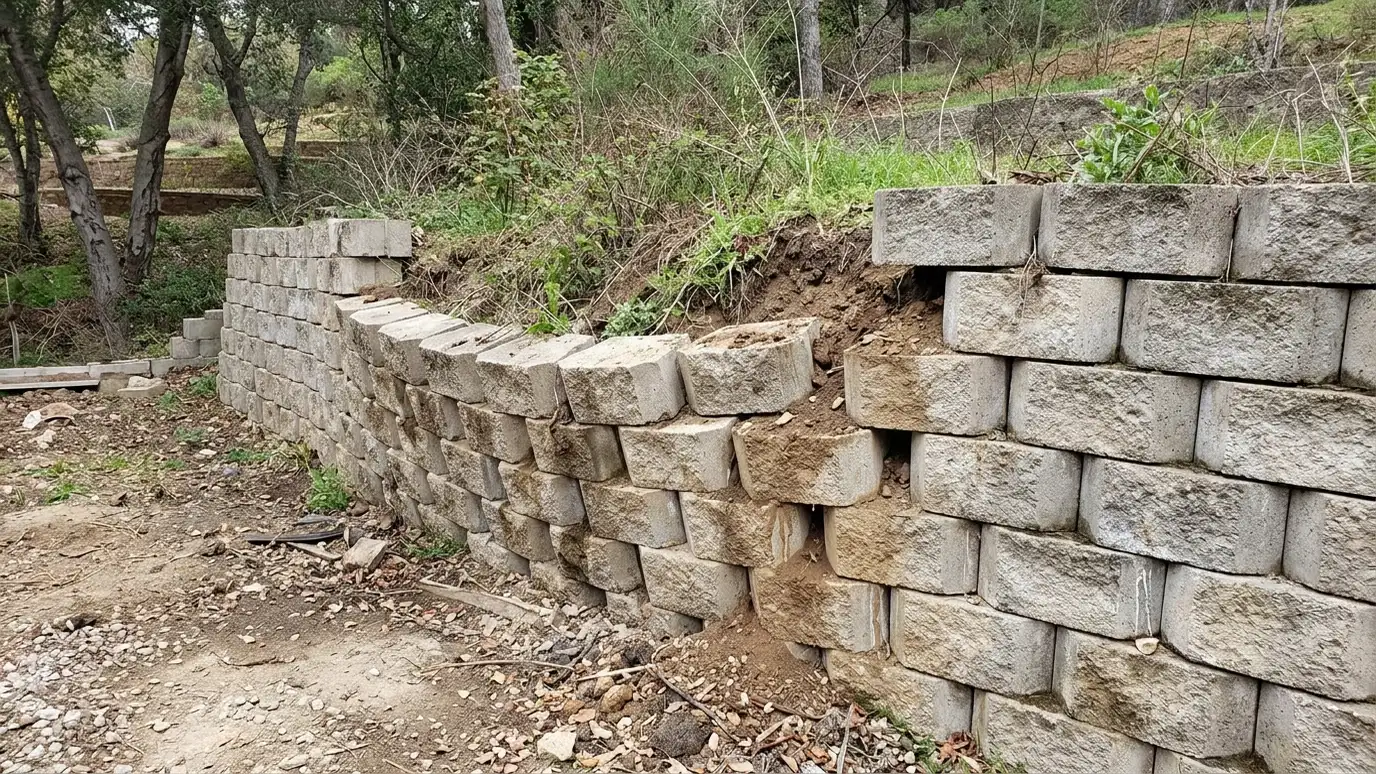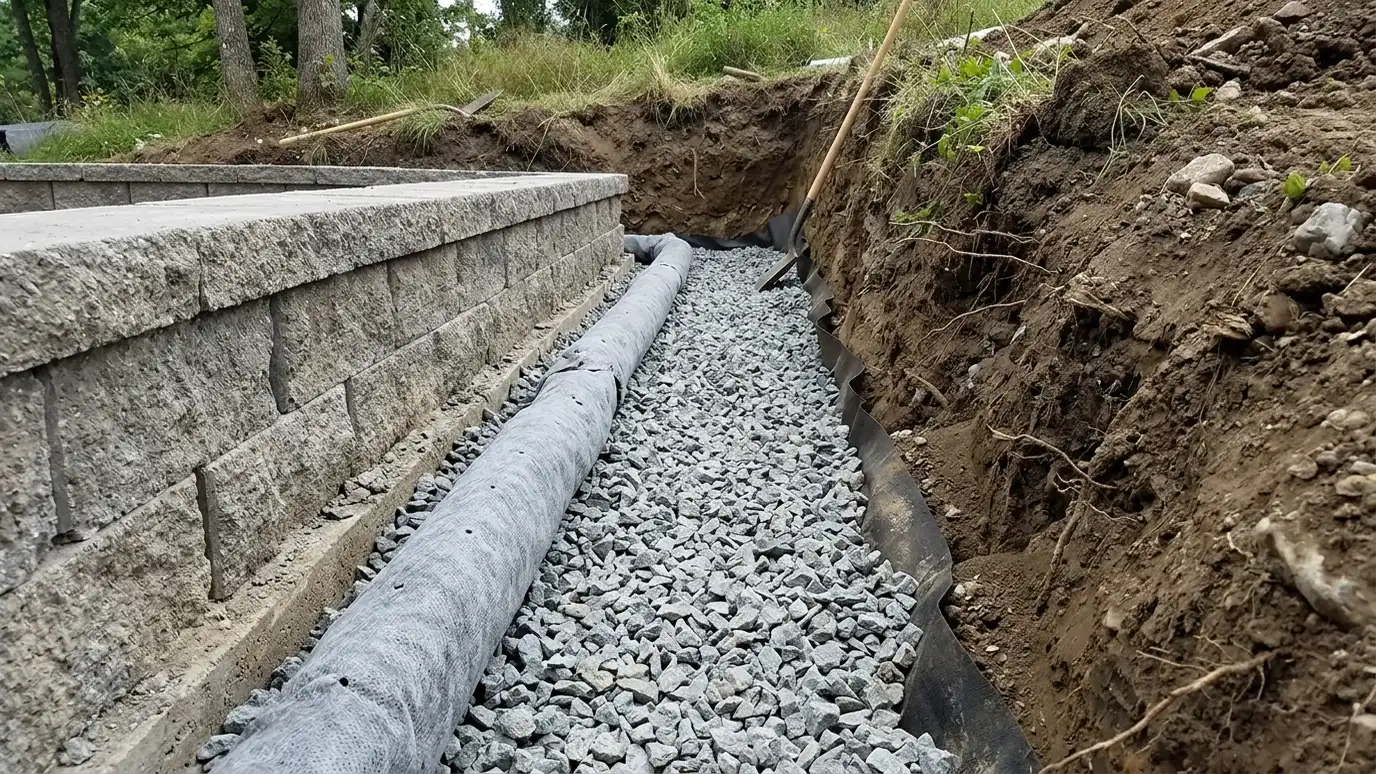
Perforated drain pipe, clean gravel, filter fabric and clear outlets that keep water pressure off your wall.
Water pressure is one of the most common causes of retaining wall trouble. Wet soil is heavier, it can freeze and it pushes against the wall far harder than dry soil. A good drainage system gives that water a path out. Homeowners in Nashville, where heavy storms are common, ask us to build drainage that works from the first day and keeps working.
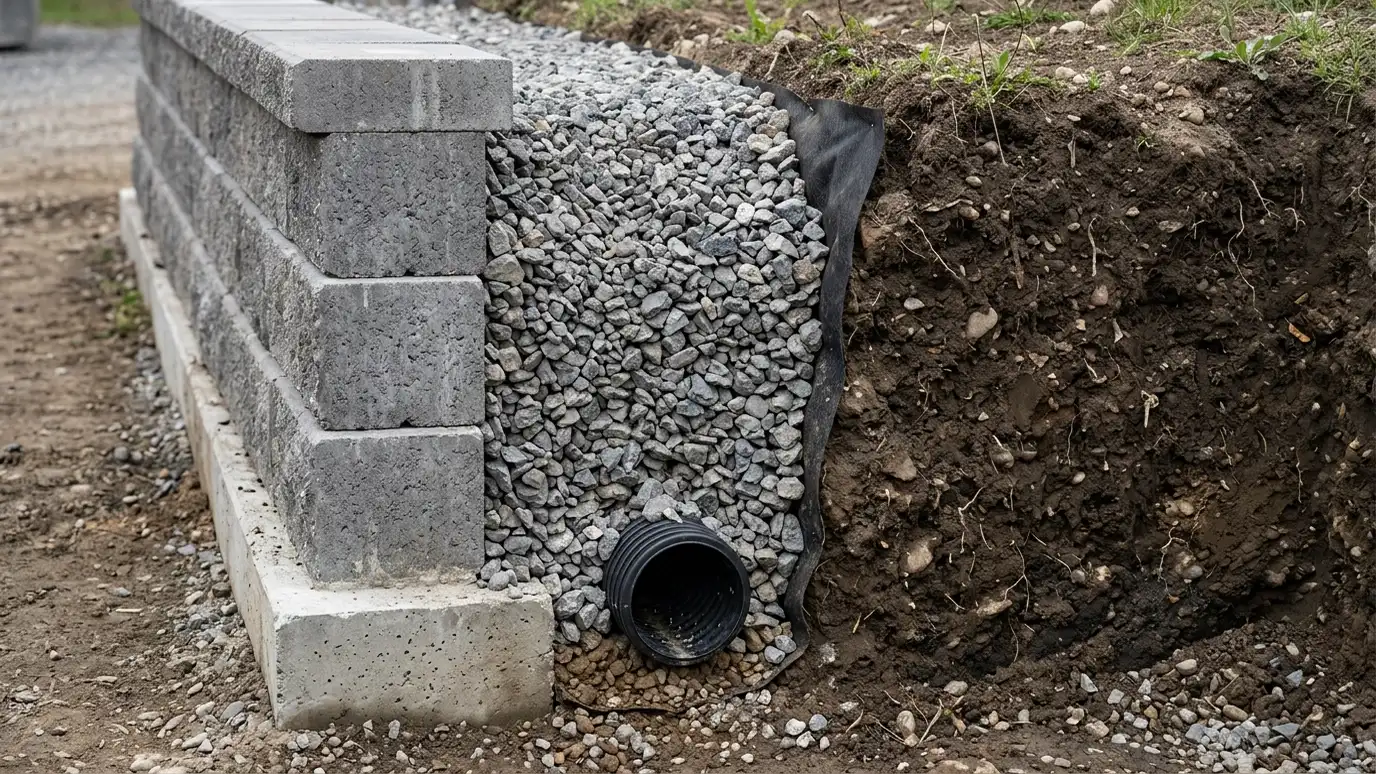
We begin with a Free Estimate and study how water reaches your wall: from the slope above, from downspouts, from pavement and from the soil itself. We install a perforated pipe at the base of the wall, surround it with clean, angular gravel wrapped in filter fabric, extend the gravel zone up behind the wall and run the pipe to a clear daylight outlet or a tie-in. We add cleanouts so the drain can be flushed, and we grade the surface so water moves away. A drainage system is only as good as its slope and outlet, so we take time to check both. The pipe needs a steady fall toward the outlet, the outlet needs a protected opening that animals and debris cannot easily block, and the discharge point must not wash out soil below. We mark outlet locations in our notes so you can find them later, and we explain how to check that water is flowing after a good rain. Small habits like that keep a drain performing for years.
Pipe, gravel and outlets give water somewhere to go.
Angular, washed gravel drains well and resists clogging.
Filter fabric keeps soil out of the stone while letting water through.
A drain must discharge safely and be accessible for maintenance.
Drag the handle to compare.
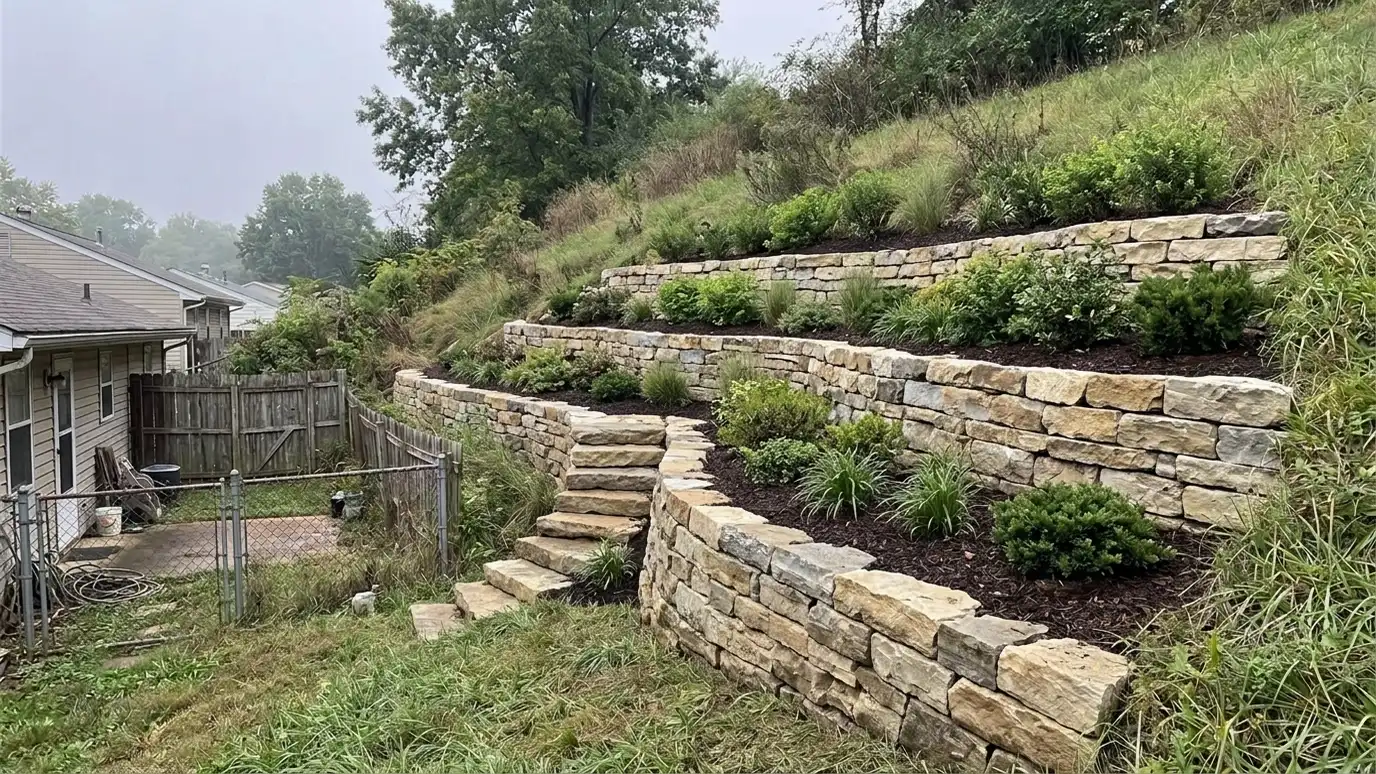
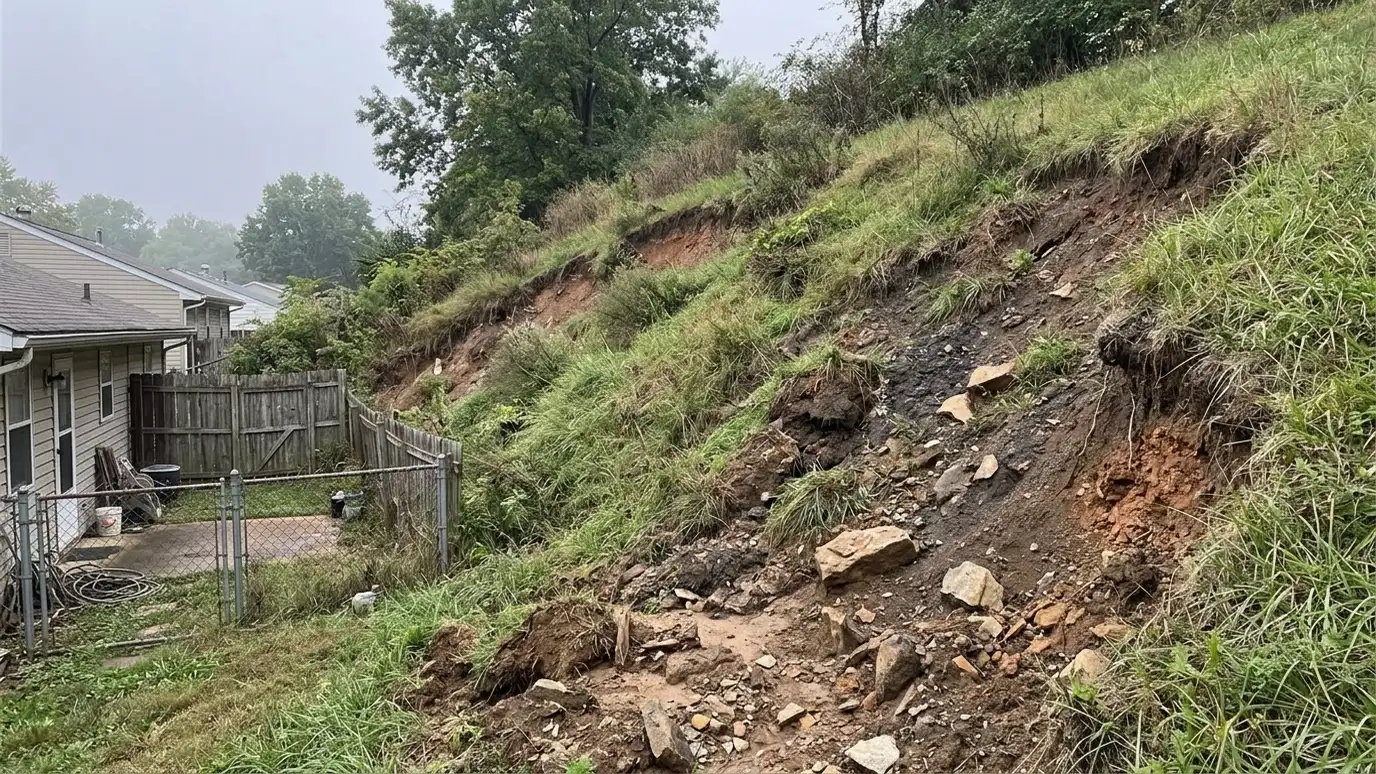 BeforeAfter
Paths of runoff mapped.
Grade and outlet planned.
Drain zone built.
Daylight or tie-in completed.
Access points installed.
Water directed away.
Every topic has its own page with what to expect and how we approach it.
 Comparison guideWall Drainage ExplainedHow drain pipe, clean stone, filter fabric and outlets work together to keep water pressure off a retaining…Learn more
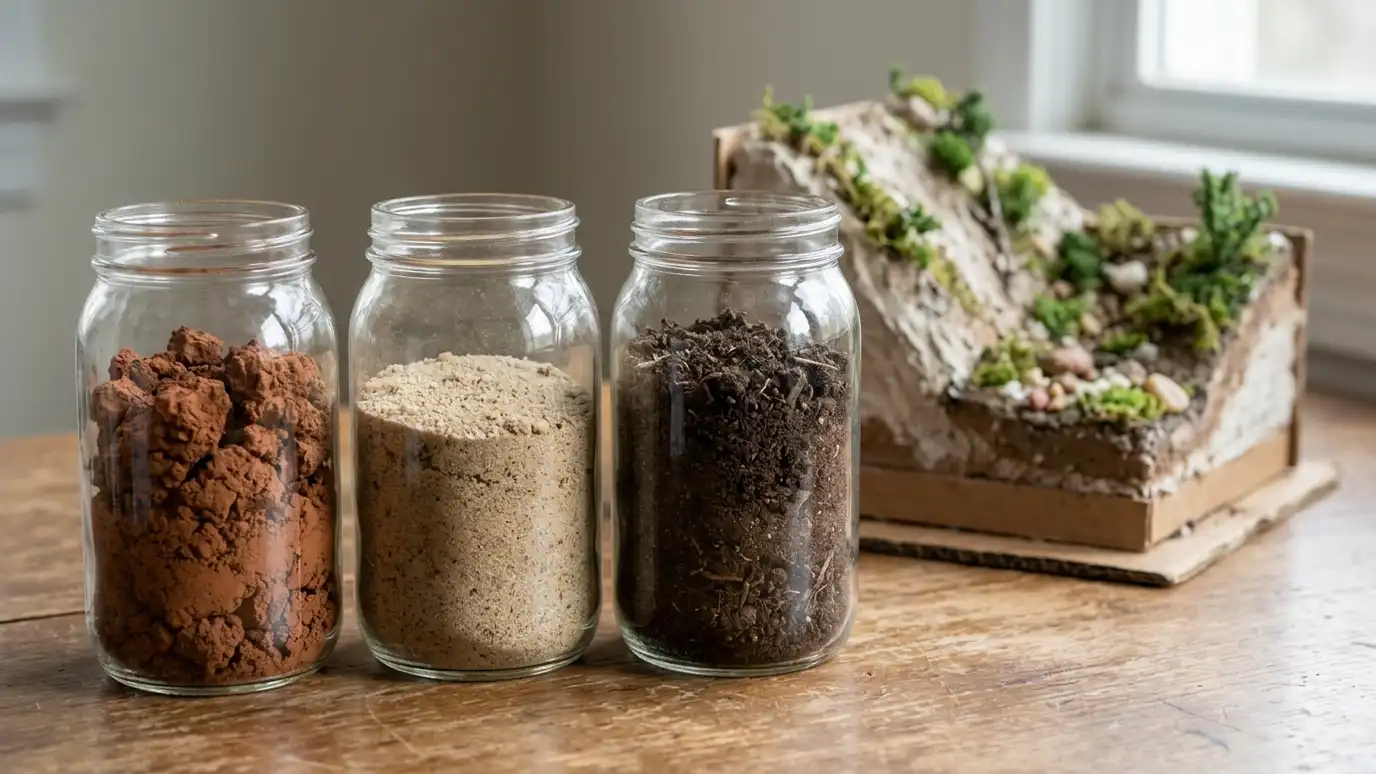 Comparison guideSoil Types and SlopesHow clay, silt, sand, rock and fill behave behind a retaining wall and why slope angle, water and…Learn more
 ResourceADSA maker of corrugated drainage pipe and stormwater products used for drains, culverts and water management.Learn more
Enter slope height and distance to see how many tiers may suit the grade, how far apart to space them and how wide the shelves can be.
You tell us what is wrong or what you want to build, and we set a visit that fits your day.
We walk the site, measure heights and lengths, look at soil and water paths and talk through what you want the space to do.
You receive a plain written scope with materials, drainage, engineering needs and the schedule before work begins.
We locate utilities, stake the wall line, excavate and build a compacted base that will carry the wall.
We build the wall course by course, add reinforcement as designed, install drains and place and compact clean backfill.
We add caps, steps and planting, clean up, restore the site and walk through the finished wall with you.
Most retaining walls benefit from drainage. We tell you what yours needs.
Pipe size depends on flow and wall length, and we select it for your site.
To a daylight outlet, a swale or an approved storm connection, depending on rules.
Yes. Fabric, clean gravel and cleanouts reduce the risk.
Sometimes, by excavating behind it or adding relief drains. We inspect first.
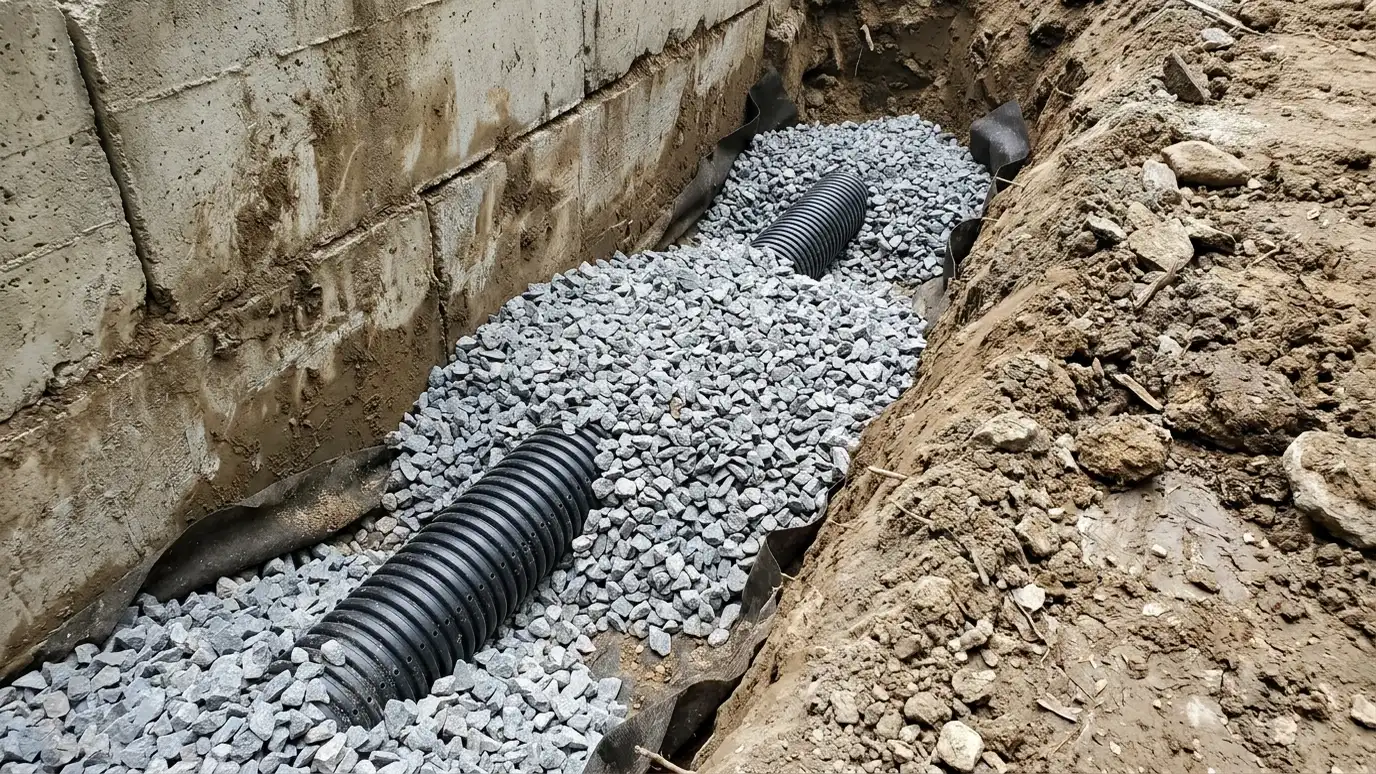 Drainage Repair Behind WallsFinding and fixing clogged, crushed or missing drains and saturated backfill that push on walls.Explore
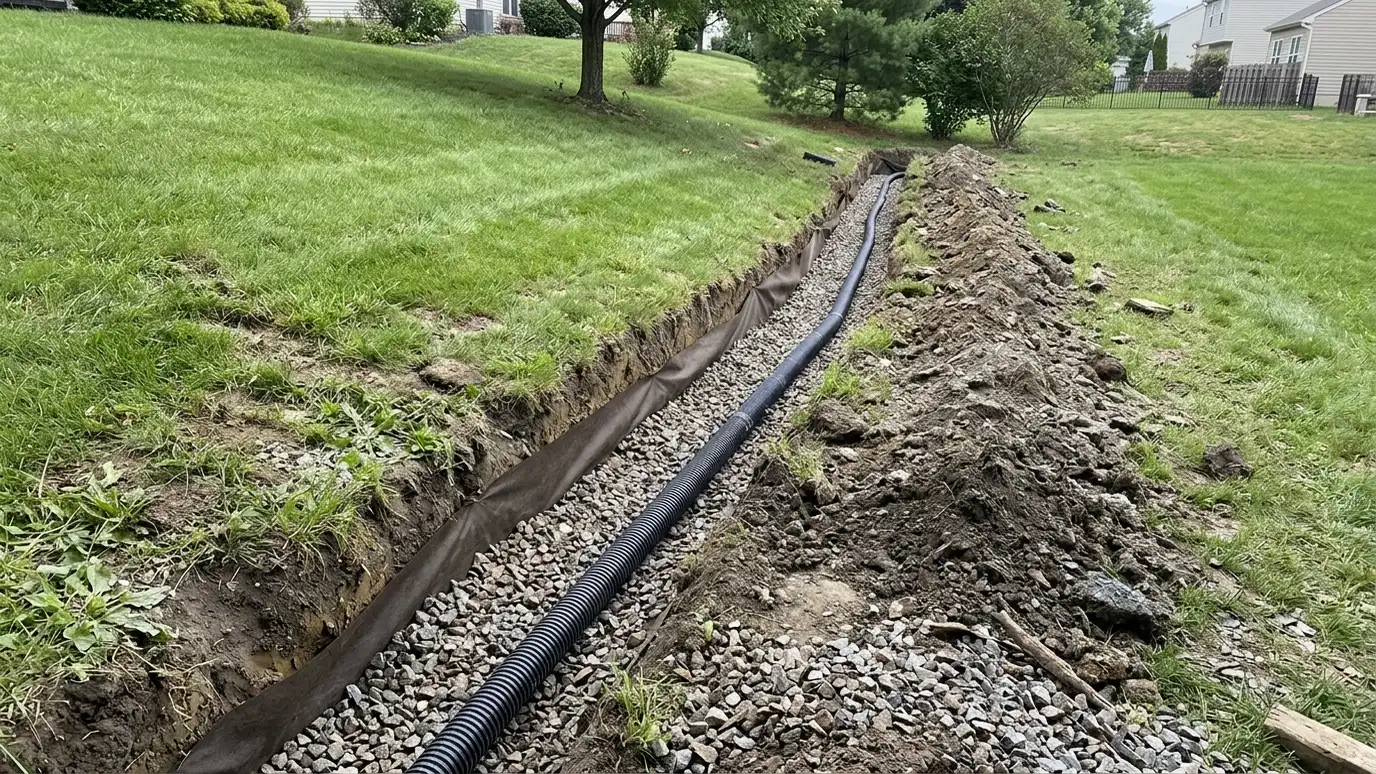 French Drain InstallationGravel-filled trenches with perforated pipe that collect and carry away groundwater and runoff.Explore
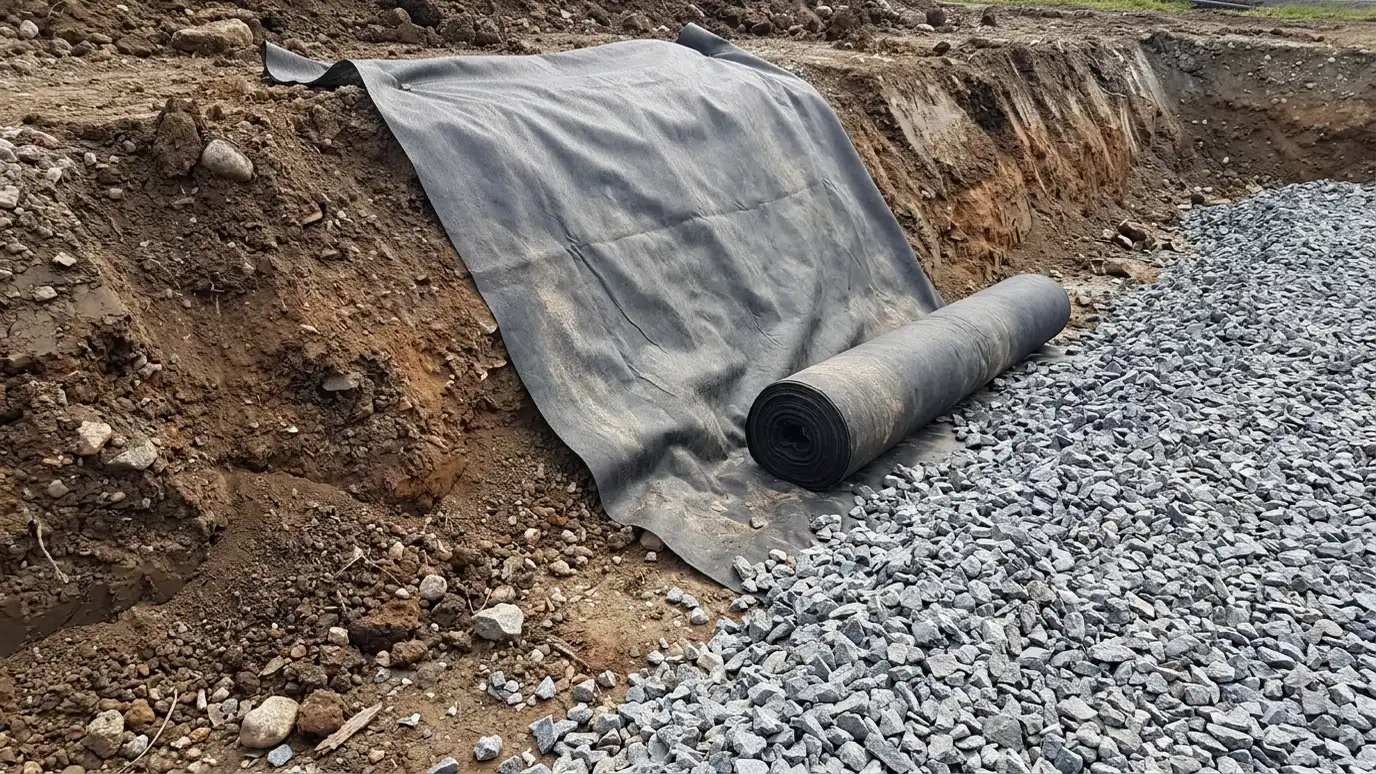 Geotextile and Filter Fabric InstallationFilter fabric and separation fabric that keep soil out of drainage stone and keep bases from mixing with…Explore
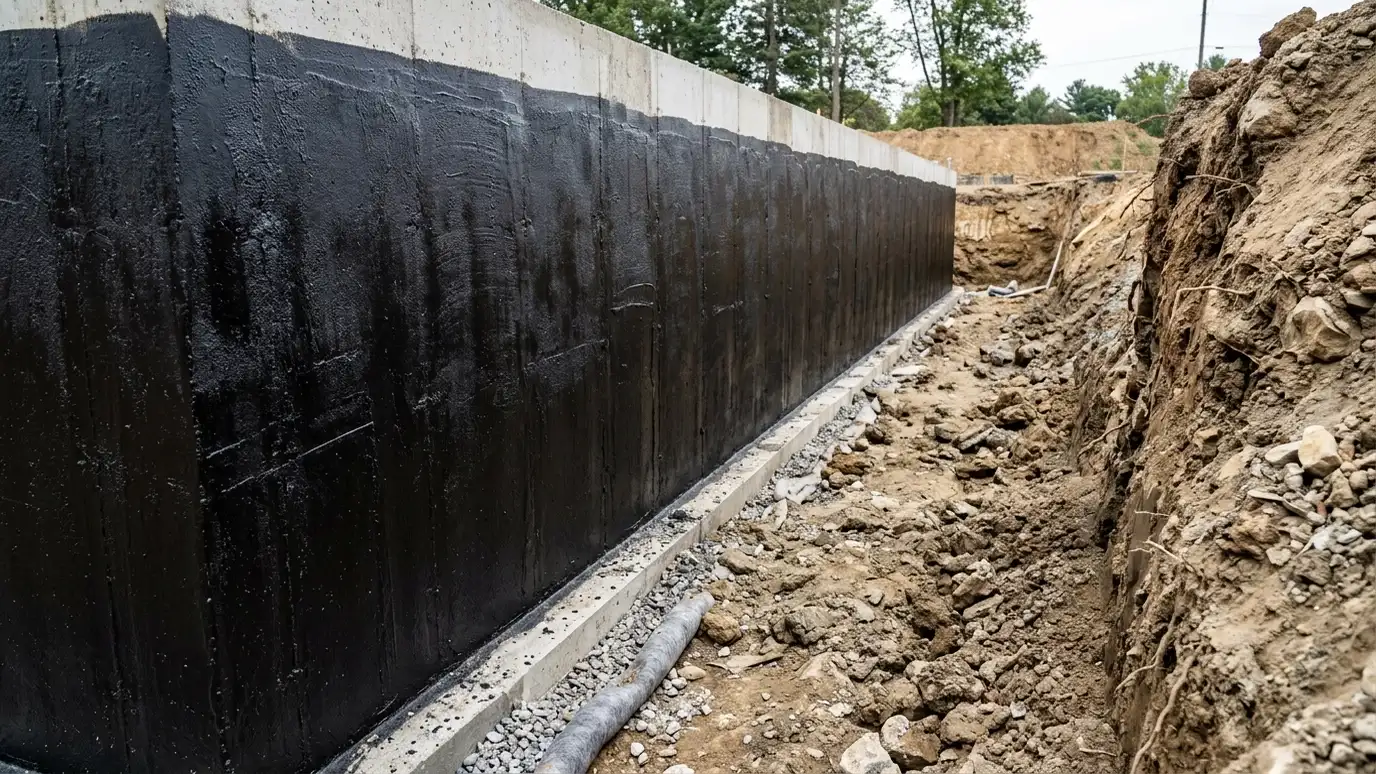 Waterproofing Behind WallsMembranes, drainage boards and sealants that keep moisture out of concrete walls and basement spaces.Explore
Tell us about your project and we will call you back to set up a visit.
Or call (615) 357-7797 to talk now.